Triethylamine → Ethyl 3-oxo-2-[(3-phenylacryloyl)amino]butanoate
Reaction equation

C(N(CC)CC)C.Cl.[NH2:9][CH:10]([C:16]([CH3:18])=[O:17])[C:11]([O:13][CH2:14][CH3:15])=[O:12].[C:19](Cl)(=[O:28])[CH:20]=[CH:21][C:22]1[CH:27]=[CH:26][CH:25]=[CH:24][CH:23]=1>C(Cl)(Cl)Cl>[C:19]([NH:9][CH:10]([C:16]([CH3:18])=[O:17])[C:11]([O:13][CH2:14][CH3:15])=[O:12])(=[O:28])[CH:20]=[CH:21][C:22]1[CH:27]=[CH:26][CH:25]=[CH:24][CH:23]=1Participants
5
Reactant 3

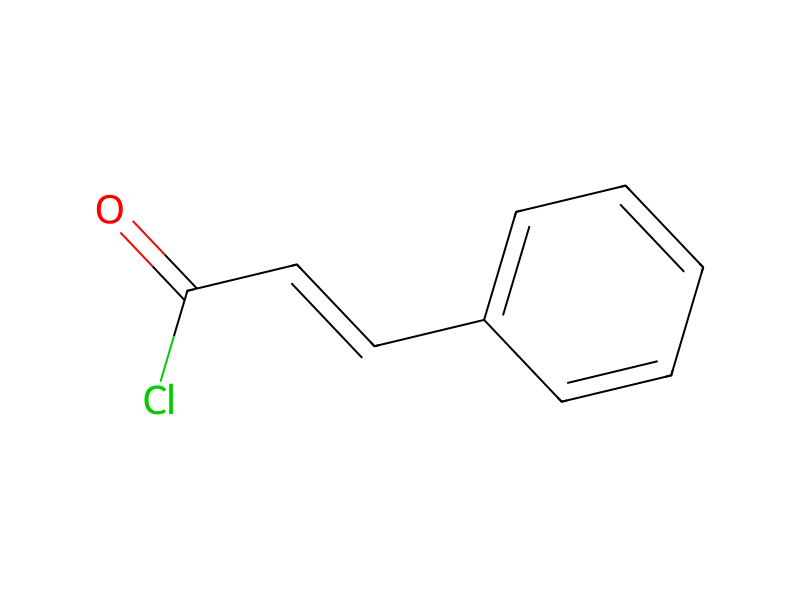

Product 1

Reagents, catalysts & solvents 1

Procedure
Triethylamine (8.3 ml) was added dropwise to a solution of ethyl 2-aminoacetoacetate hydrochloride (5.43 g) and cinnamoyl chloride (5.0 g) in chloroform (90 ml) with ice-cooling and stirring. After 20 minutes, the mixture was washed with water and dried over anhydrous magnesium sulfate. The solvent was then distilled off and the residue was treated with isopropyl ether to give ethyl 2-cinnamoylaminoacetoacetate as crystals; yield 6.1 g (73.9%). Recrystallization from ethanol gave colorless needles melting at 113°-114° C.
Workup
- temperaturecooling
- washthe mixture was washed with water
- dry with materialdried over anhydrous magnesium sulfate
- distillationThe solvent was then distilled off
- additionthe residue was treated with isopropyl ether
Sources & evidence
- ORD record
- ord-8efedca953ae43c2bed0b67ab6331cf5
- Source dataset
- uspto-grants-1986_07
- Patent number
- US04602027
Reaction notes
Loading…