Sodium Carbonate → 1-Benzyl 4-ethyl piperidine-1,4-dicarboxylate
Reaction equation

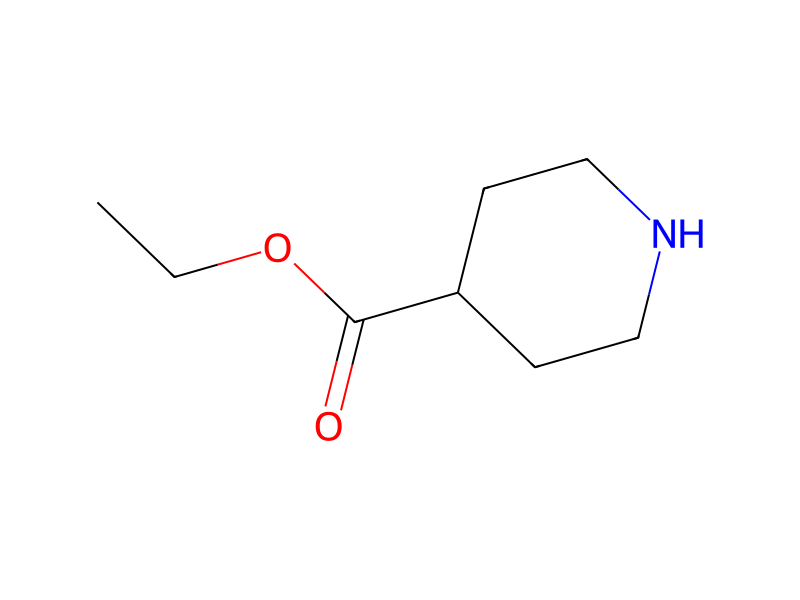
Cl[C:2]([O:4][CH2:5][C:6]1[CH:11]=[CH:10][CH:9]=[CH:8][CH:7]=1)=[O:3].[NH:12]1[CH2:22][CH2:21][CH:15]([C:16]([O:18][CH2:19][CH3:20])=[O:17])[CH2:14][CH2:13]1.C(=O)([O-])[O-].[Na+].[Na+]>ClCCl>[CH2:19]([O:18][C:16]([CH:15]1[CH2:21][CH2:22][N:12]([C:2]([O:4][CH2:5][C:6]2[CH:11]=[CH:10][CH:9]=[CH:8][CH:7]=2)=[O:3])[CH2:13][CH2:14]1)=[O:17])[CH3:20]Participants
5
Reactant 3


Product 1

Reagents, catalysts & solvents 1

Procedure
A solution of benzyl chloroformate (95 g, 0.56 mol) in dichloromethane (200 ml) was added dropwise to an ice-bath-cooled, stirred mixture of ethyl isonipecotate (87 g, 0.55 mol), sodium carbonate (60 g, 0.57 mol) and dichloromethane (200 ml) over 70 minutes. The mixture was stirred at ambient temperature for 2.5 days and filtered though a pad of Celite™. The filtrate was concentrated in vacuo. The residue was partitioned between 2M aqueous hydrochloric acid and diethyl ether. Organic layer was separated, dried (MgSO4), filtered and concentrated. The residue was chromatographed on silica gel (ethyl acetate/iso-hexane) to give the title product (152 g, 94%).
Workup
- temperaturebath-cooled
- stirringThe mixture was stirred at ambient temperature for 2.5 days
- filtrationfiltered though a pad of Celite™
- concentrationThe filtrate was concentrated in vacuo
- customThe residue was partitioned between 2M aqueous hydrochloric acid and diethyl ether
- customOrganic layer was separated
- dry with materialdried (MgSO4)
- filtrationfiltered
- concentrationconcentrated
- customThe residue was chromatographed on silica gel (ethyl acetate/iso-hexane)
Sources & evidence
- ORD record
- ord-2adb3cd44dbb451187382347458cab56
- Source dataset
- uspto-grants-2008_07
- Patent number
- US07393858B2
Reaction notes
Loading…