Trimethyl borate → 1-N-Boc-pyrrolidin-2-ylboronic acid
Reaction equation

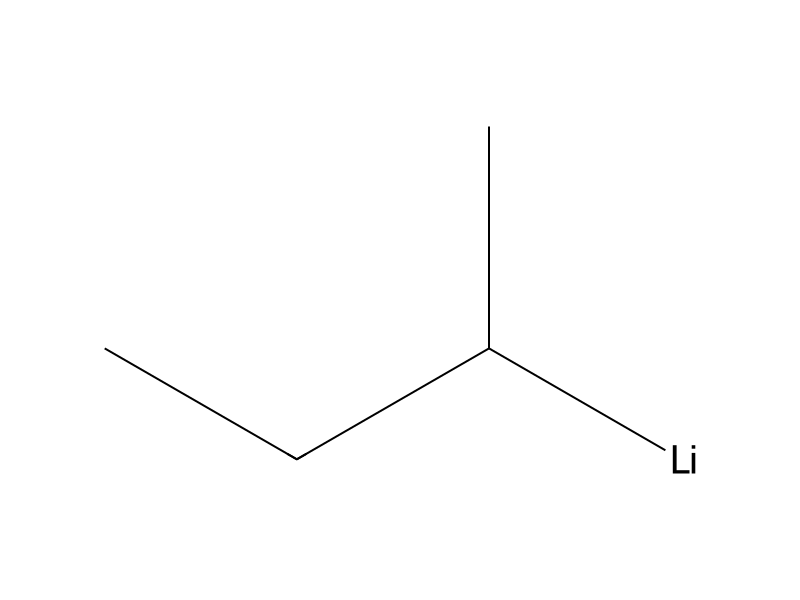
[N:1]1([C:6]([O:8][C:9]([CH3:12])([CH3:11])[CH3:10])=[O:7])[CH2:5][CH2:4][CH2:3][CH2:2]1.C([Li])(CC)C.C[O:19][B:20](OC)[O:21]C>C1COCC1>[B:20]([OH:21])([OH:19])[CH:5]1[N:1]([C:6]([O:8][C:9]([CH3:12])([CH3:11])[CH3:10])=[O:7])[CH2:2][CH2:3][CH2:4]1Participants
Reactant 3


Product 1

Reagents, catalysts & solvents 1

Procedure
N-acetyl-gly-boroproline 5 was prepared from tert-butyl 1-pyrrolidinecarboxylate (N-t-BOC-pyrrolidine, Aldrich), according to the synthetic route of FIG. 1 and Example 6. Metallation of N-t-BOC-pyrrolidine in THF with sec-butyllithium was followed by addition of trimethylborate to give 1-(tert-butoxycarbonyl)pyrrolidin-2-yl-2-boronic acid 1. Borate esterification with the single enantiomer, (+)-pinanediol in tert-butyl methyl ether (MTBE) gave pinane ester 2 (Coutts et al (1994) Tetrahedron Letters 35(29):5109-5112; Kelly et al (1993) Tetrahedron 49:1009-1016). Acid hydrolysis of the BOC group and selective crystallization gave (+)-pinane 1-pyrrolidin-2-yl-2-boronate 3. Coupling of 3 and N-acetyl glycine with EDC (N-ethyl-N′-(3-dimethylaminopropyl)carbodiimide), and HOBt (1-hydroxybenzotriazole) gave the pinane borate of N-acetyl-gly-boroproline 4. Borate exchange of 4 with phenylboronic acid gave N-acetyl-gly-boroproline 5.
Sources & evidence
- ORD record
- ord-ec005c8162744846850414f0ddf23afc
- Source dataset
- uspto-grants-2008_07
- Patent number
- US07399869B2
Reaction notes
Loading…