Sodium Bicarbonate → 5-Bromo-1,3-dihydro-benzo(c)thiophene 2,2-dioxide
Reaction equation

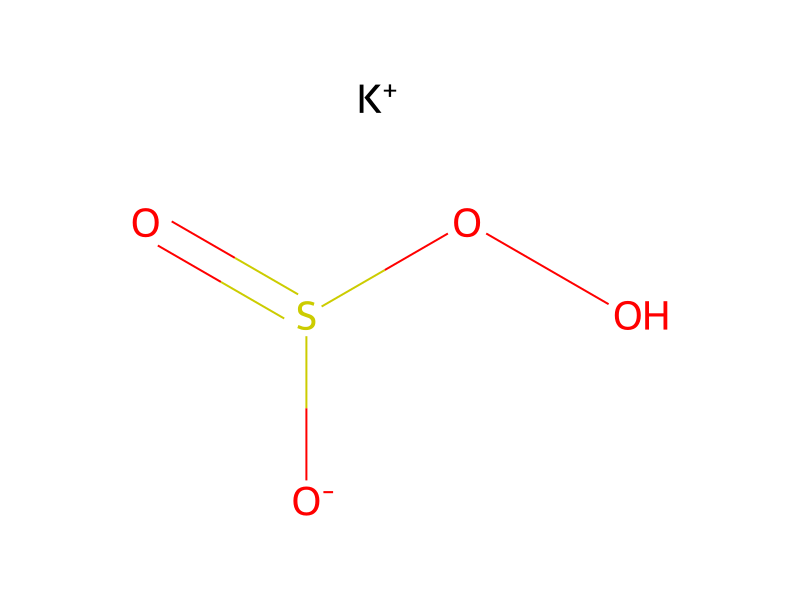
[Br:1][C:2]1[CH:10]=[CH:9][C:5]2[CH2:6]S[CH2:8][C:4]=2[CH:3]=1.O[O:12][S:13]([O-:15])=O.[K+].S(=O)(O)[O-].[Na+].C([O-])(O)=O.[Na+]>CO>[Br:1][C:2]1[CH:10]=[CH:9][C:5]2[CH2:6][S:13](=[O:15])(=[O:12])[CH2:8][C:4]=2[CH:3]=1Participants
6





Conditions
- Temperature
- 0 °C
Procedure
Dissolve 5-bromo-1,3-dihydro-benzo[c]thiophene (1.25 g, 5.79 mmol) in methanol (25 mL) and add oxone (10.7 g, 17.4 mmol). Stir the reaction mixture for 2 hours at 0° C. and then add a 1M aqueous sodium bisulfite solution (100 mL). Stir the reaction mixture for 10 minutes and add saturated NaHCO3 solution (200 mL). Extract the aqueous layer with CH2Cl2 (3×1 00 mL). Combine the organic layers and dry with Na2SO4, filter, concentrate and purify by flash column chromatography (silica gel, 0-5% MeOH/CH2Cl2) to give 930 mg of 5-bromo-1,3-dihydro-benzo[c]thiophene 2,2-dioxide (65%).
Workup
- stirringStir the reaction mixture for 10 minutes
- extractionExtract the aqueous layer with CH2Cl2 (3×1 00 mL)
- dry with materialCombine the organic layers and dry with Na2SO4
- filtrationfilter
- concentrationconcentrate
- custompurify by flash column chromatography (silica gel, 0-5% MeOH/CH2Cl2)
Sources & evidence
- ORD record
- ord-e2639faad0e841648df3139585c9550b
- Source dataset
- uspto-grants-2008_07
- Patent number
- US07399867B2
Reaction notes
Loading…