1,3-Propanediol → 7-(3-Hydroxypropoxy)quinazolin-4(3H)-one
Reaction equation

[H-].[Na+].[CH2:3]([OH:7])[CH2:4][CH2:5][OH:6].F[C:9]1[CH:18]=[C:17]2[C:12]([C:13](=[O:19])[NH:14][CH:15]=[N:16]2)=[CH:11][CH:10]=1>CN(C)C=O>[OH:6][CH2:5][CH2:4][CH2:3][O:7][C:9]1[CH:18]=[C:17]2[C:12]([C:13](=[O:19])[NH:14][CH:15]=[N:16]2)=[CH:11][CH:10]=1Participants
5
Reactant 3
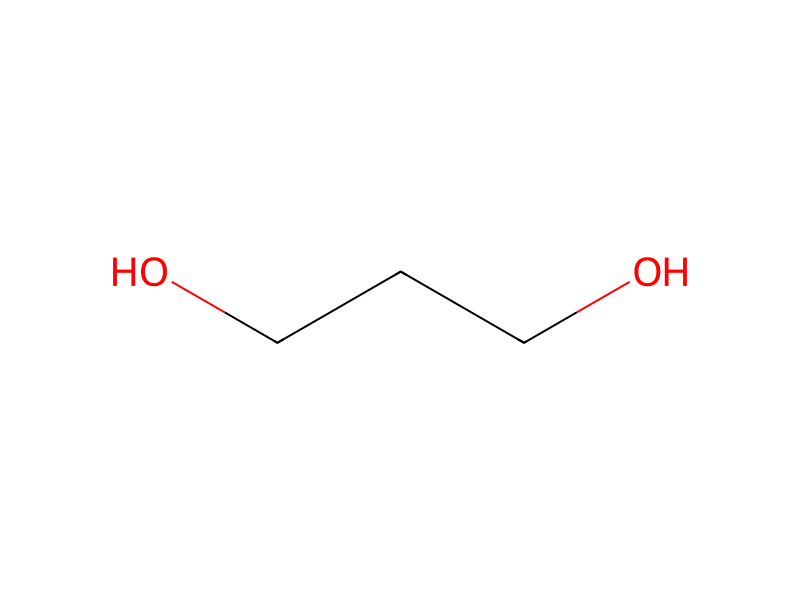


Product 1

Reagents, catalysts & solvents 1

Conditions
- Temperature
- 60 °C
Procedure
Sodium hydride (14.6 g, 365 mmol) was added at 0° C. to a solution of 1,3-propanediol (27.8 g, 365 mmol) in dimethylformamide (70 ml). 7-Fluoroquinazolin-4(3H)-one (10 g, 60.9 mmol) was added portionwise and the reaction mixture heated at 60° C., then at 110° C. for 3 hours. The reaction was cooled to 0° C., quenched with water (280 ml) and adjusted to pH 5.9. The resulting suspension was filtered, washed with water then ether and dried over phosphorus pentoxide to afford 7-(3-hydroxypropoxy)quinazolin-4(3H)-one as a white powder (12.41 g, 92% yield):
Workup
- temperatureThe reaction was cooled to 0° C.
- customquenched with water (280 ml)
- filtrationThe resulting suspension was filtered
- washwashed with water
- dry with materialether and dried over phosphorus pentoxide
Sources & evidence
- ORD record
- ord-1c3c050509064f2e831b315f6c1c4458
- Source dataset
- uspto-grants-2008_07
- Patent number
- US07402585B2
Reaction notes
Loading…