Potassium Carbonate → 2-Methyl-3-nitropyridine
Reaction equation

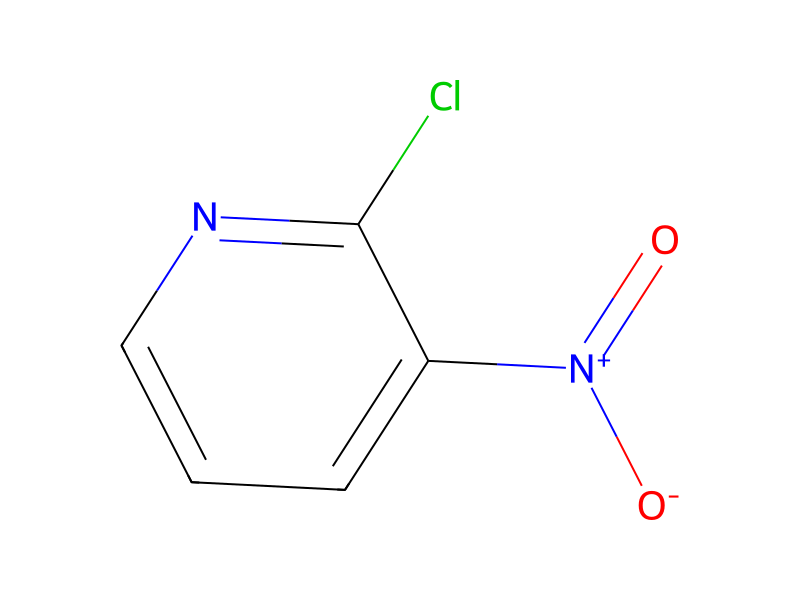
Cl[C:2]1[C:7]([N+:8]([O-:10])=[O:9])=[CH:6][CH:5]=[CH:4][N:3]=1.[C:11](=O)([O-])[O-].[K+].[K+].CB1OB(C)OB(C)O1>O1CCOCC1.O.C1C=CC([P]([Pd]([P](C2C=CC=CC=2)(C2C=CC=CC=2)C2C=CC=CC=2)([P](C2C=CC=CC=2)(C2C=CC=CC=2)C2C=CC=CC=2)[P](C2C=CC=CC=2)(C2C=CC=CC=2)C2C=CC=CC=2)(C2C=CC=CC=2)C2C=CC=CC=2)=CC=1>[CH3:11][C:2]1[C:7]([N+:8]([O-:10])=[O:9])=[CH:6][CH:5]=[CH:4][N:3]=1Participants
7






Conditions
- Temperature
- 110 °C
Procedure
A mixture of 2-chloro-3-nitropyridine (1.00 g, 6.30 mmol), potassium carbonate (2.62 g, 18.90 mmol), tetrakis(triphenylphosphine)palladium (0.73 g, 0.63 mmol) and trimethyl boroxine (0.88 mL, 6.30 mmol) in 1,4-dioxane (2 mL) and water (8 mL) was heated to 110° C. (oil bath temperature) for 6 h and then stirred for 16 h at rt. The mixture was then filtered through a celite pad, washing through with THF. The filtrate was adsorbed onto silica gel in vacuo and purified via flash column chromatography eluting with ethyl acetate/hexanes (3:7) to give the title compound as a yellow solid. δH (CDCl3): 2.86 (3H, s), 7.34 (1H, dd), 8.26 (1H, dd), 8.71 (1H, dd).
Workup
- filtrationThe mixture was then filtered through a celite pad
- washwashing through with THF
- custompurified via flash column chromatography
- washeluting with ethyl acetate/hexanes (3:7)
Sources & evidence
- ORD record
- ord-f53dc7ebeecb4a15b395a781b41ad46e
- Source dataset
- uspto-grants-2008_07
- Patent number
- US07405210B2
Reaction notes
Loading…