Acetonitrile → 6-Bromo-1-methyl-1H-pyrrolo[3,2-b]pyridine-5-carbonitrile
Reaction equation

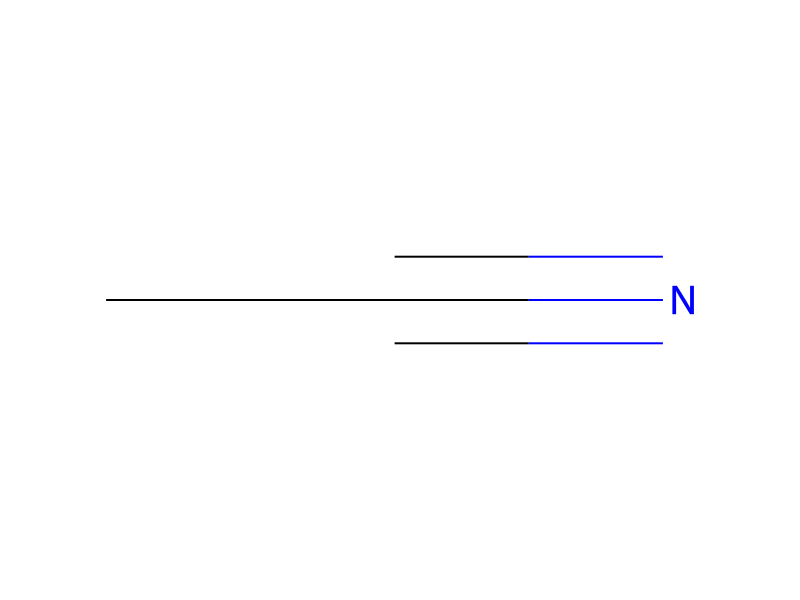
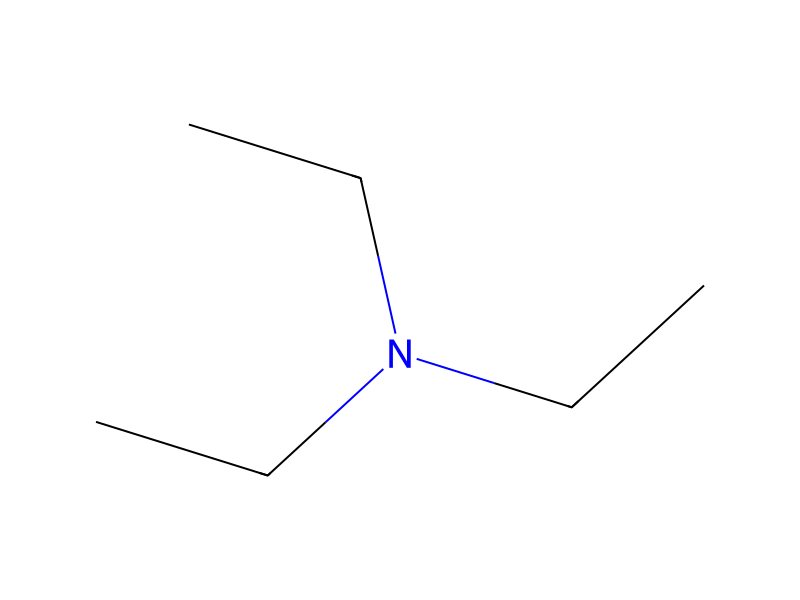
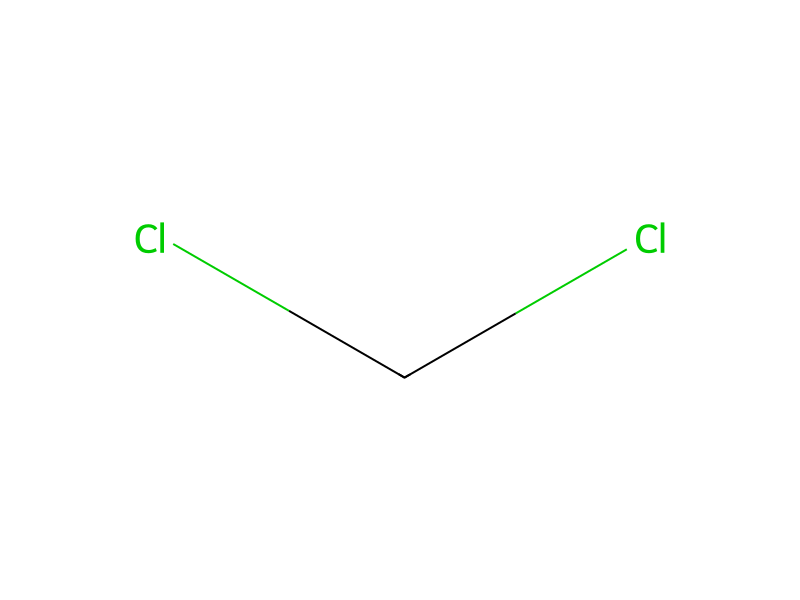
[Br:1][C:2]1[CH:3]=[C:4]2[N:11]([CH3:12])[CH:10]=[CH:9][C:5]2=[N+:6]([O-])[CH:7]=1.[C:13](#[N:15])C.C(N(CC)CC)C.C[Si](C#N)(C)C>C(Cl)Cl>[Br:1][C:2]1[CH:3]=[C:4]2[N:11]([CH3:12])[CH:10]=[CH:9][C:5]2=[N:6][C:7]=1[C:13]#[N:15]Participants
Reactant 4


Product 1

Reagents, catalysts & solvents 1
Conditions
- Temperature
- 10 °C
Procedure
A solution of 6-bromo-1-methyl-1H-pyrrolo[3,2-b]pyridine 4-oxide (42.8 kg, 188 mol) in DCM from the previous step was distilled at 45° C. to a volume of about 85 L. Acetonitrile (100 kg) was added and the mixture was distilled at 45° C. to a volume of about 110 L (2.5 L/kg). More ACN (80 kg) was added and the mixture was again distilled at 45° C. to a volume of about 110 L. Triethylamine (80 kg, 791 mol) was added. The mixture was cooled to 10±5° C. and trimethylsilyl cyanide (81.6 kg, 822 mol) was added over the course of 15 minutes while maintaining the temperature of the mixture below 25° C. The reaction mixture was gradually heated to 70±5° C. After stirring for 10 hours at this temperature, the starting material was consumed. The reaction mixture was cooled to 10±5° C. A 20% aqueous K2CO3 solution (260 kg) was added and the mixture was stirred at 10±5° C. for 1 hour. The resulting precipitate was filtered. The reactor was rinsed with a 2.3% aqueous K2CO3 solution (133 kg). The rinse was used to wash the filter cake, which was slurried in water (180 kg) for 30 minutes and filtered. The filter cake was again slurried in water (180 kg) for 30 minutes and filtered. The filtered solids were dispersed in a solution of DCM (1166 kg) and THF (156 kg). The mixture was stirred for 2 hours at 30±5° C. Activated carbon (7.0 kg, 0.16 kg/kg) was added and the mixture was stirred at 30±5° C. for 2 hours and filtered through a pad of Celite under pressure. The reactor was rinsed with DCM (200 kg) and the rinse was used to wash the filter cake. The combined filtrate was distilled at 40±5° C. to a volume of about 170 L. Next, n-heptane (120 kg) was added to the mixture, which was concentrated by distillation at 40±5° C. to a volume of about 170 L. More n-heptane (238 kg) was added to the mixture. The slurry was cooled to 5±5° C. and stirred for 1 hour. The resulting precipitate was filtered under pressure and the filter cake was washed with n-heptane (68 kg) from the reactor rinse. The wet cake was dried under vacuum at 40° C. for 20 hours to give the title compound as an off-white solid (34.2 kg).
Workup
- distillationthe mixture was distilled at 45° C. to a volume of about 110 L (2.5 L/kg)
- additionMore ACN (80 kg) was added
- distillationthe mixture was again distilled at 45° C. to a volume of about 110 L
- temperaturewhile maintaining the temperature of the mixture below 25° C
- temperatureThe reaction mixture was gradually heated to 70±5° C
- customthe starting material was consumed
- temperatureThe reaction mixture was cooled to 10±5° C
- additionA 20% aqueous K2CO3 solution (260 kg) was added
- stirringthe mixture was stirred at 10±5° C. for 1 hour
- filtrationThe resulting precipitate was filtered
- washThe reactor was rinsed with a 2.3% aqueous K2CO3 solution (133 kg)
- washto wash the filter cake, which
- waitwas slurried in water (180 kg) for 30 minutes
- filtrationfiltered
- waitThe filter cake was again slurried in water (180 kg) for 30 minutes
- filtrationfiltered
- additionThe filtered solids were dispersed in a solution of DCM (1166 kg) and THF (156 kg)
- stirringThe mixture was stirred for 2 hours at 30±5° C
- additionActivated carbon (7.0 kg, 0.16 kg/kg) was added
- stirringthe mixture was stirred at 30±5° C. for 2 hours
- filtrationfiltered through a pad of Celite under pressure
- washThe reactor was rinsed with DCM (200 kg)
- washto wash the filter cake
- distillationThe combined filtrate was distilled at 40±5° C. to a volume of about 170 L
- additionNext, n-heptane (120 kg) was added to the mixture, which
- concentrationwas concentrated by distillation at 40±5° C. to a volume of about 170 L
- additionMore n-heptane (238 kg) was added to the mixture
- temperatureThe slurry was cooled to 5±5° C.
- stirringstirred for 1 hour
- filtrationThe resulting precipitate was filtered under pressure
- washthe filter cake was washed with n-heptane (68 kg) from the reactor
- washrinse
- customThe wet cake was dried under vacuum at 40° C. for 20 hours
Sources & evidence
- ORD record
- ord-f1441b53abc14f7f9daa28281bd0dedf
- Source dataset
- uspto-grants-2014_09
- Patent number
- US08835420B2
Reaction notes
Loading…