1-Bromopropane → 4-Iodo-N-propyl-2-pyridone
Reaction equation

[I:1][C:2]1[CH:7]=[CH:6][NH:5][C:4](=[O:8])[CH:3]=1.Br[CH2:10][CH2:11][CH3:12].C([O-])([O-])=O.[K+].[K+]>CN(C=O)C>[I:1][C:2]1[CH:7]=[CH:6][N:5]([CH2:10][CH2:11][CH3:12])[C:4](=[O:8])[CH:3]=1Participants
5
Reactant 3
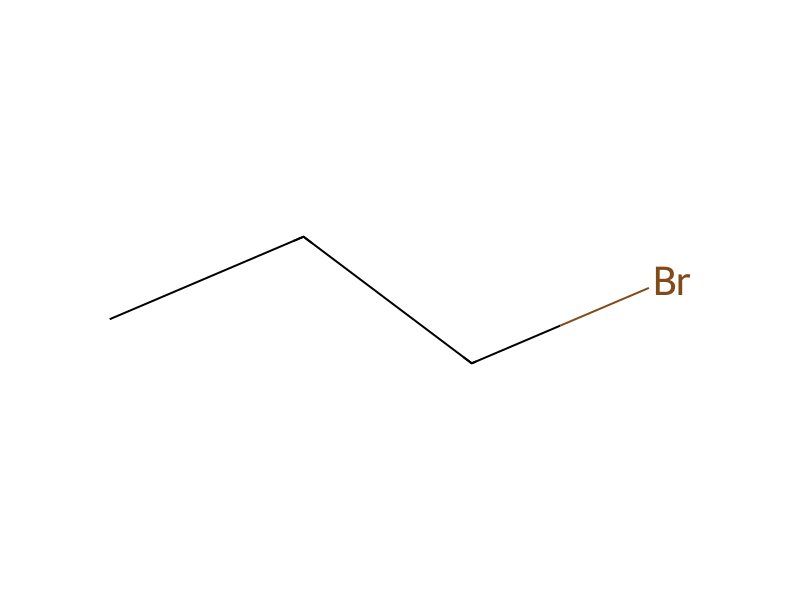


Product 1

Reagents, catalysts & solvents 1

Procedure
To 2.0 g (9.05 mmol) 4-iodo-2-pyridone in 10 mL DMF are added 1.00 mL (10.9 mmol) 1-bromopropane and 3.13 g (22.6 mmol) K2CO3. The reaction mixture is stirred at r.t. over night. The reaction is quenched by the addition of water. The resulting mixture is extracted with EtOAc. The organic layer is washed with aq. NaHCO3 solution, dried with Na2SO4 and the solvent is removed in vacuo. The residue is purified by column chromatography (silica gel, heptane/EtOAc. 70/30→50/50)
Workup
- customThe reaction is quenched by the addition of water
- extractionThe resulting mixture is extracted with EtOAc
- washThe organic layer is washed with aq. NaHCO3 solution
- dry with materialdried with Na2SO4
- customthe solvent is removed in vacuo
- customThe residue is purified by column chromatography (silica gel, heptane/EtOAc. 70/30→50/50)
Sources & evidence
- ORD record
- ord-340f5c8ec0c6415aaee92d3faedb6a2e
- Source dataset
- uspto-grants-2014_09
- Patent number
- US08835472B2
Reaction notes
Loading…