Ammonium Chloride → (S)-N-((R)-1-cyclopentylethyl)-2-methylpropane-2-sulfinamide
Reaction equation

[CH:1]1([CH:6]=O)[CH2:5][CH2:4][CH2:3][CH2:2]1.[C:8]([S@@:12]([NH2:14])=[O:13])([CH3:11])([CH3:10])[CH3:9].[CH3:15][Mg]Br.[Cl-].[NH4+]>ClCCl.C(OCC)C.S([O-])([O-])(=O)=O.[Cu+2].O>[CH:1]1([C@H:6]([NH:14][S@:12]([C:8]([CH3:11])([CH3:10])[CH3:9])=[O:13])[CH3:15])[CH2:5][CH2:4][CH2:3][CH2:2]1Participants
Reactant 4


Product 1

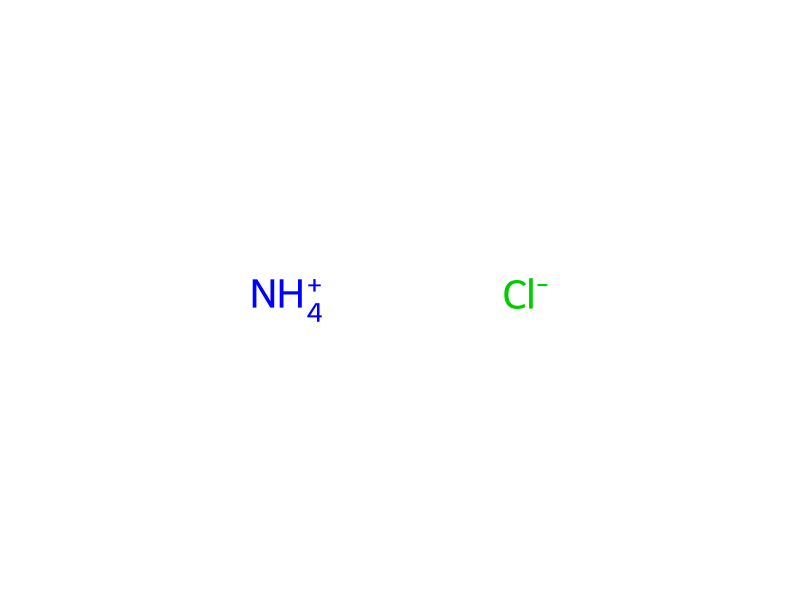
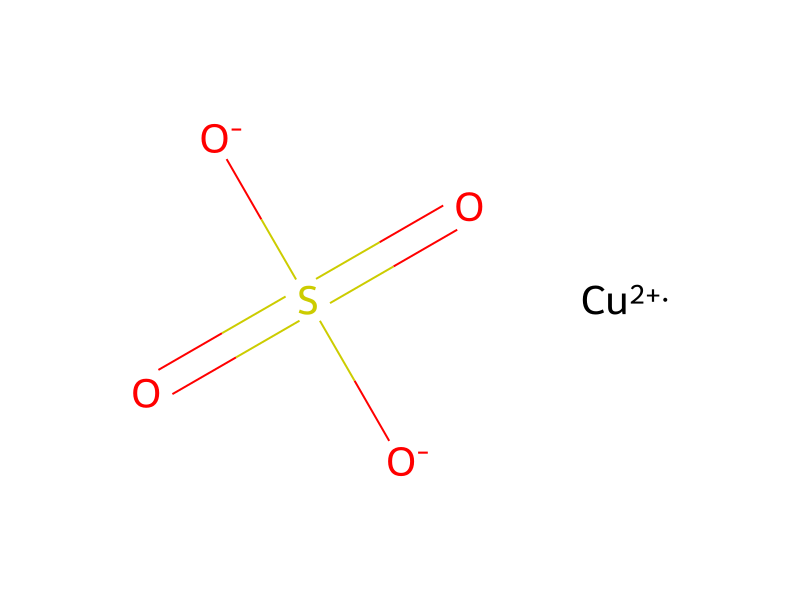
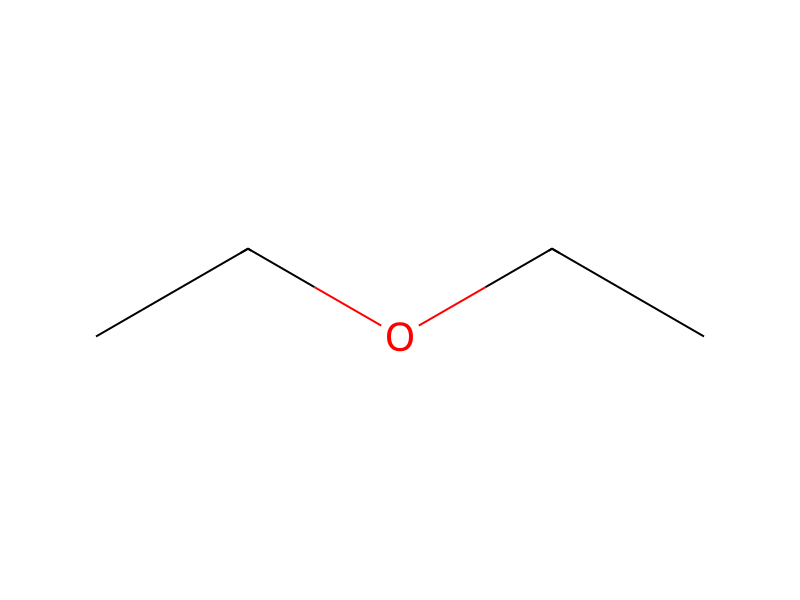
Reagents, catalysts & solvents 4
Conditions
- Temperature
- -45 °C
Procedure
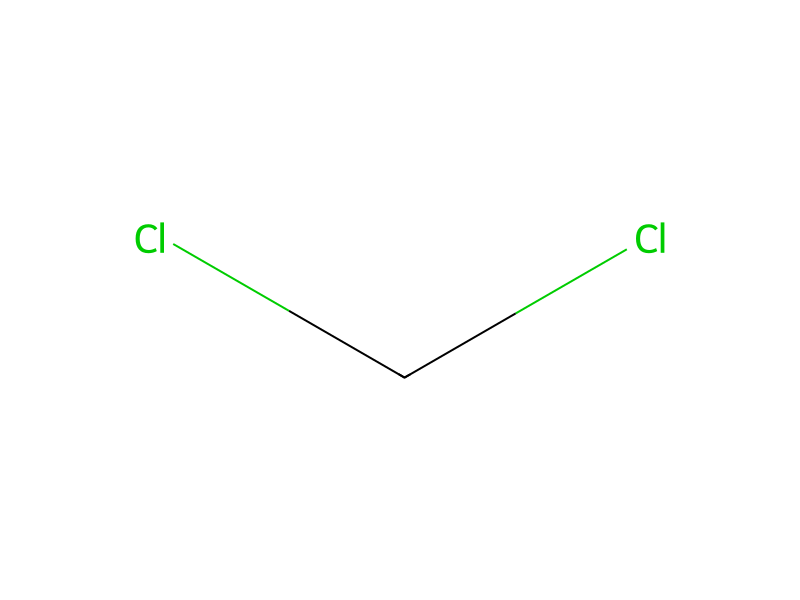
A solution of cyclopentanecarbaldehyde (0.45 mL), (S)-(−)-tert-butylsulfinamide (556 mg), and copper sulfate (1.34 g) in dichloromethane (10 mL) was stirred at room temperature for 24 hours. The reaction solution was filtered over celite, the solvent was then evaporated under reduced pressure, and the obtained residue was purified by silica gel column chromatography (hexane-ethyl acetate) to obtain a colorless oily substance. A solution of the obtained oily substance in dichloromethane (18 mL) was cooled to −45° C. and then a 35% methylmagnesium bromide solution in diethylether (2.2 mL) was added dropwise thereto. The reaction solution was stirred at −45° C. for 3 hours and then stirred at room temperature for 12 hours. The reaction solution was cooled in an ice bath, a saturated aqueous ammonium chloride solution (5 mL) and water (5 mL) were added thereto, and the mixture was stirred for 20 minutes. The reaction solution was subjected to liquid separation and further, the aqueous layer was washed with ethyl acetate (20 mL) twice. The collected organic layer was dried over sodium sulfate, the solvent was evaporated under reduced pressure, and the residue was then purified by silica gel column chromatography (hexane-ethyl acetate) to obtain (S)—N—((R)-1-cyclopentylethyl)-2-methylpropane-2-sulfinamide (723 mg) as a colorless oily substance. A methanol (1.7 mL) solution and a 4 M hydrogen chloride/1,4-dioxane solution (1.7 mL) were added thereto, and the mixture was stirred at room temperature for 2 hours. The solvent was removed under reduced pressure, diisopropylether (10 mL) was added thereto, and the mixture was subjected to sonication. The precipitated solid was filtered to obtain (R)-1-cyclopentaneethanamine hydrochloride (60 mg) as a colorless solid. A solution of the compound 0001-4 (30 mg) and phenyl chlorocarbonate (0.025 mL) in pyridine (0.9 mL) was heated and stirred at 50° C. for 4 hours. Further, (R)-1-cyclopentaneethanamine hydrochloride (60 mg) and sodium hydrogen carbonate (50 mg) were added thereto, and the mixture was then stirred at 50° C. for 3 hours. The reaction solution which had been cooled to room temperature was concentrated, water (1 mL) and a 6 M aqueous sodium hydroxide solution (0.04 mL) were added thereto, and the mixture was subjected to sonication. The precipitated solid was filtered, and the residue was washed with water (1 mL) and a methanol aqueous solution. A solution of the obtained solid, 1-tert-butoxycarbonyl-4-(4,4,5,5-tetramethyl-1,3,2-dioxaborolan-2-yl)pyrazole (59 mg), sodium carbonate (14 mg), and bis(di-tert-butyl (4-dimethylaminophenyl)phosphine)dichloropalladium (II) (7 mg) in water (0.1 mL) and 1,4-dioxane (1.9 mL) was stirred at 100° C. for 12 hours using a sealed tube. The reaction solution was cooled to room temperature, the solvent was then evaporated under reduced pressure, and the residue was purified by silica gel column chromatography (chloroform-methanol). The solvent was evaporated under reduced pressure, acetonitrile (1 mL) was added thereto, and the mixture was then subjected to sonication. The precipitated solid was filtered and the residue was washed with acetonitrile (1 mL) to obtain a compound 0198 (9.4 mg) as a pale yellow solid.
Workup
- filtrationThe reaction solution was filtered over celite
- customthe solvent was then evaporated under reduced pressure
- customthe obtained residue was purified by silica gel column chromatography (hexane-ethyl acetate)
- customto obtain a colorless oily substance
- stirringstirred at room temperature for 12 hours
- temperatureThe reaction solution was cooled in an ice bath
- stirringthe mixture was stirred for 20 minutes
- customThe reaction solution was subjected to liquid separation
- washfurther, the aqueous layer was washed with ethyl acetate (20 mL) twice
- dry with materialThe collected organic layer was dried over sodium sulfate
- customthe solvent was evaporated under reduced pressure
- customthe residue was then purified by silica gel column chromatography (hexane-ethyl acetate)
Sources & evidence
- ORD record
- ord-4920505e21044034b6fe2b94aa14a73d
- Source dataset
- uspto-grants-2014_09
- Patent number
- US08841456B2
Reaction notes
Loading…