Lithium hydroxide, monohydrate → Lithium 7-(2-morpholinoethoxy)imidazo[1,2-a]pyridine-3-carboxylate
Reaction equation

[O:1]1[CH2:6][CH2:5][N:4]([CH2:7][CH2:8][O:9][C:10]2[CH:15]=[CH:14][N:13]3[C:16]([C:19]([O:21]CC)=[O:20])=[CH:17][N:18]=[C:12]3[CH:11]=2)[CH2:3][CH2:2]1.O.[OH-].[Li+:26]>O1CCCC1.O.O1CCCC1>[O:1]1[CH2:6][CH2:5][N:4]([CH2:7][CH2:8][O:9][C:10]2[CH:15]=[CH:14][N:13]3[C:16]([C:19]([O-:21])=[O:20])=[CH:17][N:18]=[C:12]3[CH:11]=2)[CH2:3][CH2:2]1.[Li+:26]Participants
5
Reactant 2


Product 1

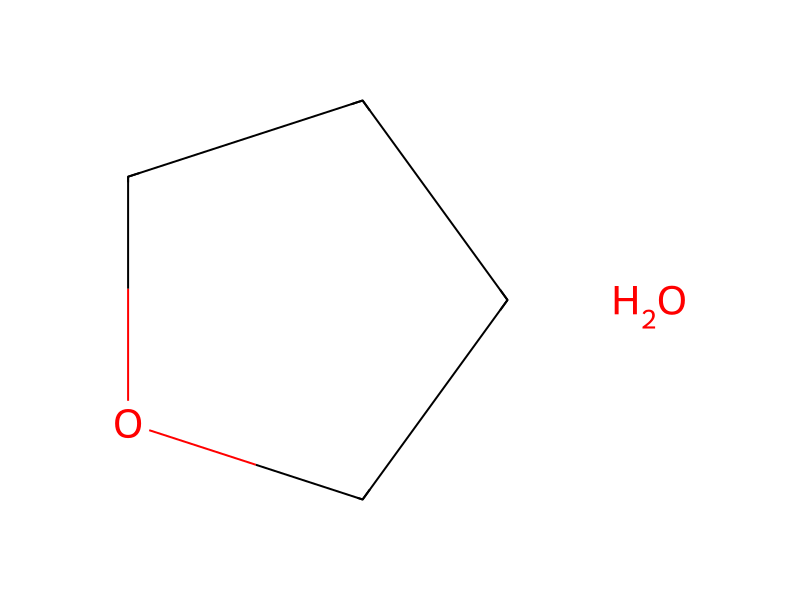
Reagents, catalysts & solvents 2

Procedure
Ethyl 7-(2-morpholinoethoxy)imidazo[1,2-a]pyridine-3-carboxylate (1 g, 3.13 mmol) was dissolved in tetrahydrofuran/water (4:1, 0.5 M). Lithium hydroxide monohydrate (131 mg, 3.13 mmol) was added and the mixture was stirred at ambient temperature for 16 hours. The mixture was diluted with additional tetrahydrofuran and concentrated. Drying under high vacuum for 6 hours gave lithium 7-(2-morpholinoethoxy)imidazo[1,2-a]pyridine-3-carboxylate as a pale yellow solid (979 mg).
Workup
- concentrationconcentrated
- customDrying under high vacuum for 6 hours
Sources & evidence
- ORD record
- ord-6baf5a532be44eaf91f713b8e21dc424
- Source dataset
- uspto-grants-2014_09
- Patent number
- US08841455B2
Reaction notes
Loading…