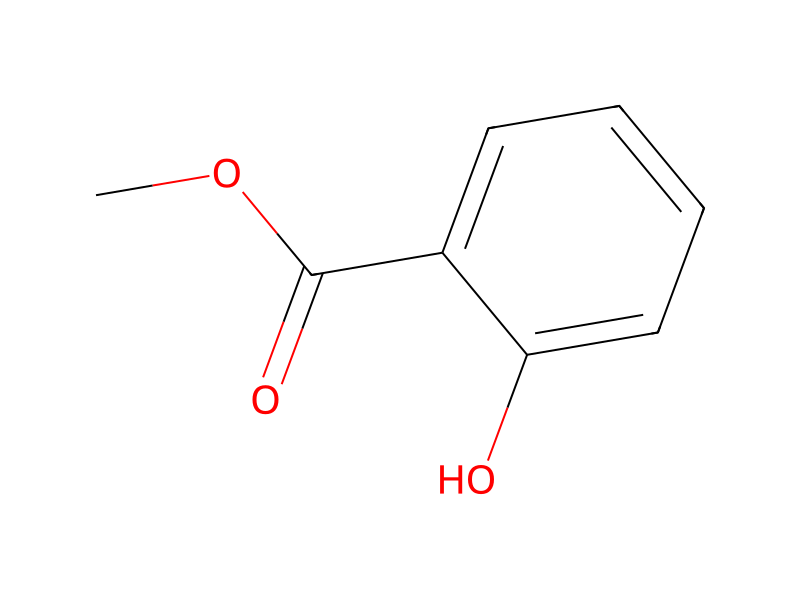
Methyl Salicylate → HCID 57073919, compound
Reaction equation

[C:1]([O:10]C)(=O)[C:2]1[C:3](=[CH:5][CH:6]=[CH:7][CH:8]=1)[OH:4].[CH2:12]1[O:16][CH:13]1[CH2:14][CH3:15].[CH2:17](N(CC)CC)C>>[CH2:14]([CH:13]1[C:12](=[O:16])[C:1](=[O:10])[C:2]2[CH:8]=[CH:7][CH:6]=[CH:5][C:3]=2[O:4][CH2:17]1)[CH3:15]Participants
4



Conditions
- Temperature
- 150 °C
Procedure
To a one liter autoclave was added a mixture of 304 g. (2.0 moles) methyl salicylate (III), 4.0 g. triethylamine and 150 g. (2.1 mole) of 1,2-butylene oxide. The reaction mixture was heated under nitrogen at 150° C for 6 hours. The clear brown liquid crude reaction product (444 g.) was then removed from the autoclave and fractionally distilled (4489-84 and 4524-25) through a 3 ft. Vigreaux (Goodloe packed) column after addition of 2 g. sodium acetate to aid hydrolysis. Traces of glycol and catalyst (Et N) were removed at first, but the main fraction (4524-25), 160 g. was identified (NMR, IR) as the pure title compound IX. On standing in air IX solidified and could be recrystallized from cyclohexane as prisms, m.p. 63°-66° C.
Workup
- additionTo a one liter autoclave was added
- additiona mixture of 304 g
- customThe clear brown liquid crude reaction product (444 g.)
- customwas then removed from the autoclave
- distillationfractionally distilled (4489-84 and 4524-25) through a 3 ft
- additionVigreaux (Goodloe packed) column after addition of 2 g
- customhydrolysis
- customTraces of glycol and catalyst (Et N) were removed at first, but the main fraction (4524-25), 160 g
- customcould be recrystallized from cyclohexane as prisms, m.p. 63°-66° C.
Sources & evidence
- ORD record
- ord-df113e83103f433bb97c7f6cd3c25c49
- Source dataset
- uspto-grants-1978_06
- Patent number
- US04096119
Reaction notes
Loading…