Propylene Carbonate → Isophorone DI-isocyanate
Reaction equation

[O:1]=[C:2]=[N:3][CH:4]1[CH2:13][C:12]([CH3:15])([CH3:14])[CH2:11][C:6](C)([CH2:7]N=C=O)[CH2:5]1.C1N2CCN(CC2)C1.C1(=O)OC(C)C[O:26]1>>[N-:3]=[C:2]=[O:1].[N-:3]=[C:2]=[O:1].[O:26]=[C:4]1[CH2:13][C:12]([CH3:15])([CH3:14])[CH2:11][C:6]([CH3:7])=[CH:5]1Participants
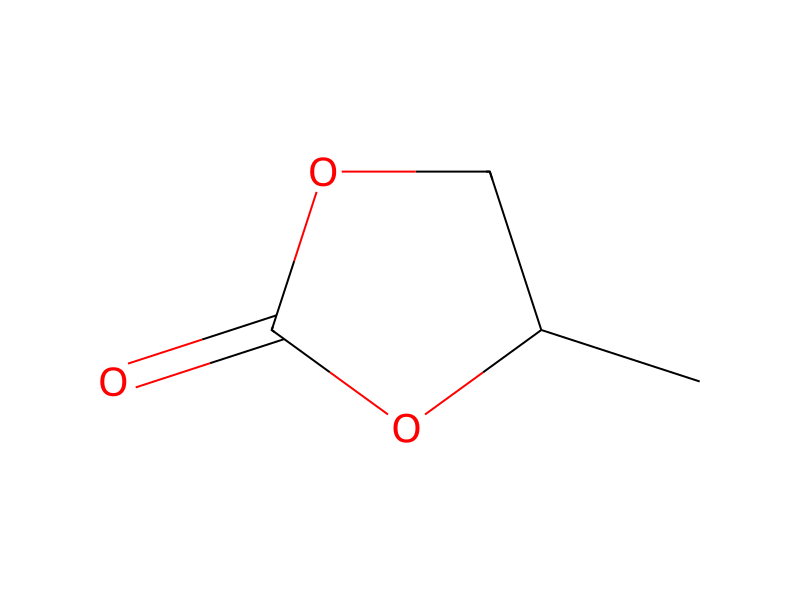

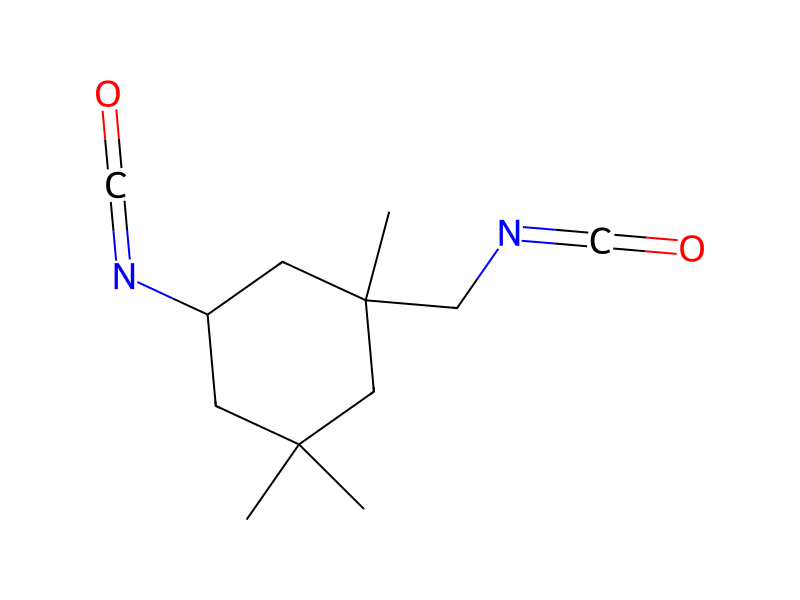

Conditions
- Temperature
- 131 °C
Procedure
A mixture of 861 parts of isophorone diisocyanate, 535.95 parts of propylene carbonate and 2.15 parts of Dabco TMR* is stirred and gradually heated. When the temperature reaches 55° C. heating is discontinued. The exothermic reaction raises the temperature to 131° C. in 15 minutes. After cooling to 89° C., 5.8 parts of a 10% solution of Dabco TMR* in propylene carbonate is added. The temperature rises to 90° C. in 8 minutes. After heating to 132° C. it is allowed to cool. 1397.1 parts of this product, the tri-isocyanato-isocyanurate formed from 3 moles of isophorone di-isocyanate as a 61.4% solids solution in propylene carbonate, having an NCO content of 10.94% is stirred while 366.8 parts of 3,5-dimethylpyrazole is added, cooling as required, to keep the temperature below 80° C. followed by 463.4 parts of the monomethyl ether of propylene glycol. The mixture is stirred at 50° C. and a clear solution formed which solution is then allowed to cool. The IR Spectrum shows NCO absent.
Workup
- temperaturegradually heated
- customreaches 55° C.
- temperatureheating
- customThe exothermic reaction
- temperatureAfter cooling to 89° C.
- temperatureAfter heating to 132° C. it
- temperatureto cool
Sources & evidence
- ORD record
- ord-0efd3fbe5964464f9fd77bace311f35e
- Source dataset
- uspto-grants-2002_04
- Patent number
- US06368669B1
Reaction notes
Loading…