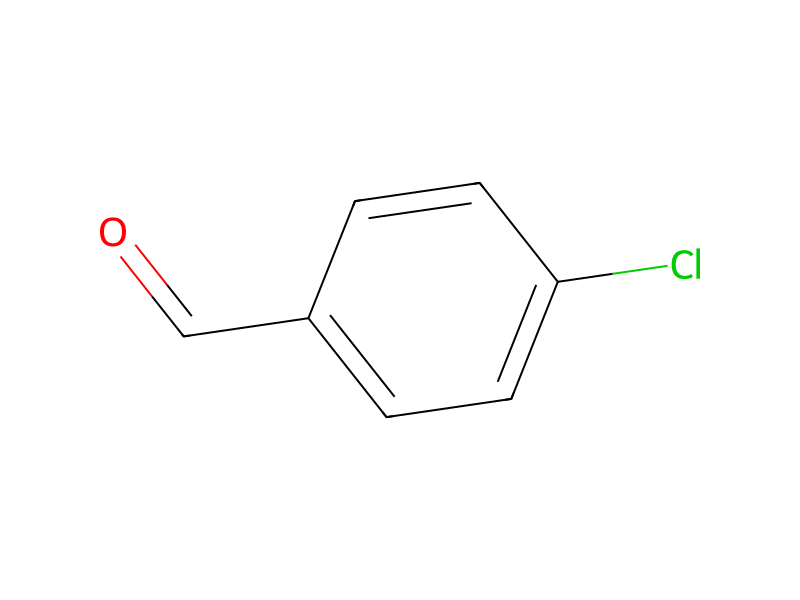
4-Chlorobenzaldehyde → 2,2-Difluoro-1-phenyl-3-(4'-chlorophenyl)-1,3-propanediol
Reaction equation

C1(S([C:10]([CH:13]([C:15]2[CH:20]=[CH:19][CH:18]=[CH:17][CH:16]=2)[OH:14])([F:12])[F:11])(=O)=O)C=CC=CC=1.[Cl:21][C:22]1[CH:29]=[CH:28][C:25]([CH:26]=[O:27])=[CH:24][CH:23]=1.CC([O-])(C)C.[K+]>CN(C=O)C>[F:11][C:10]([F:12])([CH:26]([C:25]1[CH:28]=[CH:29][C:22]([Cl:21])=[CH:23][CH:24]=1)[OH:27])[CH:13]([C:15]1[CH:16]=[CH:17][CH:18]=[CH:19][CH:20]=1)[OH:14]Participants




Procedure
Into the mixture of PhSO2CF2CH(OH)Ph (120 mg, 0.4 mmol) and 4-chlorobenzaldehyde (113 mg, 0.8 mmol) in DMF (3 mL) at −50° C., was added t-BuOK (90 mg, 0.8 mmol) in 2 mL DMF. The reaction mixture was stirred at −50° C. to RT overnight. The reaction was then quenched with cold NaCl aqueous solution, followed by extraction with Et2O (20 mL×3). After drying over MgSO4 and solvent removal, the product 2,2-Difluoro-1-phenyl-3-(4′-chlorophenyl)-1,3-propanediol was obtained by chromatography as a white solid, 76% yield. For anti-isomer: 1H NMR (CDCl3): δ 3.22 (m, 2H); 5.04 (td, J=11.0 Hz, 2H); 7.36 (m, 9H). 13C NMR (CDCl3): δ 72.9 (t, J=29 Hz); 73.8 (t, J=29 Hz); 118.7 (t, J=259 Hz); 127.6; 128.6; 129.0; 134.3; 134.8. 19F NMR(CDCl3): δ −118.2˜120.1 (m).
Workup
- customThe reaction was then quenched with cold NaCl aqueous solution
- extractionfollowed by extraction with Et2O (20 mL×3)
- dry with materialAfter drying over MgSO4 and solvent removal
Sources & evidence
- ORD record
- ord-ad5b508534d646d4979319e3b7844155
- Source dataset
- uspto-grants-2006_08
- Patent number
- US07087789B2
Reaction notes
Loading…