Dicyclohexylcarbodiimide → 2,2-dimethoxyethyl N-benzyloxycarbonyl-L-prolinate
Reaction equation

[CH2:1]([O:8][C:9]([N:11]1[CH2:18][CH2:17][CH2:16][C@H:12]1[C:13]([OH:15])=[O:14])=[O:10])[C:2]1[CH:7]=[CH:6][CH:5]=[CH:4][CH:3]=1.[CH3:19][O:20][CH:21]([O:24][CH3:25])[CH2:22]O.C1CCC(N=C=NC2CCCCC2)CC1>CN(C1C=CN=CC=1)C.ClCCl>[CH2:1]([O:8][C:9]([N:11]1[CH2:18][CH2:17][CH2:16][C@H:12]1[C:13]([O:15][CH2:22][CH:21]([O:24][CH3:25])[O:20][CH3:19])=[O:14])=[O:10])[C:2]1[CH:3]=[CH:4][CH:5]=[CH:6][CH:7]=1Participants
6
Reactant 3

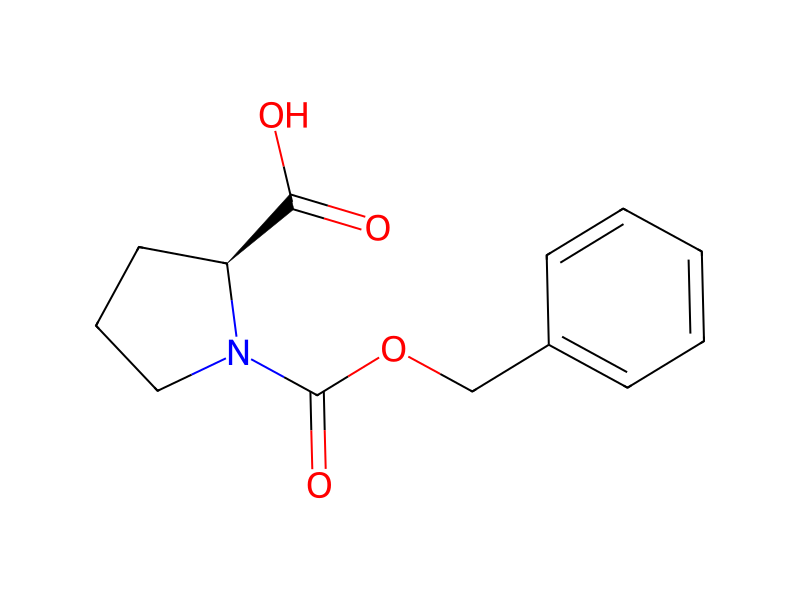

Product 1

Reagents, catalysts & solvents 2


Procedure
To a 100 mL, round bottom flask equipped with a magnetic stirrer and nitrogen inlet is added N-Benzyloxycarbonyl-L-proline (3.5 g), dichloromethane (25 mL) and 2,2-dimethoxyethanol (1.8 g). The mixture is cooled using an ice bath (0-5° C.) and DMAP (86 mg) is added. DCC (3.06 g) is added to the mixture over a period of 2 minutes. The resulting precipitate is filtered, washed with heptanes (2×10 mL) and the filtrate is concentrated under reduced pressure. The residue was purified by silica gel chromatography using heptanes/ethyl acetate (4:1) as the eluent, and 4.5 g of 2,2-dimethoxyethyl N-benzyloxycarbonyl-L-prolinate was obtained.
Workup
- customTo a 100 mL, round bottom flask equipped with a magnetic stirrer and nitrogen inlet
- temperatureThe mixture is cooled
- additionis added
- filtrationThe resulting precipitate is filtered
- washwashed with heptanes (2×10 mL)
- concentrationthe filtrate is concentrated under reduced pressure
- customThe residue was purified by silica gel chromatography
Sources & evidence
- ORD record
- ord-9b1351d4a3a14ae8a7fe3543b9bdc94b
- Source dataset
- uspto-grants-2002_04
- Patent number
- US06380388B1
Reaction notes
Loading…