Catechol → 2-(Difluoromethoxy)phenol
Reaction equation

Cl[CH:2]([F:4])[F:3].[C:5]1([C:7](=[CH:9][CH:10]=[CH:11][CH:12]=1)[OH:8])[OH:6].[OH-].[Na+].S(S([O-])=O)([O-])=O.[Na+].[Na+]>O.O1CCOCC1>[F:3][CH:2]([F:4])[O:6][C:5]1[CH:12]=[CH:11][CH:10]=[CH:9][C:7]=1[OH:8]Participants
7
Reactant 4



Product 1

Reagents, catalysts & solvents 2


Procedure
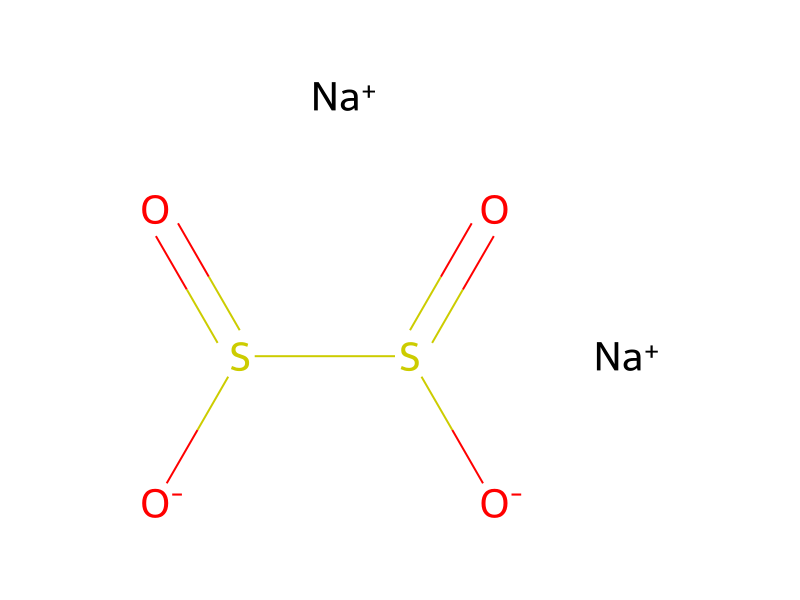
275 g of chlorodifluoromethane are passed into a solution of 100 g of pyrocatechol, 220 g of sodium hydroxide and 60 g of sodium dithionite in 500 ml of water and 400 ml of dioxane at 50°-55° C. analogously to L. N. Sedova et al., Zh. Org. Khim. 6, 568 (1970). After distillation at 61°-62° C./1.0-1.1 kPa, a mixture of 1,2-bis(difluoromethoxy)benzene and 2-difluoromethoxyphenol is obtained, the products being separated by chromatography on silica gel by means of cyclohexane/ethyl acetate (4:1).
Workup
- distillationAfter distillation at 61°-62° C./1.0-1.1 kPa
- additiona mixture of 1,2-bis(difluoromethoxy)benzene
Sources & evidence
- ORD record
- ord-11043cf788bb4a68a38d8a22af02a423
- Source dataset
- uspto-grants-1988_07
- Patent number
- US04758579
Reaction notes
Loading…