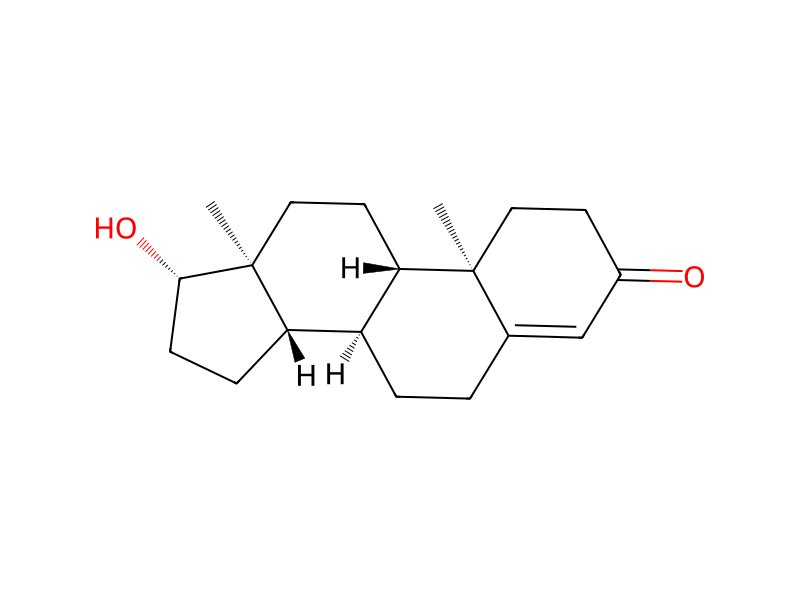
Testosterone → 17beta-Hydroxy-4-androstene
Reaction equation

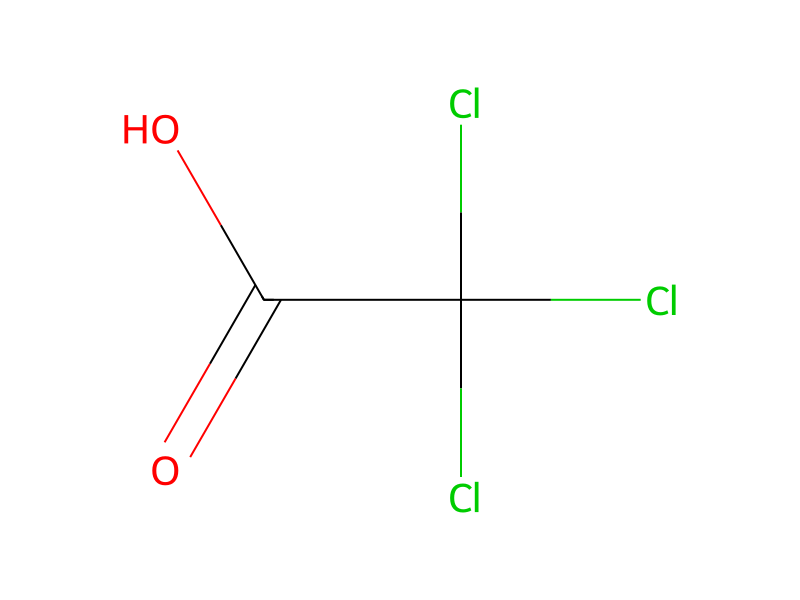
[BH4-].[Na+].ClC(Cl)(Cl)C(O)=O.C(#N)C.[OH:13][C@H:14]1[CH2:19][CH2:18][C@H:17]2[C@H:20]3[C@H:30]([CH2:31][CH2:32][C@:15]12[CH3:16])[C@:28]1([CH3:29])[C:23](=[CH:24][C:25](=O)[CH2:26][CH2:27]1)[CH2:22][CH2:21]3>C(Cl)Cl>[CH3:16][C@:15]12[CH2:32][CH2:31][C@H:30]3[C@@H:20]([CH2:21][CH2:22][C:23]4[C@:28]3([CH3:29])[CH2:27][CH2:26][CH2:25][CH:24]=4)[C@@H:17]1[CH2:18][CH2:19][C@@H:14]2[OH:13]Participants
6
Reactant 4


Product 1

Reagents, catalysts & solvents 1

Procedure
370 mg of anhydrous sodium borohydride is added in portions with ice/water cooling to 5 ml of trichloroacetic acid and 5 ml of acetonitrile. Then, 500 mg of 17beta-hydroxy-4-androsten-3-one in 9 ml of methylene chloride is instilled. It is stirred at room temperature and is worked up after 30 minutes, as described in example 1. 400 mg of 4-androsten-17beta-ol with melting point 144°-147° C. is obtained.
Sources & evidence
- ORD record
- ord-7c244cfd823d4a4baff81a5054dd6e5c
- Source dataset
- uspto-grants-1992_08
- Patent number
- US05140106
Reaction notes
Loading…