Hydrochloric Acid → MLS002667383
Reaction equation

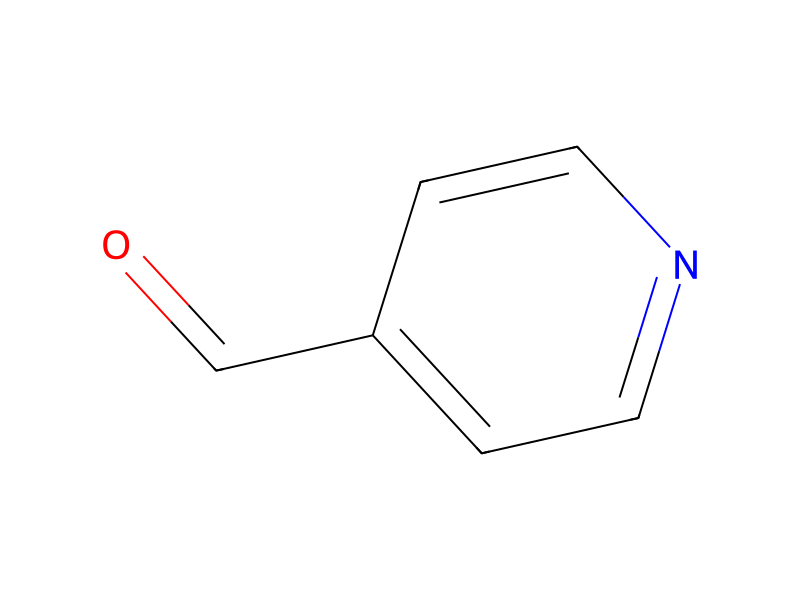
[OH-:1].[Na+].O[CH2:4][C:5]([C:7]1[CH:12]=[CH:11][CH:10]=[CH:9][CH:8]=1)=[O:6].[N:13]1[CH:18]=[CH:17][C:16]([CH:19]=[O:20])=[CH:15][CH:14]=1.Cl>C(O)C>[OH:1][C:12]1[CH:11]=[CH:10][CH:9]=[CH:8][C:7]=1[C:5](=[O:6])[CH2:4][CH:19]([C:16]1[CH:17]=[CH:18][N:13]=[CH:14][CH:15]=1)[OH:20]Participants
6
Reactant 4



Product 1

Reagents, catalysts & solvents 1

Procedure
According to the method of Corvaisier (Bull. Soc. Chim. Fr. 1962, 528) 15 ml of an 11 N aqueous sodium hydroxide solution are added to a solution of 24 g of 2-hydroxyacetophenone and 21 g of pyridine-4-carbaldehyde in 130 ml of absolute ethanol maintained an ambient temperature. An abundant yellow precipitate forms at first which then gradually dissolves. After two hours at ambient temperature the mixture is adjusted to pH 1 by means of hydrochloric acid. The yellow precipitate obtained is filtered, washed with water and dried. 27 g of 1-(2-hydroxyphenyl) 3-(4-pyridyl) 3-hydroxy 1-propanone melting at 150° C. are obtained.
Workup
- dissolutionAn abundant yellow precipitate forms at first which then gradually dissolves
- customThe yellow precipitate obtained
- filtrationis filtered
- washwashed with water
- customdried
Sources & evidence
- ORD record
- ord-469f2215b931479dae9e1401e36ce6dc
- Source dataset
- uspto-grants-1981_10
- Patent number
- US04294841
Reaction notes
Loading…