Borane → Homoveratrylamine
Reaction equation

B.[CH3:2][O:3][C:4]1[CH:5]=[C:6]([CH:12]=[CH:13][N+:14]([O-])=O)[CH:7]=[CH:8][C:9]=1[O:10][CH3:11]>O1CCCC1>[CH2:13]([NH2:14])[CH2:12][C:6]1[CH:7]=[CH:8][C:9]([O:10][CH3:11])=[C:4]([O:3][CH3:2])[CH:5]=1Participants
Reactant 2

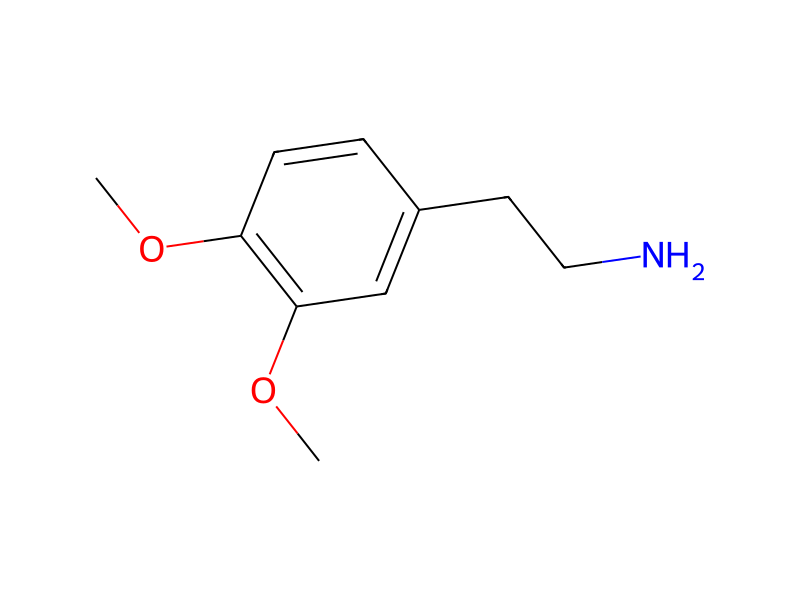
Product 1
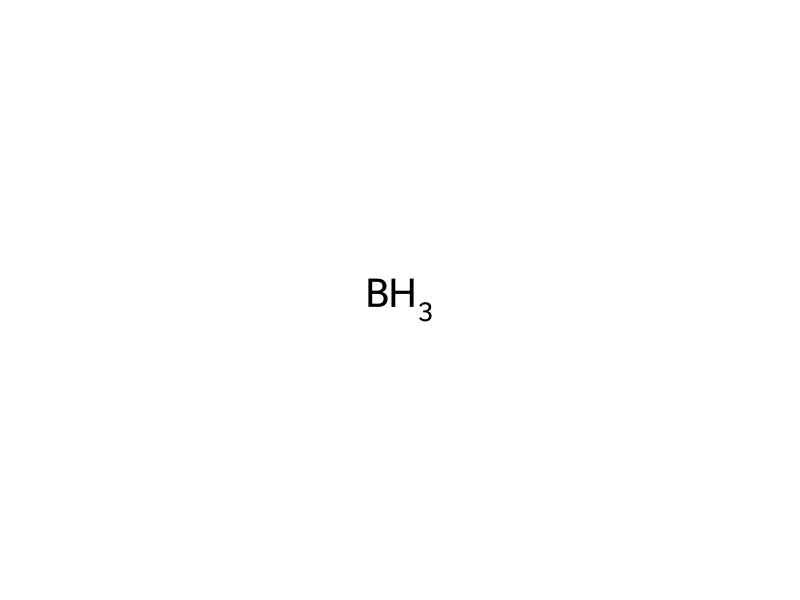
Reagents, catalysts & solvents 1

Procedure
In a 3 L flask, containing an argon atmosphere, fitted with a dropping funnel and condenser, was placed 800 mL of a 1.0 M solution of borane in tetrahydrofuran. To the stirred solution was added a solution of 33.47 grams of 2-(3,4-dimethoxypheny)-nitroethene in 800 ml of tetrahydrofuran, at such a rate (~3 hours) that the temperature of the solution in the flask did not exceed 35° C. The mixture was heated to reflux for 20 hours and then allowed to cool to room temperature. The excess borane was quenched by careful addition of methanol (97 mL). The mixture was concentrated on a rotary evaporator. The residue was diluted with methanol (670 mL) and 2.0N HCl (670 mL). The mixture was heated to reflux for 1 hour. The methanol was removed on a rotary evaporator. The aqueous solution was extracted with diethyl ether (2×800 mL) to remove the neutral impurities. The pH of the aqueous solution was adjusted to 12-- 14 with sodium hydroxide pellets (66.88 g), then extracted with ether (3×800 mL). The organic layers were separately dried over anhydrous sodium sulfate, filtered and concentrated on a rotary evaporator to provide 2.14 grams of neutral by-products and 31.65 grams of crude homoveratrylamine. Purification of the homoveratrylamine by bulb-to-bulb distillation (110° C. @ 0.6 mm Hg) provided 24.78 grams of the desired product, 85.5% yield.
Workup
- additionIn a 3 L flask, containing an argon atmosphere
- customfitted with a dropping funnel and condenser
- customa rate (~3 hours)
- customdid not exceed 35° C
- temperatureThe mixture was heated
- temperatureto reflux for 20 hours
- customThe excess borane was quenched by careful addition of methanol (97 mL)
- concentrationThe mixture was concentrated on a rotary evaporator
- additionThe residue was diluted with methanol (670 mL) and 2.0N HCl (670 mL)
- temperatureThe mixture was heated
- temperatureto reflux for 1 hour
- customThe methanol was removed on a rotary evaporator
- extractionThe aqueous solution was extracted with diethyl ether (2×800 mL)
- customto remove the neutral impurities
- extractionextracted with ether (3×800 mL)
- dry with materialThe organic layers were separately dried over anhydrous sodium sulfate
- filtrationfiltered
- concentrationconcentrated on a rotary evaporator
Sources & evidence
- ORD record
- ord-e93381d02b4348ef86436dfd59b8e597
- Source dataset
- uspto-grants-2000_01
- Patent number
- US06013841
Reaction notes
Loading…