(2R,3S,4R,5R)-2,3,4,5,6-pentahydroxyhexanal → Sorbitol
Reaction equation

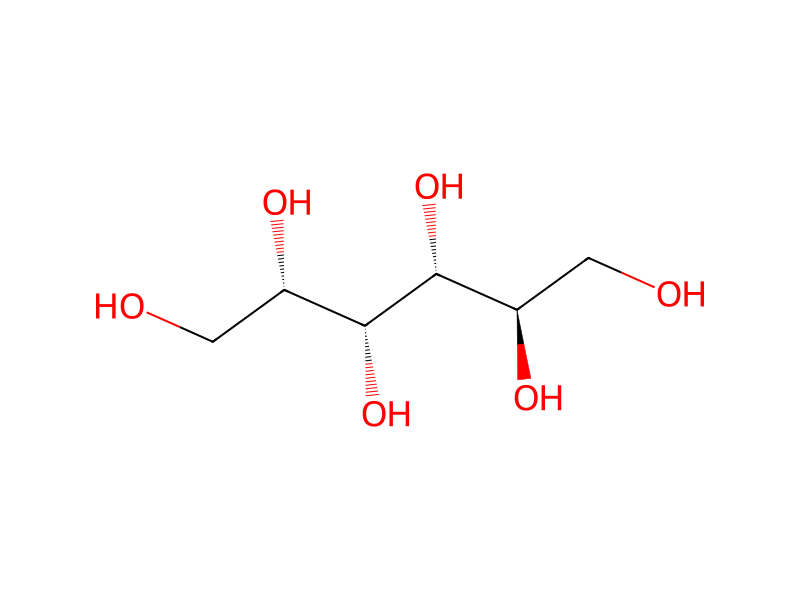
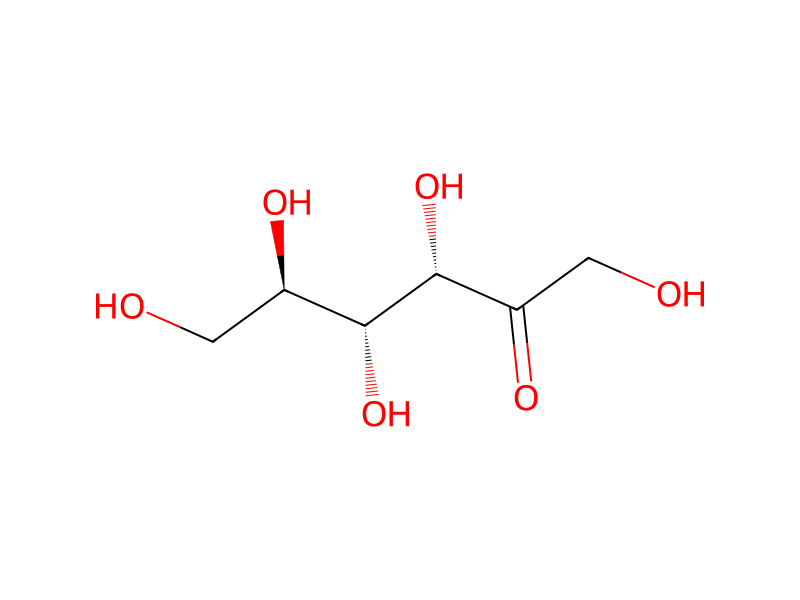
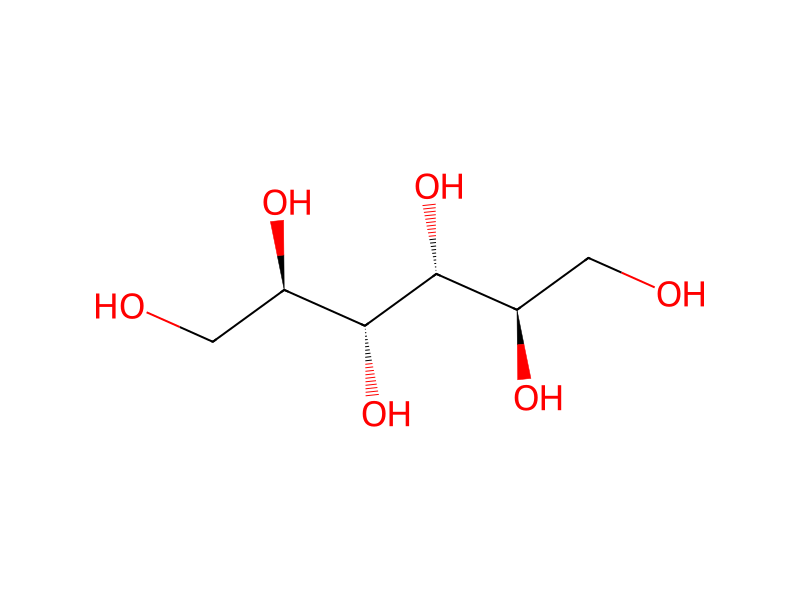
[O:1]=[CH:2][C@@H:3]([C@H:5]([C@@H:7]([C@@H:9]([CH2:11][OH:12])[OH:10])[OH:8])[OH:6])[OH:4]>[Ni]>[OH:12][CH2:11][C@@H:9]([C@H:7]([C@@H:5]([C@@H:3]([CH2:2][OH:1])[OH:4])[OH:6])[OH:8])[OH:10].[CH2:11]([OH:12])[C@H:9]([C@H:7]([C@@H:5]([C@@H:3]([CH2:2][OH:1])[OH:4])[OH:6])[OH:8])[OH:10].[OH:1][CH2:2][C:3]([C@H:5]([C@@H:7]([C@@H:9]([CH2:11][OH:12])[OH:10])[OH:8])[OH:6])=[O:4]Participants
5
Reactant 1

Product 3
Reagents, catalysts & solvents 1

Procedure
This hydrogenation was conducted as that described above except that the catalyst was a nickel on titanium dioxide which had been reduced at 450° C. Analysis showed only 63 percent glucose conversion to afford sorbitol, mannitol, and fructose in selectivity of 44, 4, and 27 percent respectively.
Workup
- customhad been reduced at 450° C
Sources & evidence
- ORD record
- ord-99a43f33ecf542a68013e9b5b0ac2d28
- Source dataset
- uspto-grants-1983_05
- Patent number
- US04382150
Reaction notes
Loading…