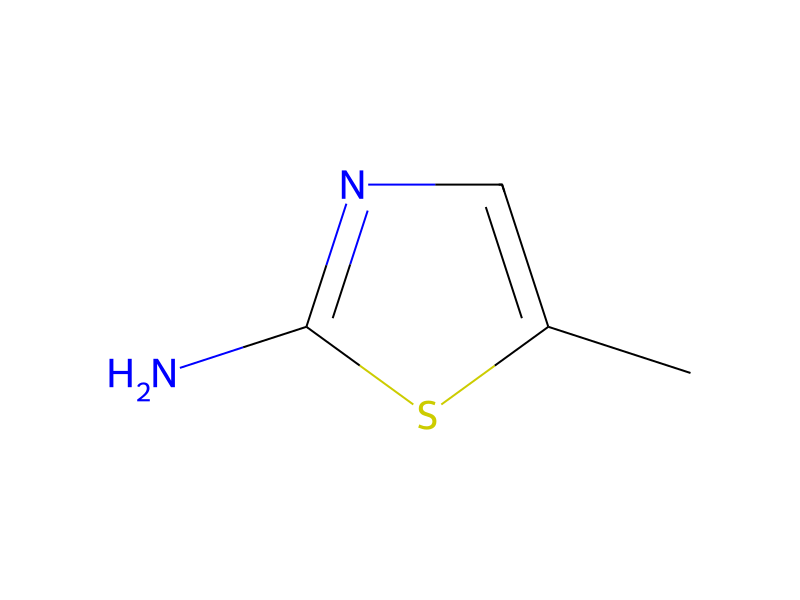
2-Amino-5-methylthiazole → HCID 58279251, compound
Reaction equation
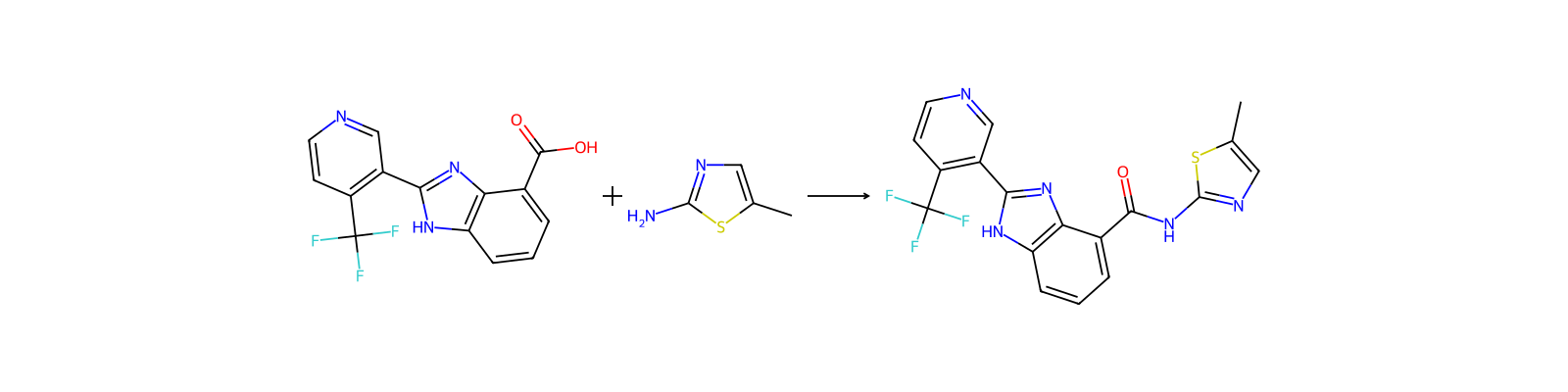
[F:1][C:2]([F:22])([F:21])[C:3]1[CH:8]=[CH:7][N:6]=[CH:5][C:4]=1[C:9]1[NH:13][C:12]2[CH:14]=[CH:15][CH:16]=[C:17]([C:18]([OH:20])=O)[C:11]=2[N:10]=1.[NH2:23][C:24]1[S:25][C:26]([CH3:29])=[CH:27][N:28]=1>>[CH3:29][C:26]1[S:25][C:24]([NH:23][C:18]([C:17]2[C:11]3[N:10]=[C:9]([C:4]4[CH:5]=[N:6][CH:7]=[CH:8][C:3]=4[C:2]([F:21])([F:22])[F:1])[NH:13][C:12]=3[CH:14]=[CH:15][CH:16]=2)=[O:20])=[N:28][CH:27]=1Participants
3


Procedure
2-(4-(Trifluoromethyl)pyridin-3-yl)-1H-benzo[d]imidazole-4-carboxylic acid 119 was coupled to 2-amino-5-methylthiazole 171 using the same general amide coupling procedure shown above to afford N-(5-methylthiazol-2-yl)-2-(4-(trifluoromethyl)pyridin-3-yl)-1H-benzo[d]imidazole-4-carboxamide (Compound 703). MS (ESI) calcd for C18H12F3N5OS: 403.07; found: 404 [M+H].
Sources & evidence
- ORD record
- ord-110befc948534194af206c4d2cb77795
- Source dataset
- uspto-grants-2014_09
- Patent number
- US08846947B2
Reaction notes
Loading…