Potassium Carbonate → 2-[4-(3-fluoro-benzyloxy)-phenoxy]-N-methyl-acetamide
Reaction equation

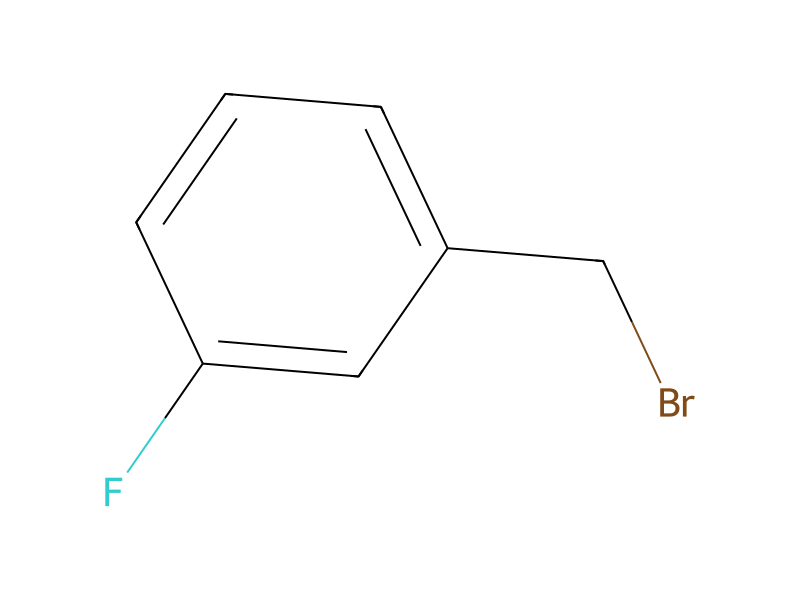
[OH:1][C:2]1[CH:13]=[CH:12][C:5]([O:6][CH2:7][C:8]([NH:10][CH3:11])=[O:9])=[CH:4][CH:3]=1.Br[CH2:15][C:16]1[CH:21]=[CH:20][CH:19]=[C:18]([F:22])[CH:17]=1.C(=O)([O-])[O-].[K+].[K+]>CC(=O)CC>[F:22][C:18]1[CH:17]=[C:16]([CH:21]=[CH:20][CH:19]=1)[CH2:15][O:1][C:2]1[CH:3]=[CH:4][C:5]([O:6][CH2:7][C:8]([NH:10][CH3:11])=[O:9])=[CH:12][CH:13]=1Participants
5



Procedure
In analogy to the procedure described in Example 3b), the alkylation of 2-(4-hydroxy-phenoxy)-N-methyl-acetamide [Example 3a)] with 1-bromomethyl-3-fluoro-benzene in 2-butanone using potassium carbonate as the base yielded the 2-[4-(3-fluoro-benzyloxy)-phenoxy]-N-methyl-acetamide as white crystals; MS: m/e=290 (M+H)+.
Sources & evidence
- ORD record
- ord-656c9ed81cd04eacb669f984c8775aaa
- Source dataset
- uspto-grants-2007_08
- Patent number
- US07253318B2
Reaction notes
Loading…