Imidazole → 4-(1H-imidazol-1-yl)benzaldehyde
Reaction equation

F[C:2]1[CH:9]=[CH:8][C:5]([CH:6]=[O:7])=[CH:4][CH:3]=1.[NH:10]1[CH:14]=[CH:13][N:12]=[CH:11]1.C(=O)([O-])[O-].[K+].[K+].C(OCC)(=O)C>CS(C)=O>[N:10]1([C:2]2[CH:9]=[CH:8][C:5]([CH:6]=[O:7])=[CH:4][CH:3]=2)[CH:14]=[CH:13][N:12]=[CH:11]1Participants
6
Reactant 4



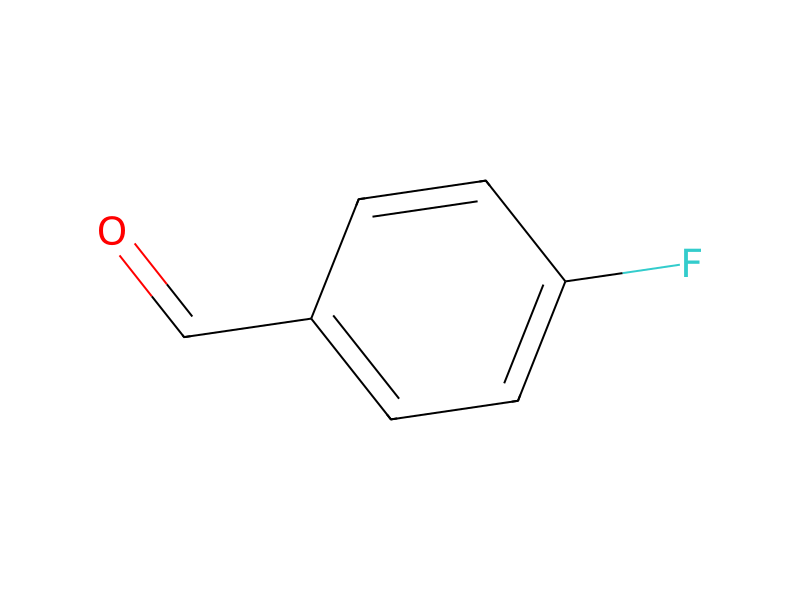
Product 1

Reagents, catalysts & solvents 1

Conditions
- Temperature
- 110 °C
Procedure
A mixture of 4-fluorobenzaldehyde (4.96 g, 40 mmol), imidazole (2.86 g, 42 mmol), and potassium carbonate (6.08 g, 44 mmol) in DMSO (40 ml) was stirred at 110° C. overnight. The reaction mixture was allowed to return to room temperature, and poured into ice water (100 ml). The resulting precipitates were collected by filtration and washed with water and then with ethyl acetate to afford 4-(imidazol-1-yl)benzaldehyde (2.33 g, yield 34%) as a pale yellow crystalline powder.
Workup
- customto return to room temperature
- customThe resulting precipitates
- filtrationwere collected by filtration
- washwashed with water
Sources & evidence
- ORD record
- ord-08182df049dc477da6d6feee0f8d93f1
- Source dataset
- uspto-grants-2007_08
- Patent number
- US07262212B2
Reaction notes
Loading…