2-ethylhexanoic acid tin(II) salt → HCID 131720449, compound
Reaction equation

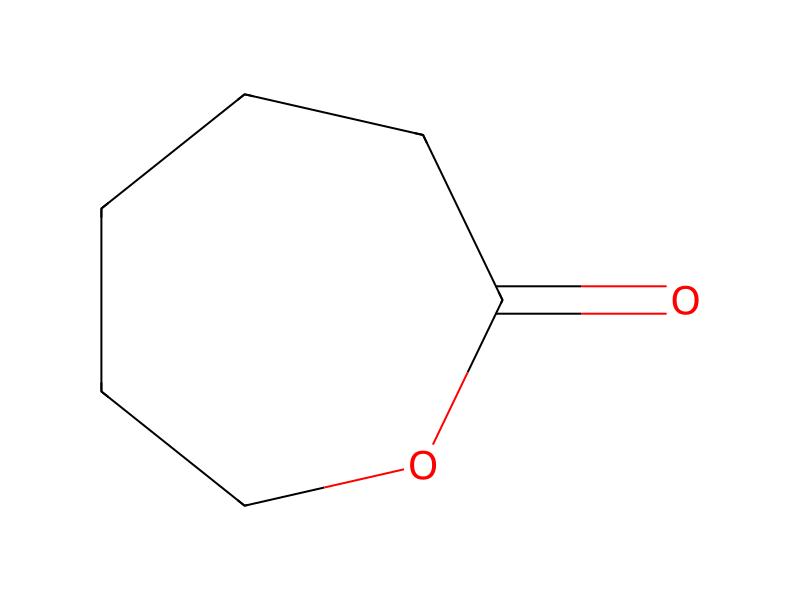
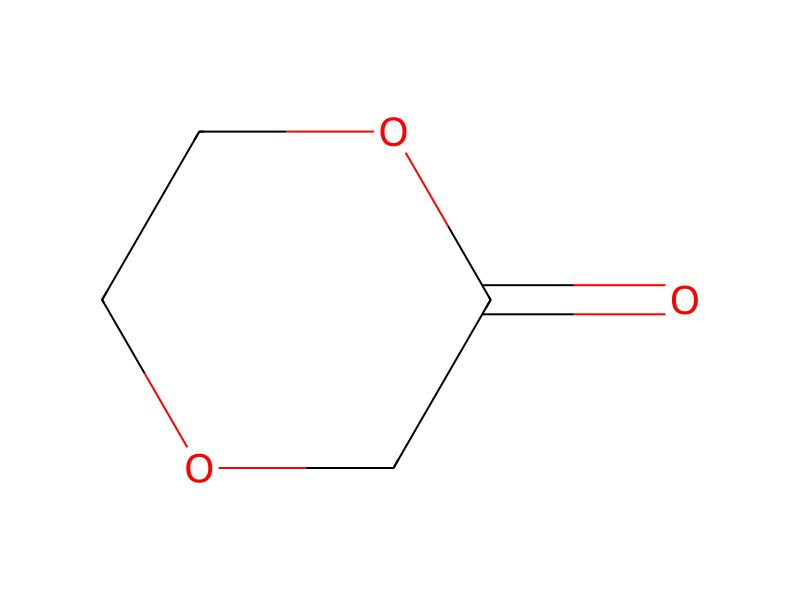
[C:1]1(=[O:8])[O:7][CH2:6][CH2:5][CH2:4][CH2:3][CH2:2]1.[CH2:9]1[O:16][C:14](=[O:15])[CH2:13][O:12][C:10]1=[O:11].[O:17]1[CH2:22][CH2:21][O:20][CH2:19][C:18]1=[O:23].CCCCC(C([O-])=O)CC.CCCCC(C([O-])=O)CC.[Sn+2]>C(O)(C(F)(F)F)C(F)(F)F.C(O)COCCO>[C:1]1(=[O:8])[O:7][CH2:6][CH2:5][CH2:4][CH2:3][CH2:2]1.[CH2:9]1[O:16][C:14](=[O:15])[CH2:13][O:12][C:10]1=[O:11].[O:17]1[CH2:22][CH2:21][O:20][CH2:19][C:18]1=[O:23]Participants
7



Procedure
The procedure described in Example 2 is substantially reproduced with 45.66 gm (0.40 mole) of ε-caprolactone, 63.84 gm (0.55 mole) of glycolide, 5.10 gm (0.05 mole) of p-dioxanone, 0.114 ml (1.20 mmole/mole of total monomer) of distilled diethylene glycol and 0.0673 ml stannous octoate (0.33 molar solution is toluene). A weight loss of 1.6% is observed when the polymer is devolatilized at 110° C. under high vacuum. The I.V. of the copolymer is 1.51 dl/g in HFIP and the mole ratio of PCL/PGA/PDS is found to be 38.5/56.2/5.4 by NMR. The glass transition temperature (Tg) and the melting point (Tm) of this copolymer are found to be -6° C. and 54° C., respectively, by DSC.
Workup
- customis devolatilized at 110° C. under high vacuum
- customto be -6° C. and 54° C.
Sources & evidence
- ORD record
- ord-8f1d92909dec437aa1de88769f191703
- Source dataset
- uspto-grants-1998_02
- Patent number
- US05713920
Reaction notes
Loading…