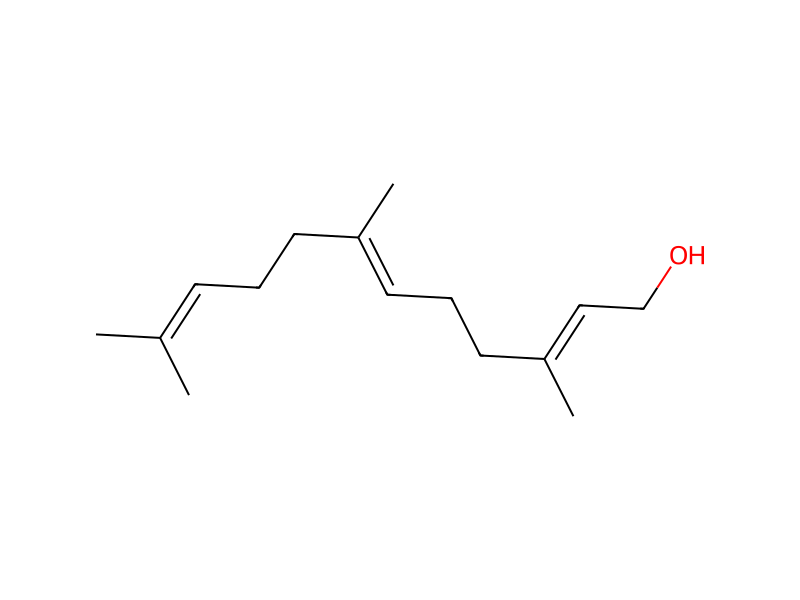
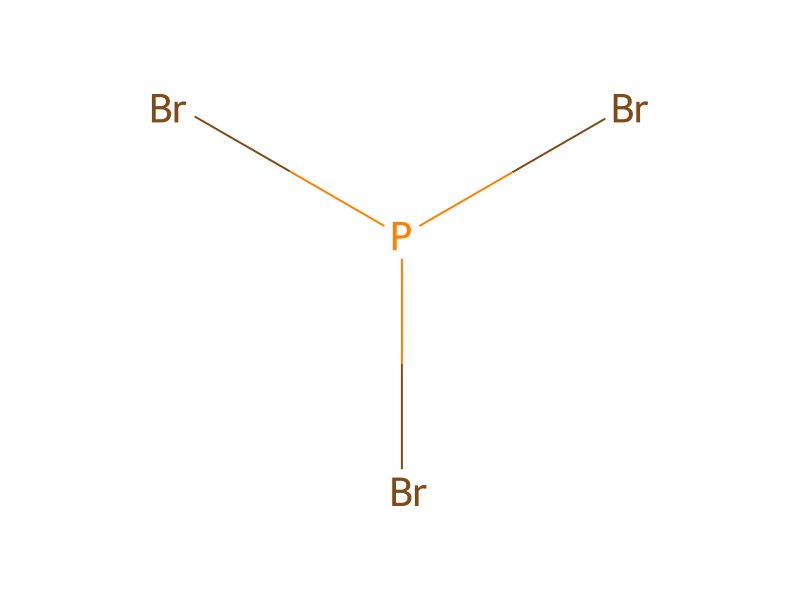
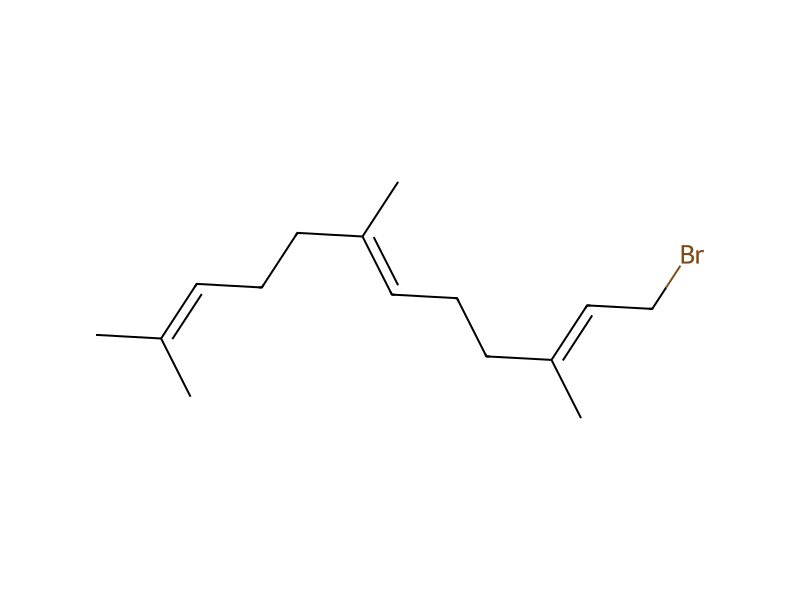
a Farnesol → Farnesyl bromide
Reaction equation

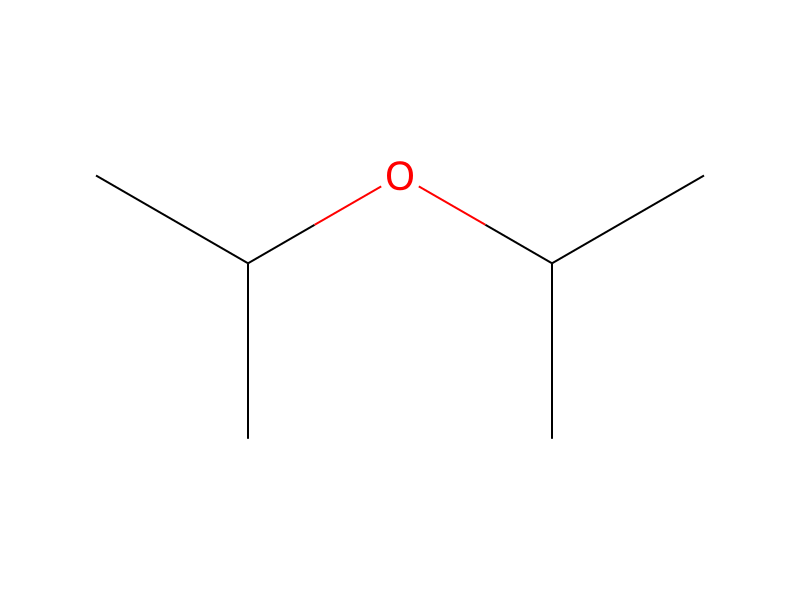
O[CH2:2][CH:3]=[C:4]([CH2:6][CH2:7][CH:8]=[C:9]([CH2:11][CH2:12][CH:13]=[C:14]([CH3:16])[CH3:15])[CH3:10])[CH3:5].P(Br)(Br)[Br:18].C(=O)([O-])[O-].[Na+].[Na+]>C(OC(C)C)(C)C>[CH2:2]([Br:18])[CH:3]=[C:4]([CH2:6][CH2:7][CH:8]=[C:9]([CH2:11][CH2:12][CH:13]=[C:14]([CH3:16])[CH3:15])[CH3:10])[CH3:5]Participants
5
Reactant 3

Product 1
Reagents, catalysts & solvents 1
Conditions
- Temperature
- -20 °C
Procedure
Into an argon-replaced 1 liter reaction vessel, 66.6 g (0.3 mol) of farnesol (all trans-form) was charged, and 300 ml of isopropyl ether was further added to dissolve farnesol. The resulting solution was cooled to -20° C., and thereafter 32.5 g (0.12 mol) of phosphorus tribromide was added to carry out reaction at -20° C. to -10° C. for 2 hours. The reaction mixture thus obtained was poured into 400 ml of an aqueous 5% sodium carbonate solution, and the liquid was separated. The organic layer was washed with saturated brine, followed by distillation of the solvent to obtain 77.0 g of farnesyl bromide (yield: 90%). Data of physical properties of this compound are shown below.
Workup
- additionwas charged
- customreaction at -20° C. to -10° C. for 2 hours
- customThe reaction mixture thus obtained
- customthe liquid was separated
- washThe organic layer was washed with saturated brine
- distillationfollowed by distillation of the solvent
Sources & evidence
- ORD record
- ord-3be3b48818744e09932ef8afd4922f7c
- Source dataset
- uspto-grants-1998_02
- Patent number
- US05714645
Reaction notes
Loading…