Triphenylphosphine → 2(Thiazol-2-yl)phenylglyoxylic Acid Methyl Ester-O-methyloxime
Reaction equation

C([Sn](CC)(CC)[C:4]1[S:5][CH:6]=[CH:7][N:8]=1)C.[CH3:13][O:14][N:15]=[C:16]([C:21]1[CH:26]=[CH:25][CH:24]=[CH:23][C:22]=1Br)[C:17]([O:19][CH3:20])=[O:18].C1(P(C2C=CC=CC=2)C2C=CC=CC=2)C=CC=CC=1>O1CCCC1.[Pd](Cl)Cl>[CH3:13][O:14][N:15]=[C:16]([C:21]1[CH:26]=[CH:25][CH:24]=[CH:23][C:22]=1[C:4]1[S:5][CH:6]=[CH:7][N:8]=1)[C:17]([O:19][CH3:20])=[O:18]Participants
6
Reactant 3



Product 1

Reagents, catalysts & solvents 2

Procedure
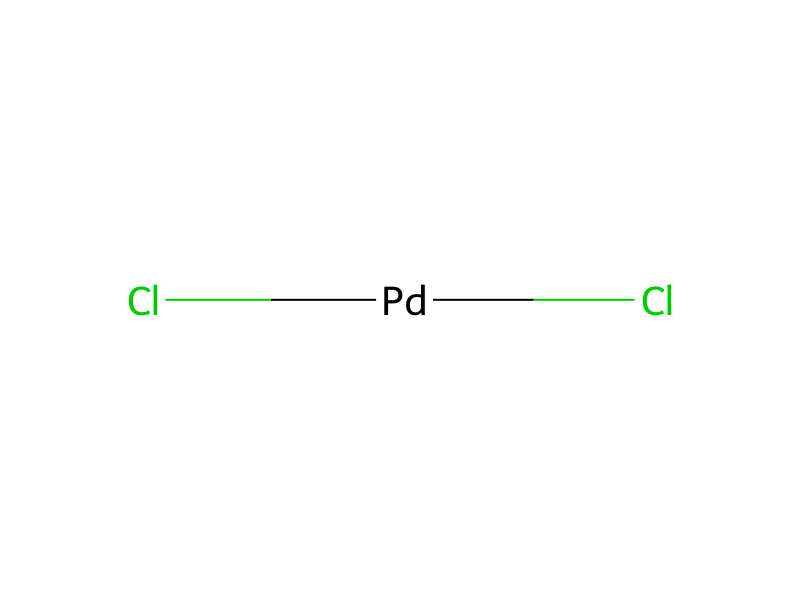
Under a nitrogen blanket, 1.7 g of 2-triethylstannylthiazole is added to a mixture of 1.4 g (5.19 mmol) of the bromo compound (Compound E), 100 mg of palladium(II) chloride and 310 mg of triphenylphosphine in 30 ml of tetrahydrofuran, and the whole is refluxed for 2 hours. The mixture is then filtered and evaporated down. After chromatography on silica gel using cyclohexane/ethyl acetate there remains 700 mg (49%) of compound 1, Tab. I, as an oil.
Workup
- temperaturethe whole is refluxed for 2 hours
- filtrationThe mixture is then filtered
- customevaporated down
Sources & evidence
- ORD record
- ord-162c1c96acbd4927aede41695a704b58
- Source dataset
- uspto-grants-1998_02
- Patent number
- US05719171
Reaction notes
Loading…