Mandelic Acid → HCID 20319578, compound
Reaction equation

[NH2:1][C:2]1[CH:3]=[C:4]([CH:9]([CH3:15])[C:10]([O:12][CH2:13][CH3:14])=[O:11])[CH:5]=[CH:6][C:7]=1[OH:8].[C:16](O)(=O)[CH:17]([C:19]1[CH:24]=[CH:23][CH:22]=[CH:21][CH:20]=1)[OH:18]>C1(C)C(C)=CC=CC=1>[OH:18][CH:17]([C:16]1[O:8][C:7]2[CH:6]=[CH:5][C:4]([CH:9]([CH3:15])[C:10]([O:12][CH2:13][CH3:14])=[O:11])=[CH:3][C:2]=2[N:1]=1)[C:19]1[CH:24]=[CH:23][CH:22]=[CH:21][CH:20]=1Participants
4
Reactant 2
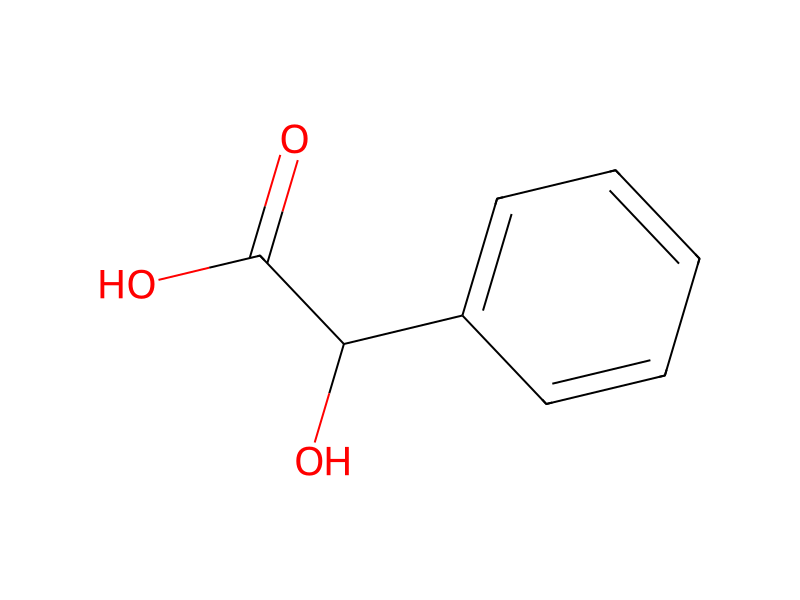

Product 1

Reagents, catalysts & solvents 1

Procedure
A mixture of ethyl 2-(3-amino-4-hydroxyphenyl)propionate (1.2 g.), mandelic acid (1 g.) and xylene (50 ml.) was heated using a Dean and Stark apparatus. After 24 hours, the solution was evaporated to dryness and the residue was taken up in chloroform. This solution was washed first with sodium hydroxide solution, then with hydrochloric acid and finally dried over sodium carbonate. The solution was evaporated to dryness to give ethyl 2-[2-(α-hydroxybenzyl)-5-benzoxazolyl]propionate, the structure of which was confirmed by n.m.r. spectroscopy.
Workup
- temperaturewas heated
- customthe solution was evaporated to dryness
- washThis solution was washed first with sodium hydroxide solution
- dry with materialwith hydrochloric acid and finally dried over sodium carbonate
- customThe solution was evaporated to dryness
Sources & evidence
- ORD record
- ord-18e4911cdbba466183bdb3bedc628095
- Source dataset
- uspto-grants-1978_07
- Patent number
- US04100168
Reaction notes
Loading…