Tetrahydrofuran → Dimethyl(2-oxo-4-phenylbutyl)phosphonate
Reaction equation

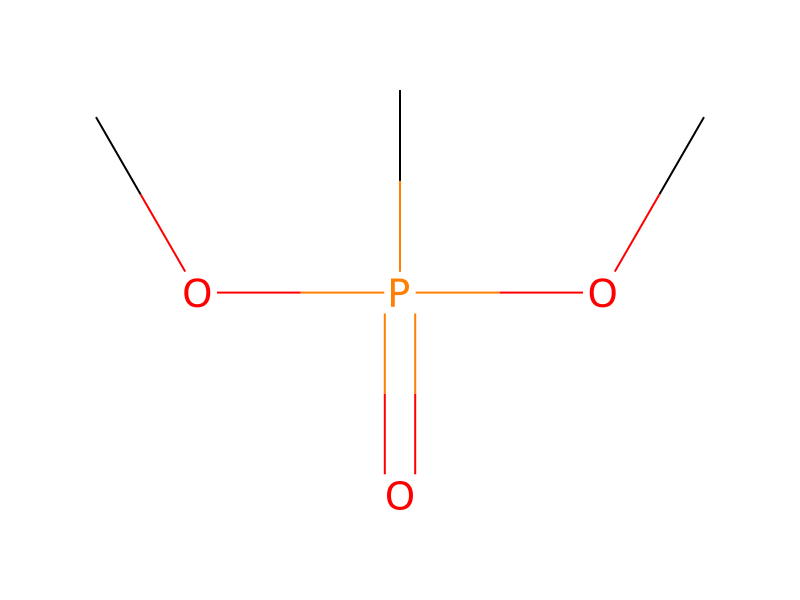
[CH3:1][P:2](=[O:7])([O:5][CH3:6])[O:3][CH3:4].O1CCCC1.C([Li])CCC.[C:18](OCC)(=[O:27])[CH2:19][CH2:20][C:21]1[CH:26]=[CH:25][CH:24]=[CH:23][CH:22]=1>C(O)(=O)C>[O:27]=[C:18]([CH2:19][CH2:20][C:21]1[CH:26]=[CH:25][CH:24]=[CH:23][CH:22]=1)[CH2:1][P:2](=[O:7])([O:5][CH3:6])[O:3][CH3:4]Participants
6
Reactant 4



Product 1

Reagents, catalysts & solvents 1

Procedure
A solution of dimethyl methylphosphonate (115.5 g.) in 2.1 l. of tetrahydrofuran is treated, while stirring at -65° C., with a solution of butyl lithium (660 ml. 1.6 M. in hexane). A solution of ethyl hydrocinnamate (93.5 g.) in 225 ml. of tetrahydrofuran is added at -65° C. Stirring is continued at -65° C. for 2 hrs. and then at about 25° C. for 16 hrs. Acetic acid (70 ml.) is added and the mixture concentrated under reduced pressure. The residue is partitioned between dichloromethane and water. The organic phase is dried and concentrated. Distillation yields the title compound, b. 188°-191° C./2 mm., having a mass spectral peak at 256.
Workup
- waitand then at about 25° C. for 16 hrs
- concentrationthe mixture concentrated under reduced pressure
- customThe residue is partitioned between dichloromethane and water
- customThe organic phase is dried
- concentrationconcentrated
- distillationDistillation
Sources & evidence
- ORD record
- ord-20629563b1164fa1b11cb9d8ec7779cb
- Source dataset
- uspto-grants-1978_07
- Patent number
- US04100355
Reaction notes
Loading…