Potassium Carbonate → 2-(3-Hexanoylphenoxy)methyl naphthalene
Reaction equation

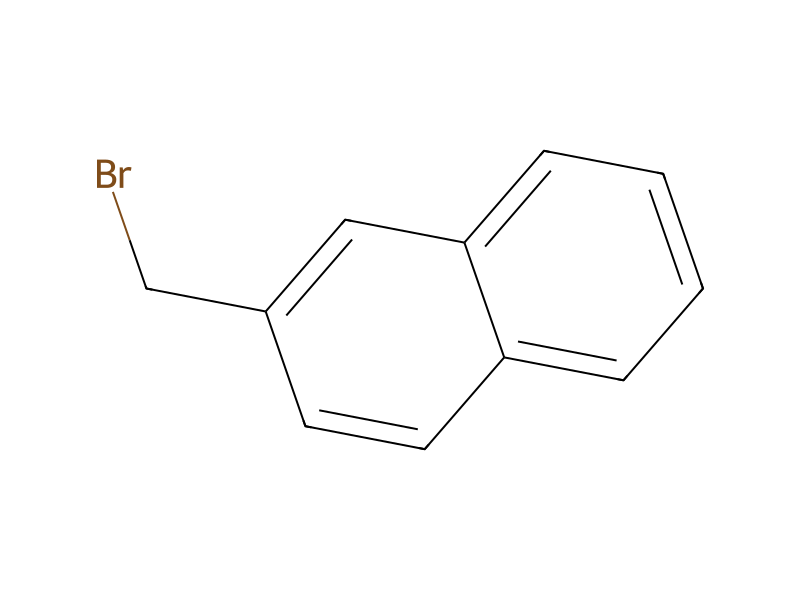
Br[CH2:2][C:3]1[CH:12]=[CH:11][C:10]2[C:5](=[CH:6][CH:7]=[CH:8][CH:9]=2)[CH:4]=1.[C:13]([C:20]1[CH:21]=[C:22]([OH:26])[CH:23]=[CH:24][CH:25]=1)(=[O:19])[CH2:14][CH2:15][CH2:16][CH2:17][CH3:18].C(=O)([O-])[O-].[K+].[K+]>CC(C)=O.[I-].[K+]>[C:13]([C:20]1[CH:21]=[C:22]([CH:23]=[CH:24][CH:25]=1)[O:26][CH2:2][C:3]1[CH:12]=[CH:11][C:10]2[C:5](=[CH:6][CH:7]=[CH:8][CH:9]=2)[CH:4]=1)(=[O:19])[CH2:14][CH2:15][CH2:16][CH2:17][CH3:18]Participants
6





Procedure
A mixture containing 2-bromomethyl naphthalene (3.0 g, 13.5 mmol), 3-hexanoylphenol (2.6 g, 13.5 mmol), powdered potassium carbonate (19.0 g, 135 mmol) and potassium iodide (0.1 g) in dry acetone (100 ml) was refluxed for two days. Most of the solvent was removed after filtering off the solid residue. The oil was purified by chromatography on silica gel using a 5% ethylacetate in hexane solution as eluent to leave the desined product as a clear, colorless liquid (2.6 g).
Workup
- temperaturewas refluxed for two days
- customMost of the solvent was removed
- filtrationafter filtering off the solid residue
- customThe oil was purified by chromatography on silica gel using a 5% ethylacetate in hexane solution as eluent
Sources & evidence
- ORD record
- ord-a691940918ea45fdb65c64c00b5114fd
- Source dataset
- uspto-grants-1988_10
- Patent number
- US04778931
Reaction notes
Loading…