Piperazine → 1,4-Piperazinediacetonitrile
Reaction equation

[NH:1]1[CH2:6][CH2:5][NH:4][CH2:3][CH2:2]1.C(=O)([O-])[O-].[K+].[K+].Br[CH2:14][C:15]#[N:16].[C:17](#[N:19])[CH3:18]>>[N:1]1([CH2:18][C:17]#[N:19])[CH2:6][CH2:5][N:4]([CH2:14][C:15]#[N:16])[CH2:3][CH2:2]1Participants
5




Procedure
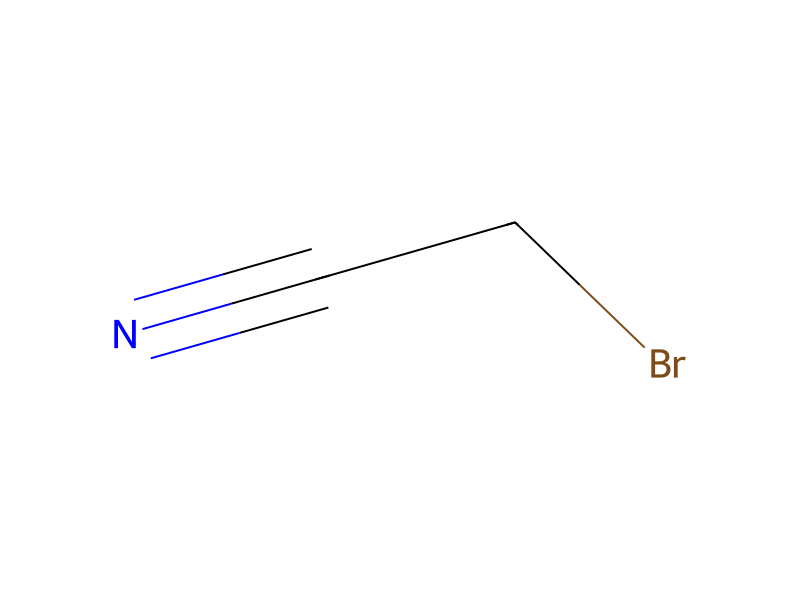
To a solution of piperazine (6 g, 69.77 mmol, 1.00 equiv) in acetonitrile (150 mL) was added potassium carbonate (19.2 g, 139.13 mmol, 2.00 equiv) and the mixture was stirred. To this was added dropwise a solution of 2-bromoacetonitrile (16.7 g, 140.34 mmol, 2.00 equiv) in acetonitrile (100 mL) and the suspension was stirred for 4 h at room temperature. The solids were filtered out and the resulting solution was concentrated under vacuum. The crude product was purified by re-crystallization from methanol resulting in 7.75 g (68%) of Intermediate 50.1 as a white solid.
Workup
- stirringthe suspension was stirred for 4 h at room temperature
- filtrationThe solids were filtered out
- concentrationthe resulting solution was concentrated under vacuum
- customThe crude product was purified by re-crystallization from methanol resulting in 7.75 g (68%) of Intermediate 50.1 as a white solid
Sources & evidence
- ORD record
- ord-31b748765a7b46be858b876b33b62a78
- Source dataset
- uspto-grants-2015_03
- Patent number
- US08969377B2
Reaction notes
Loading…