Pyridine → 4-(4,4,5,5-Tetramethyl-1,3,2-dioxaborolan-2-yl)benzyl isopropylcarbamate
Reaction equation

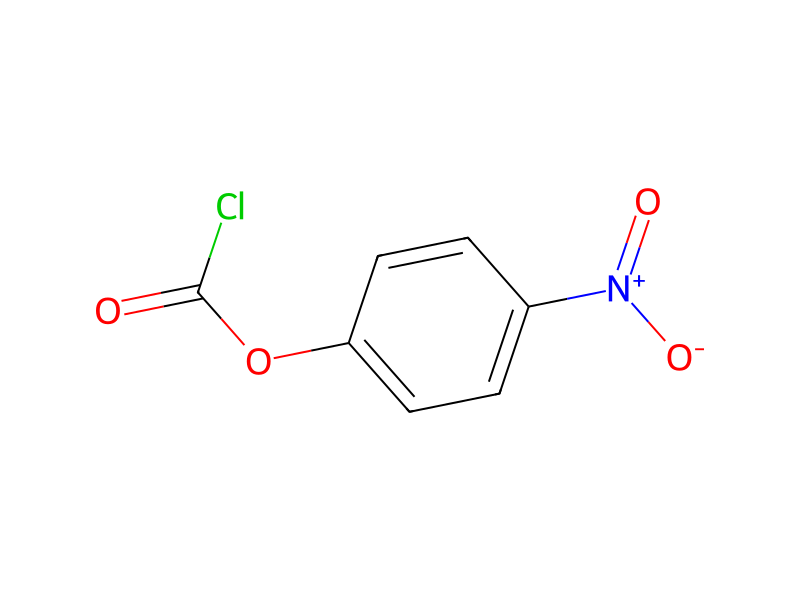
[CH3:1][C:2]1([CH3:17])[C:6]([CH3:8])([CH3:7])[O:5][B:4]([C:9]2[CH:14]=[CH:13][C:12]([CH2:15][OH:16])=[CH:11][CH:10]=2)[O:3]1.N1C=CC=CC=1.ClC(OC1C=[CH:32][C:31]([N+:34]([O-])=O)=[CH:30]C=1)=O.C1C[O:40][CH2:39]C1>>[CH3:8][C:6]1([CH3:7])[C:2]([CH3:17])([CH3:1])[O:3][B:4]([C:9]2[CH:10]=[CH:11][C:12]([CH2:15][O:16][C:39](=[O:40])[NH:34][CH:31]([CH3:30])[CH3:32])=[CH:13][CH:14]=2)[O:5]1Participants
5




Procedure
To a solution of [4-(4,4,5,5-tetramethyl-[1,3,2]dioxaborolan-2-yl)-phenyl]-methanol (2.34 g, 10 mmol) and pyridine (890 ul, 11 mmol) in THF (50 ml) at rt was added dropwise a solution of 4-nitrophenyl chloroformate (2.22 g, 11 mmol) in THF (10 ml). The reaction mixture was stirred at rt for overnight. The precipitate was removed by filtration. The filtrate was concentrated to give the desired compound (4.2 g, may contain some pyridine HCl salt).
Workup
- customThe precipitate was removed by filtration
- concentrationThe filtrate was concentrated
Sources & evidence
- ORD record
- ord-6023c19c56124c9f82c072db10e2be56
- Source dataset
- uspto-grants-2015_03
- Patent number
- US08969565B2
Reaction notes
Loading…