Potassium Carbonate → Phenyl 4-(trifluoromethyl)pyrimidin-2-ylcarbamate
Reaction equation

[F:1][C:2]([F:11])([F:10])[C:3]1[CH:8]=[CH:7][N:6]=[C:5]([NH2:9])[N:4]=1.C(=O)([O-])[O-].[K+].[K+].Cl[C:19]([O:21][C:22]1[CH:27]=[CH:26][CH:25]=[CH:24][CH:23]=1)=[O:20]>O1CCCC1>[F:11][C:2]([F:1])([F:10])[C:3]1[CH:8]=[CH:7][N:6]=[C:5]([NH:9][C:19](=[O:20])[O:21][C:22]2[CH:27]=[CH:26][CH:25]=[CH:24][CH:23]=2)[N:4]=1Participants
5
Reactant 3

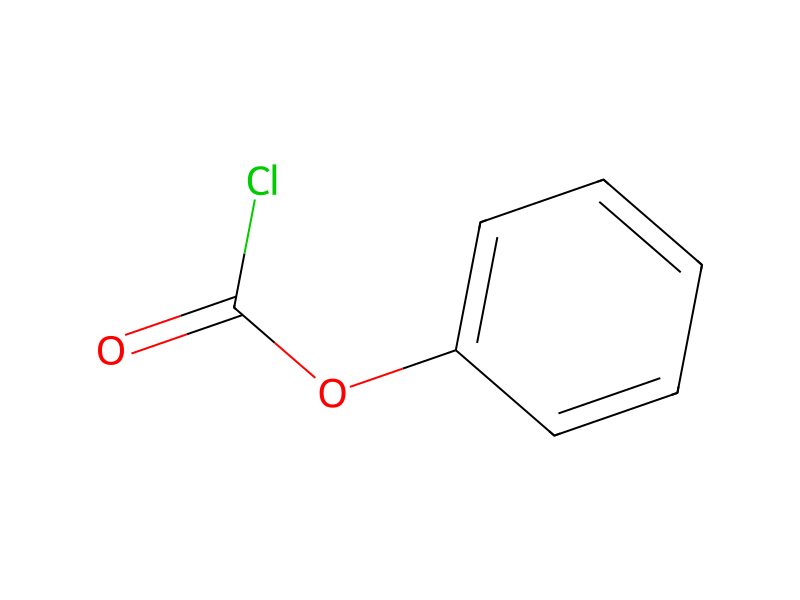

Product 1

Reagents, catalysts & solvents 1

Procedure
According to the procedure described in Example 113B, to a solution of 4-(trifluoromethyl)pyrimidin-2-amine (500 mg, 3.1 mmoles) in 20 mL of tetrahydrofuran was added potassium carbonate (533 mg, 4 mmoles) followed by phenyl chloroformate (626 mg, 4 mmoles). The mixture was stirred at room temperature overnight. After 24 hours, and additional portion of phenyl chloroformate was added and the reaction heated to 60° C. for 3 days. This solution was concentrated to dryness and purified by silica chromatography (eluted with a gradient of 0-5% ethyl acetate/dichloromethane) to afford phenyl 4-(trifluoromethyl)pyrimidin-2-ylcarbamate. 1H NMR (300 MHz, DMSO-d6) δ 11.50 (s, 1H), 9.05 (s, 1H), 7.69 (m, 1H), 7.46 (m, 2H), 7.25 (m, 3H).
Workup
- waitAfter 24 hours
- temperaturethe reaction heated to 60° C. for 3 days
- concentrationThis solution was concentrated to dryness
- custompurified by silica chromatography (
- washeluted with a gradient of 0-5% ethyl acetate/dichloromethane)
Sources & evidence
- ORD record
- ord-d28ebb43954b42bdb362c8e5692e0214
- Source dataset
- uspto-grants-2015_03
- Patent number
- US08969587B2
Reaction notes
Loading…