Triethylamine → N-(4-bromopyrazolo[1,5-a]pyridin-2-yl)cyclopropanecarboxamide
Reaction equation

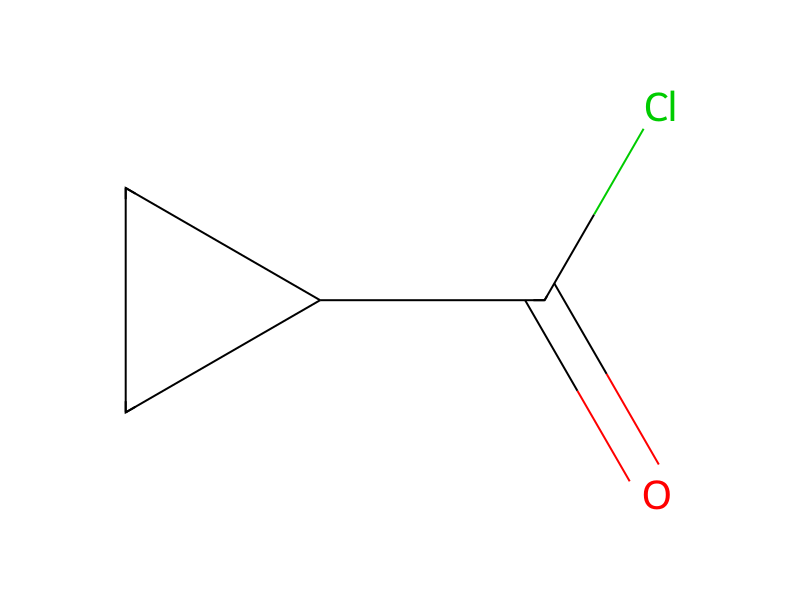
[Br:1][C:2]1[C:3]2[N:4]([N:8]=[C:9]([NH2:11])[CH:10]=2)[CH:5]=[CH:6][CH:7]=1.CCN(CC)CC.[CH:19]1([C:22](Cl)=[O:23])[CH2:21][CH2:20]1>CC#N>[Br:1][C:2]1[C:3]2[N:4]([N:8]=[C:9]([NH:11][C:22]([CH:19]3[CH2:21][CH2:20]3)=[O:23])[CH:10]=2)[CH:5]=[CH:6][CH:7]=1Participants




Procedure
4-bromo-pyrazolo[1,5-a]pyridin-2-ylamine (Intermediate 3) (259 mg, 1.22 mmol) was dissolved in dry CH3CN (10 mL) at 5° C. and Et3N (425 μL, 3.05 mmol) was added followed by the cyclopropane carbonyl chloride (278 μL, 3.05 mmol). The reaction mixture was then allowed to warm to room temperature. The solvent was removed in vacuo the residue was treated with 7 M methanolic ammonia solution (5 mL) and stirred at room temp for 1 h to hydrolyse any bis-acylated product. The solvent was removed in vacuo and the residue was re-dissolved in DCM and washed with water and brine. The organics were passed through a hydrophobic frit and concentrated in vacuo. Purification by flash column chromatography (2:1 petroleum ether 40-60:EtOAc) yielded cyclopropanecarboxylic acid (4-bromo-pyrazolo[1,5-a]pyridin-2-yl)-amide (Intermediate 4).
Workup
- customThe solvent was removed in vacuo the residue
- additionwas treated with 7 M methanolic ammonia solution (5 mL)
- customThe solvent was removed in vacuo
- dissolutionthe residue was re-dissolved in DCM
- washwashed with water and brine
- concentrationconcentrated in vacuo
- customPurification by flash column chromatography (2:1 petroleum ether 40-60:EtOAc)
Sources & evidence
- ORD record
- ord-0b195e11214d4f059bbadf98ff9f1dec
- Source dataset
- uspto-grants-2015_03
- Patent number
- US08975406B2
Reaction notes
Loading…