Triethylamine → HCID 86720633, compound
Reaction equation

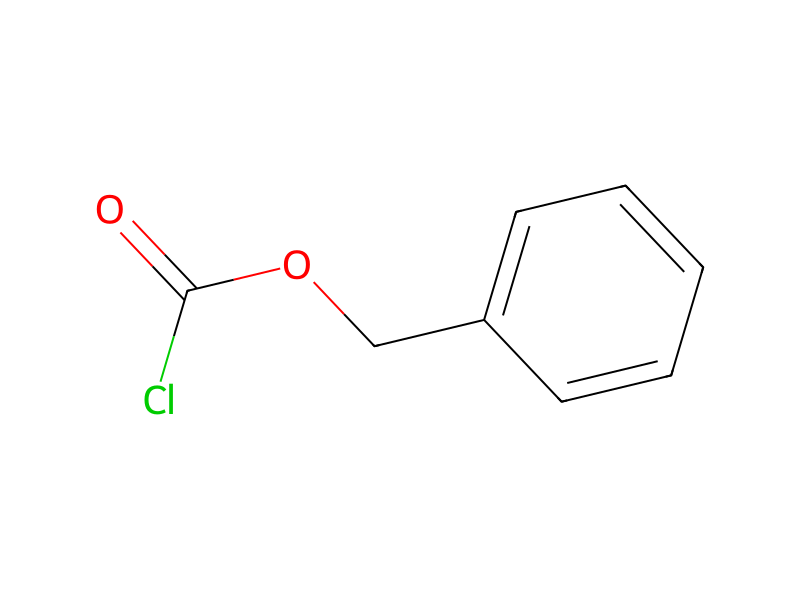
[Cl:1][C:2]1[C:6]2[CH:7]=[N:8][CH:9]=[CH:10][C:5]=2[NH:4][CH:3]=1.C(N(CC)CC)C.Cl[C:19]([O:21][CH2:22][C:23]1[CH:28]=[CH:27][CH:26]=[CH:25][CH:24]=1)=[O:20]>ClCCl>[Cl:1][C:2]1[C:6]2[CH:7]=[N:8][CH:9]=[CH:10][C:5]=2[N:4]([C:19]([O:21][CH2:22][C:23]2[CH:28]=[CH:27][CH:26]=[CH:25][CH:24]=2)=[O:20])[CH:3]=1Participants
5
Reactant 3


Product 1

Reagents, catalysts & solvents 1

Conditions
- Temperature
- 0 °C
Procedure
To a stirred solution of 3-chloro-1H-pyrrolo[3,2-c]pyridine (1 g, 6.55 mmol) in dichloromethane (10 mL), triethylamine (2.3 ml, 16.38 mmol) was added. The mixture was cooled to 0° C. and benzyl chloroformate (2.3 mL, 50% solution in dichloromethane, 9.83 mmol) was added drop wise. After complete addition, the reaction mixture was stirred at room temperature for about 1 hour. On completion, the reaction was quenched by addition of saturated aq. sodium bicarbonate solution and the organic layer was separated, washed with brine, dried over anhydrous sodium sulfate and concentrated under vacuum to afford benzyl 3-chloro-1H-pyrrolo[3,2-c]pyridine-1-carboxylate (2.42 g, 100%) as viscous liquid.
Workup
- additionAfter complete addition
- customOn completion, the reaction was quenched by addition of saturated aq. sodium bicarbonate solution
- customthe organic layer was separated
- washwashed with brine
- dry with materialdried over anhydrous sodium sulfate
- concentrationconcentrated under vacuum
Sources & evidence
- ORD record
- ord-2ea9dd2bfd6e468f92a9635b03d4d273
- Source dataset
- uspto-grants-2015_03
- Patent number
- US08980911B2
Reaction notes
Loading…