Potassium Acetate → (6-((1,3-Dioxoisoindolin-2-yl)methyl)pyridin-3-yl)boronic acid
Reaction equation

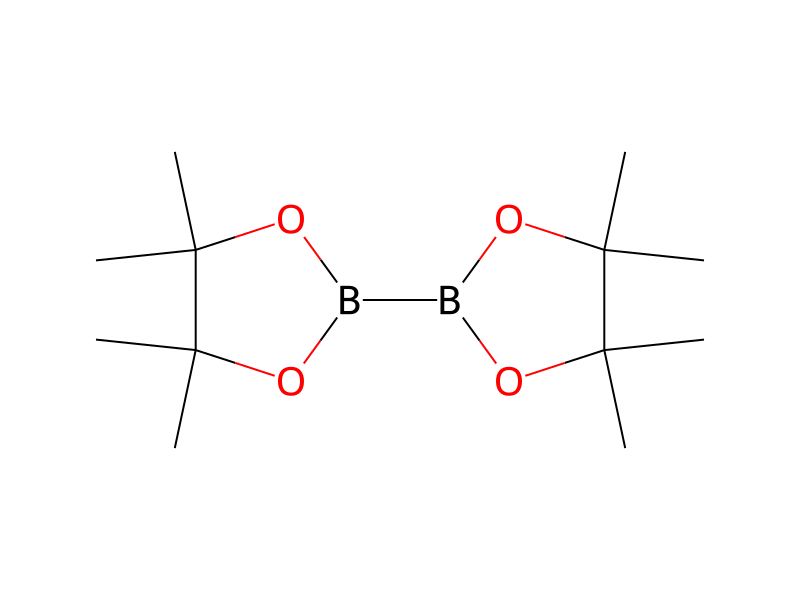
Br[C:2]1[CH:3]=[CH:4][C:5]([CH2:8][N:9]2[C:17](=[O:18])[C:16]3[C:11](=[CH:12][CH:13]=[CH:14][CH:15]=3)[C:10]2=[O:19])=[N:6][CH:7]=1.CC1(C)C(C)(C)[O:24][B:23](B2OC(C)(C)C(C)(C)O2)[O:22]1.C([O-])(=O)C.[K+]>O1CCOCC1>[O:19]=[C:10]1[C:11]2[C:16](=[CH:15][CH:14]=[CH:13][CH:12]=2)[C:17](=[O:18])[N:9]1[CH2:8][C:5]1[N:6]=[CH:7][C:2]([B:23]([OH:24])[OH:22])=[CH:3][CH:4]=1Participants




Conditions
- Temperature
- 70 °C
Procedure
To a mixture of 2-((5-bromopyridin-2-yl)methyl)isoindoline-1,3-dione (317 mg, 1.000 mmol) and 4,4,4′,4′,5,5,5′,5′-octamethyl-2,2′-bi(1,3,2-dioxaborolane) (381 mg, 1.499 mmol) in dioxane (10 mL) at rt under nitrogen was added potassium acetate (294 mg, 3.00 mmol), followed by PdCl2(dppf)-CH2Cl2Adduct (82 mg, 0.100 mmol). At this time, the reaction mixture was heated to 70° C. under nitrogen for 5 hr. After cooling to rt, the solvent was removed on the rotovap and the residue was taken up in EtOAc (30 ml). The mixture was filtered through celite and the filter cake was thoroughly washed with EtOAc. The EtOAc filtrate was concentrated to afford (6-((1,3-dioxoisoindolin-2-yl)methyl)pyridin-3-yl)boronic acid (280 mg, 0.993 mmol, 99% yield) as a brown oil. This material was used as is in the next step. MS (ES+) m/z: 283.1 (M+H); LC retention time: 0.54 min (analytical LCMS Method B).
Workup
- temperatureAfter cooling to rt
- customthe solvent was removed on the rotovap
- filtrationThe mixture was filtered through celite
- washthe filter cake was thoroughly washed with EtOAc
- concentrationThe EtOAc filtrate was concentrated
Sources & evidence
- ORD record
- ord-9edec2512804429588148e30d01b3d92
- Source dataset
- uspto-grants-2015_03
- Patent number
- US08987268B2
Reaction notes
Loading…