Boronic Acid → (6-(Isobutyramidomethyl)pyridin-3-yl)boronic acid
Reaction equation

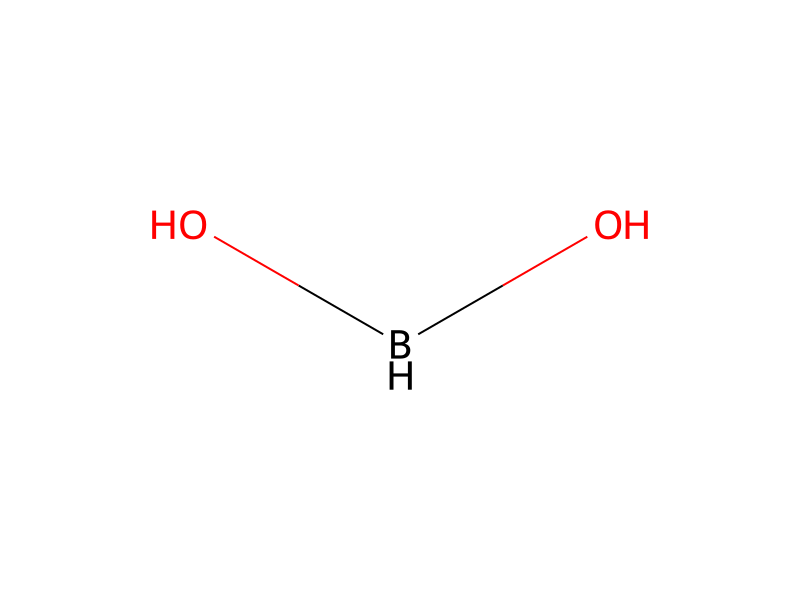
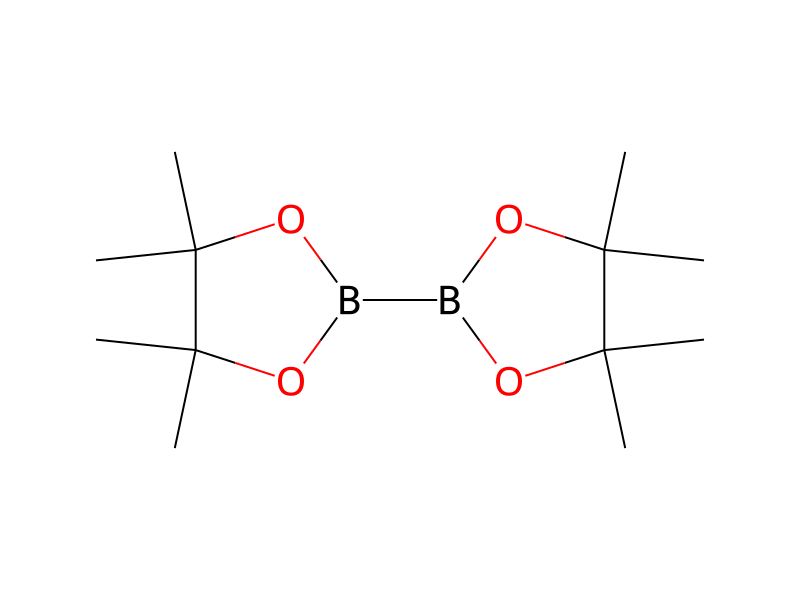
Br[C:2]1[CH:3]=[CH:4][C:5]([CH2:8][NH:9][C:10](=[O:14])[CH:11]([CH3:13])[CH3:12])=[N:6][CH:7]=1.CC1(C)C(C)(C)[O:19][B:18](B2OC(C)(C)C(C)(C)O2)[O:17]1.C([O-])(=O)C.[K+].B(O)O>O1CCOCC1>[C:10]([NH:9][CH2:8][C:5]1[N:6]=[CH:7][C:2]([B:18]([OH:19])[OH:17])=[CH:3][CH:4]=1)(=[O:14])[CH:11]([CH3:13])[CH3:12]Participants
6




Procedure
A mixture N-((5-bromopyridin-2-yl)methyl)isobutyramide (228 mg, 0.887 mmol), 4,4,4′,4′,5,5,5′,5′-octamethyl-2,2′-bi(1,3,2-dioxaborolane) (293 mg, 1.153 mmol), PdCl2(dppf)-CH2Cl2Adduct (72.4 mg, 0.089 mmol) and potassium acetate (218 mg, 2.217 mmol) in Dioxane (6 mL) was heated to 70° C. for 3 hr. LCMS indicated that the major product was boronic acid. After cooling to rt, the reaction mixture was filtered through celite and the filtrate was concentrated to afford (6-(isobutyramidomethyl)pyridin-3-yl)boronic acid (195 mg, 0.878 mmol, 99% yield) as a brown oil. The material was used as is in the next step. The yield is assumed to be quantitative. MS (ES+) m/z: 223.1 (M+H); LC retention time: 0.43 min (analytical LCMS Method B).
Workup
- filtrationthe reaction mixture was filtered through celite
- concentrationthe filtrate was concentrated
Sources & evidence
- ORD record
- ord-87bd2fffe5c6491ab4ac512220bc7124
- Source dataset
- uspto-grants-2015_03
- Patent number
- US08987268B2
Reaction notes
Loading…