Pyrrolidine → HCID 85787464, compound
Reaction equation

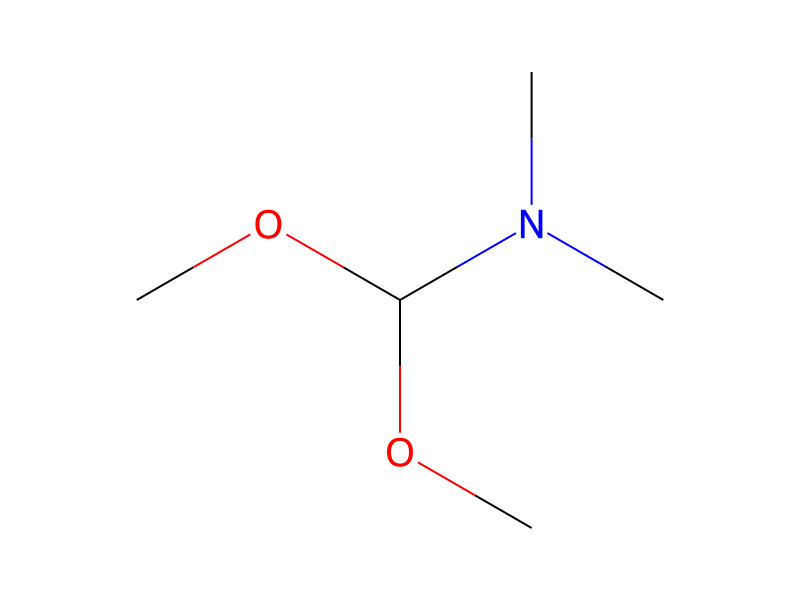
[NH:1]1[CH2:5][CH2:4][CH2:3][CH2:2]1.[F:6][C:7]1[CH:12]=[CH:11][CH:10]=[C:9]([N+:13]([O-:15])=[O:14])[C:8]=1[CH3:16].[CH3:17]OC(OC)N(C)C>>[F:6][C:7]1[CH:12]=[CH:11][CH:10]=[C:9]([N+:13]([O-:15])=[O:14])[C:8]=1[CH:16]=[CH:17][N:1]1[CH2:5][CH2:4][CH2:3][CH2:2]1Participants
4



Procedure
Pyrrolidine (0.26 mL, 3.22 mmol) was added to a solution of 2-fluoro-6-nitrotoluene (5 g, 32.23 mmol) in N,N-dimethyl formamide dimethyl acetal (50 mL) and refluxed for 48 h. The resulting mixture was cooled to ambient temperature and partitioned between ethyl acetate (150 mL) and water (150 mL). The organic layer was separated and the aqueous layer extracted with ethyl acetate (5×30 mL). The combined organic layers were washed with water (3×30 mL), brine (3×20 mL), dried over anhydrous sodium sulphate and concentrated in vacuo to give 1-[2-(2-fluoro-6-nitro-phenyl)vinyl]pyrrolidine (6.08 g, 80%) as brown liquid.
Workup
- temperaturerefluxed for 48 h
- custompartitioned between ethyl acetate (150 mL) and water (150 mL)
- customThe organic layer was separated
- extractionthe aqueous layer extracted with ethyl acetate (5×30 mL)
- washThe combined organic layers were washed with water (3×30 mL), brine (3×20 mL)
- dry with materialdried over anhydrous sodium sulphate
- concentrationconcentrated in vacuo
Sources & evidence
- ORD record
- ord-6219f9f5c9d2405ab3fd08027158017d
- Source dataset
- uspto-grants-2015_03
- Patent number
- US08993574B2
Reaction notes
Loading…