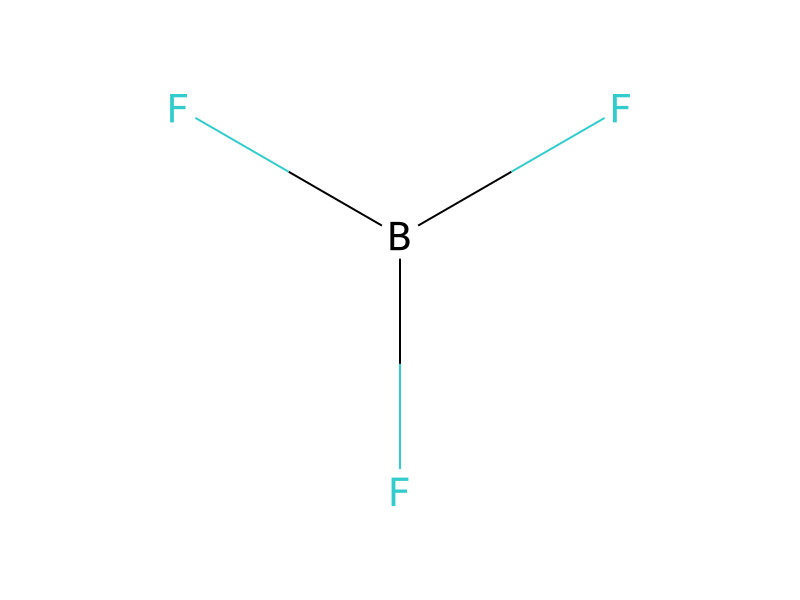
Boron trifluoride → 8-Benzyloxy-5-(2-bromoacetyl)-2-hydroxyquinoline
Reaction equation

[C:1]([C:4]1[CH:13]=[CH:12][C:11]([O:14][CH2:15][C:16]2[CH:21]=[CH:20][CH:19]=[CH:18][CH:17]=2)=[C:10]2[C:5]=1[CH:6]=[CH:7][C:8](=[O:22])[NH:9]2)(=[O:3])[CH3:2].B(F)(F)F.[Br:27]Br.C(=O)([O-])[O-].[K+].[K+]>ClCCl>[Br:27][CH2:2][C:1]([C:4]1[CH:13]=[CH:12][C:11]([O:14][CH2:15][C:16]2[CH:21]=[CH:20][CH:19]=[CH:18][CH:17]=2)=[C:10]2[C:5]=1[CH:6]=[CH:7][C:8](=[O:22])[NH:9]2)=[O:3]Participants
6





Conditions
- Temperature
- 30 °C
Procedure
A dry 3 liter, 4-necked round bottom flask equipped with a mechanical stirrer, thermometer, addition funnel and refluxing condenser was charged with of 5-Acetyl-8-benzyloxycarbostyril (50 gms/0.17 moles) and dry dichloromethane (1 liter) under argon. To this solution was added boron trifluoride etharate (25.7 ml/0.204 moles). The reaction mass was heated to reflux. To this reaction mass was added slowly solution of bromine (8.4 ml/0.17 moles) in dichloromethane (100 ml) at reflux in 4 hours. The mixture was refluxed for additional 30 minutes. The mass was cooled to 30° C. and adjusted to pH 8-9 using 10% aqueous potassium carbonate solution (470 ml).
Workup
- customA dry 3 liter, 4-necked round bottom flask equipped with a mechanical stirrer
- additionthermometer, addition funnel
- temperaturerefluxing condenser
- temperatureThe reaction mass was heated to reflux
- temperatureat reflux in 4 hours
- temperatureThe mixture was refluxed for additional 30 minutes
Sources & evidence
- ORD record
- ord-f7b44cd435a644ea9e3e153803fac07e
- Source dataset
- uspto-grants-2012_08
- Patent number
- US08236959B2
Reaction notes
Loading…