Sodium Carbonate → 6-naphthalen-2-yl-pyridin-3-ol
Reaction equation

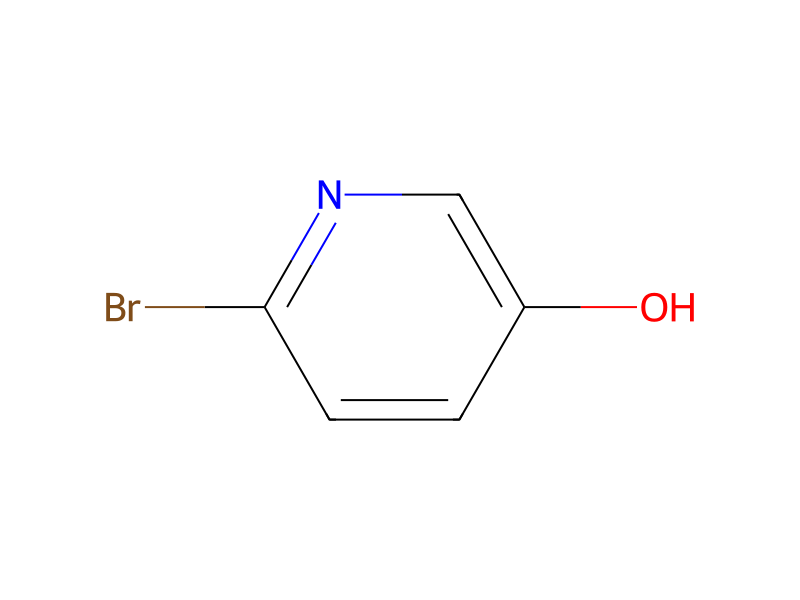
Br[C:2]1[CH:7]=[CH:6][C:5]([OH:8])=[CH:4][N:3]=1.[CH:9]1[C:18]2[C:13](=[CH:14][CH:15]=[CH:16][CH:17]=2)[CH:12]=[CH:11][C:10]=1B(O)O.C(=O)([O-])[O-].[Na+].[Na+]>C1COCC1.CCOC(C)=O>[CH:17]1[C:18]2[C:13](=[CH:12][CH:11]=[CH:10][CH:9]=2)[CH:14]=[CH:15][C:16]=1[C:2]1[N:3]=[CH:4][C:5]([OH:8])=[CH:6][CH:7]=1Participants
6





Procedure
To a solution of 2-bromo-5-hydroxypyridine (1.04 g, 6 mmol) in 25 mL anhydrous THF was added 2-naphthylboronic acid (1.03 g, 6 mmol) and 2 M aq. sodium carbonate (9 mL, 18 mmol). To this reaction mixture was added palladium tetrakistriphenylphosphine (0.7 g, 0.6 mmol) and the mixture was stirred at rt for 15 h under nitrogen. The reaction mixture was diluted with EtOAc, the organic layer was washed with water (50 mL), brine (50 mL) and dried over anhydrous Na2SO4. Removal of solvent gave a white powder which was purified by column chromatography (Silica Gel 230-400 mesh; 3% MeOH in DCM) to give 6-naphthalen-2-yl-pyridin-3-ol (0.225 g, 17%). MS (ES) m/z: 222.96 (M+1), 221.93 (M); Mp. 168-169° C.
Workup
- washthe organic layer was washed with water (50 mL), brine (50 mL)
- dry with materialdried over anhydrous Na2SO4
- customRemoval of solvent
- customgave a white powder which
- customwas purified by column chromatography (Silica Gel 230-400 mesh; 3% MeOH in DCM)
Sources & evidence
- ORD record
- ord-24fd76d21f104a1da63bb31846f22fcf
- Source dataset
- uspto-grants-2012_08
- Patent number
- US08242130B2
Reaction notes
Loading…