Hydrochloric Acid → Diisopropylsilyl bis(trifluoromethanesulfonate)
Reaction equation

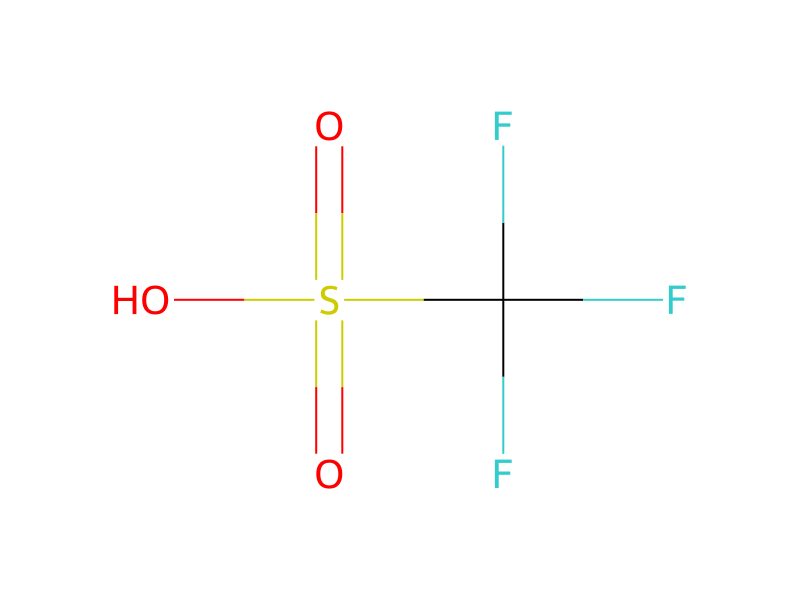
Cl[Si:2](Cl)([CH:6]([CH3:8])[CH3:7])[CH:3]([CH3:5])[CH3:4].[F:10][C:11]([F:17])([F:16])[S:12]([OH:15])(=[O:14])=[O:13].Cl>>[F:10][C:11]([F:17])([F:16])[S:12]([O:15][Si:2]([O:15][S:12]([C:11]([F:17])([F:16])[F:10])(=[O:14])=[O:13])([CH:6]([CH3:8])[CH3:7])[CH:3]([CH3:5])[CH3:4])(=[O:14])=[O:13]Participants
4



Procedure
An oven-dried 100 mL-RB flask is charged with dichlorodiisopropylsilane (9.2 g, 0.05 mol). Then 15 g of trifluoromethanesulfonic acid (15 g, 0.10 mol) is added dropwise. The mixture is heated at 60° C. until no further HCl evolves. The residue is distilled to yield 12 g (60%) of the product as clear liquid. 1H NMR (500 MHz, CDCl3, in ppm) δ 1.58 (heptet, 2H, J=7.2 Hz), 1.24 (d, 12H, J=7.2 Hz).
Workup
- distillationThe residue is distilled
Sources & evidence
- ORD record
- ord-b4318bfa95f248edad6fe8ce9437bb52
- Source dataset
- uspto-grants-2012_08
- Patent number
- US08247341B2
Reaction notes
Loading…