Water → HCID 86642248, compound
Reaction equation

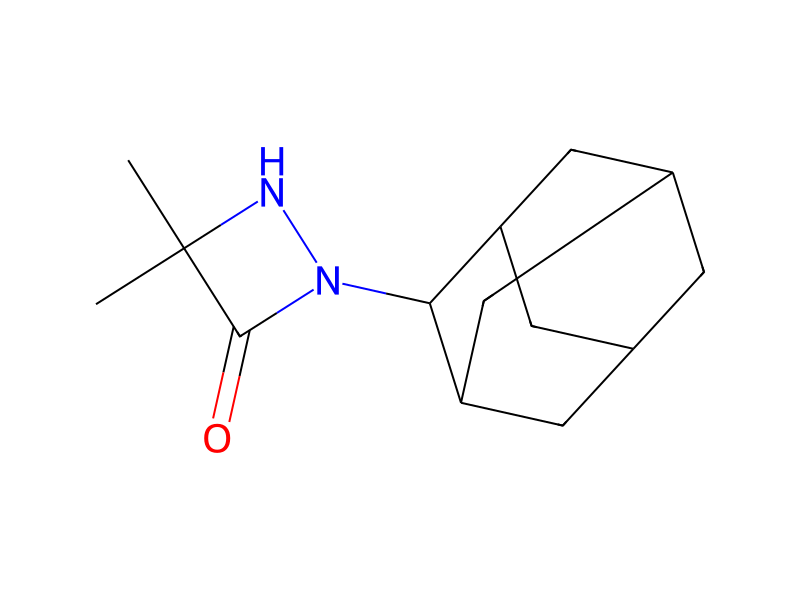
[CH:1]12[CH2:10][CH:5]3[CH2:6][CH:7]([CH2:9][CH:3]([CH2:4]3)[CH:2]1[N:11]1[C:14](=[O:15])[C:13]([CH3:17])([CH3:16])[NH:12]1)[CH2:8]2.C(=O)([O-])[O-].[K+].[K+].[CH2:24]([O:26][C:27](=[O:30])[CH2:28]Br)[CH3:25].O>CN(C)C=O>[CH3:16][C:13]1([CH3:17])[N:12]([CH2:28][C:27]([O:26][CH2:24][CH3:25])=[O:30])[N:11]([CH:2]2[CH:3]3[CH2:4][CH:5]4[CH2:6][CH:7]([CH2:8][CH:1]2[CH2:10]4)[CH2:9]3)[C:14]1=[O:15]Participants
6





Conditions
- Temperature
- 80 °C
Procedure
Under an argon atmosphere, a solution of 2-(adamantan-2-yl)-4,4-dimethyl-1,2-diazetidin-3-one (234 mg, 1.00 mmol) prepared in Process 3 of Example 12 in N,N-dimethylformamide (2 mL) was added with potassium carbonate (277 mg, 2.00 mmol) and ethylbromoacetate (167 mg, 1.00 mmol) at room temperature, and the resultant was stirred at 80° C. for 20 hours. The reaction solution was added with water and extracted with diethyl ether. The organic layer was dried over anhydrous sodium sulfate, concentrated in vacuo, the obtained residue was purified using silica gel chromatography (hexane:ethyl acetate=2:1), and ethyl [4,4-dimethyl-3-oxo-2-(adamantan-2-yl)-1,2-diazetidin-1-yl]acetate (190 mg, 59.4%) was obtained as a colorless oil.
Workup
- extractionextracted with diethyl ether
- dry with materialThe organic layer was dried over anhydrous sodium sulfate
- concentrationconcentrated in vacuo
- customthe obtained residue was purified
Sources & evidence
- ORD record
- ord-39deae0a925e48e5a02754ce0b05ee74
- Source dataset
- uspto-grants-2012_08
- Patent number
- US08252781B2
Reaction notes
Loading…