Triethylamine → tert-Butyl 4-(methylcarbamoyl)piperazine-1-carboxylate
Reaction equation

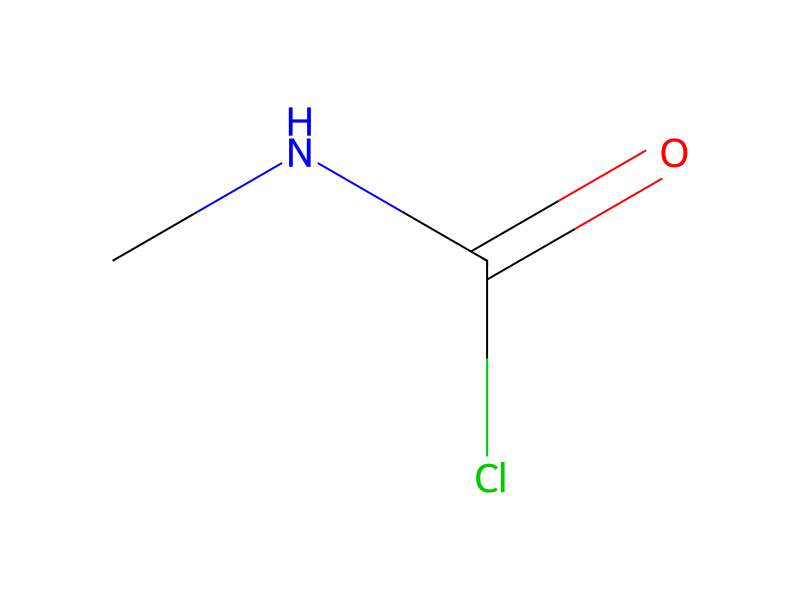
[C:1]([O:5][C:6]([N:8]1[CH2:13][CH2:12][NH:11][CH2:10][CH2:9]1)=[O:7])([CH3:4])([CH3:3])[CH3:2].C(N(CC)CC)C.[CH3:21][NH:22][C:23](Cl)=[O:24]>ClCCl>[CH3:21][NH:22][C:23]([N:11]1[CH2:12][CH2:13][N:8]([C:6]([O:5][C:1]([CH3:4])([CH3:2])[CH3:3])=[O:7])[CH2:9][CH2:10]1)=[O:24]Participants
Reactant 3


Product 1

Reagents, catalysts & solvents 1

Procedure
To a cold solution (ice bath) of piperazine-1-carboxylic acid tert-butyl ester (9.0 g, 48.32 mmol) and triethylamine (9.8 g, 96.64 mmol) in dichloromethane (100 mL) was slowly added a solution of methylaminoformyl chloride (5.0 g, 53.5 mmol) in dichloromethane at 0° C. The reaction mixture was allowed to warm to room temperature and stirred overnight, and then partitioned in dichloromethane (200 mL) and water (100 mL). Organic layer was separated, dried (MgSO4), and concentrated to yield tert-butyl 4-(methylcarbamoyl)piperazine-1-carboxylate as a solid which was dissolved in dichloromethane (100 mL) and TFA (20 mL). The solution was stirred for 12 h and the volatiles were evaporated under pressure, the oily residue was dissolved in methanol and 1N hydrogen chloride solution was added. The solid formed was filtered and washed with ether, dried to give N-methylpiperazine-1-carboxamide hydrochloride, 8.12 g (93%)
Workup
- custompartitioned in dichloromethane (200 mL)
- customOrganic layer was separated
- dry with materialdried (MgSO4)
- concentrationconcentrated
Sources & evidence
- ORD record
- ord-bb727a7cdfbf452b9ed0e44f06688d20
- Source dataset
- uspto-grants-2012_08
- Patent number
- US08252793B2
Reaction notes
Loading…