Triethylamine → (6-Benzyloxy-indol-1-yl)-propan-2-ol
Reaction equation

N([C@@H](C)CN1C2[C:9](=[CH:10][CH:11]=[C:12]([O:15][CH2:16][C:17]3[CH:22]=[CH:21][CH:20]=[CH:19][CH:18]=3)C=2)C=N1)=[N+]=[N-].[CH2:24]([N:26]([CH2:29][CH3:30])[CH2:27][CH3:28])C.CS(Cl)(=O)=O.[N-]=[N+]=[N-].[Na+].N[C@@H:41](C)CN1C2C(=CC=C(O)C=2)C=N1.[CH:54]([O-:56])=O.[NH4+]>ClCCl.CCO.C(OCC)C.O>[CH2:16]([O:15][C:12]1[CH:30]=[C:29]2[C:9]([CH:28]=[CH:27][N:26]2[CH2:24][CH:54]([OH:56])[CH3:41])=[CH:10][CH:11]=1)[C:17]1[CH:22]=[CH:21][CH:20]=[CH:19][CH:18]=1Participants
Reactant 6

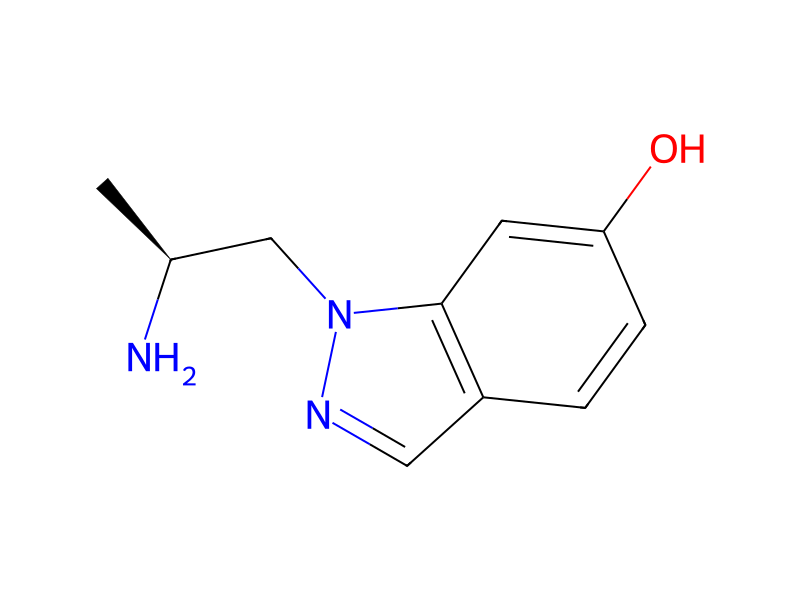
Product 1

Reagents, catalysts & solvents 4
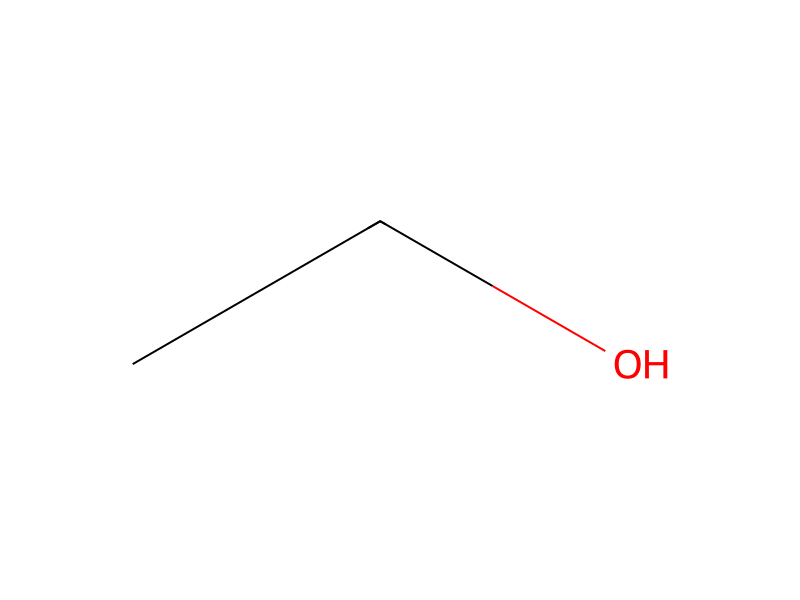
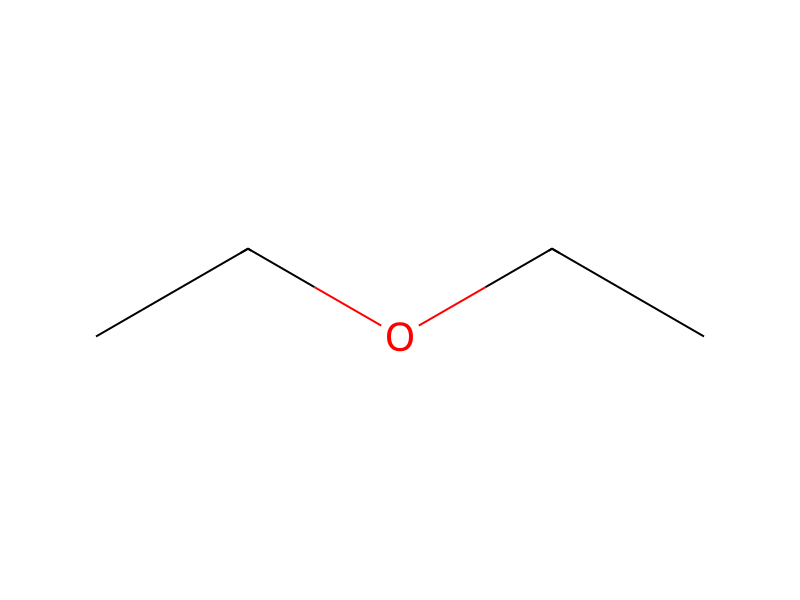
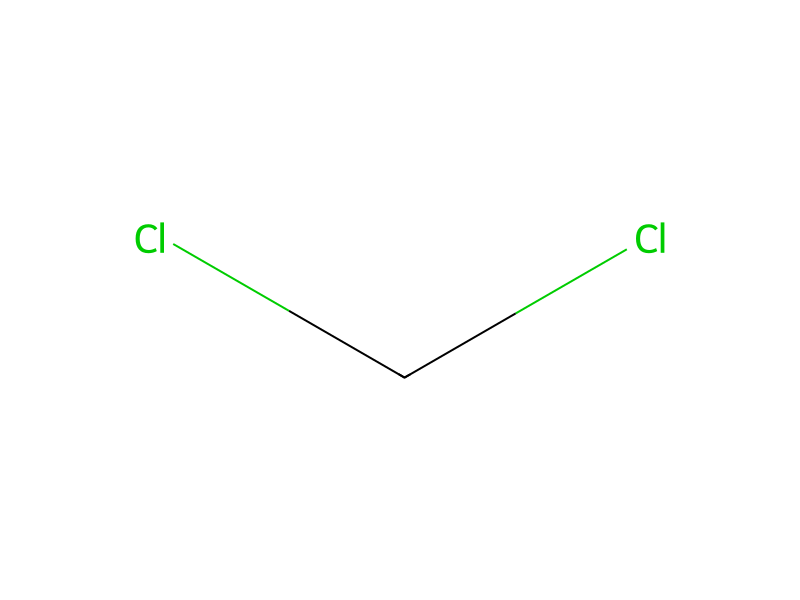
Conditions
- Temperature
- 0 °C
Procedure
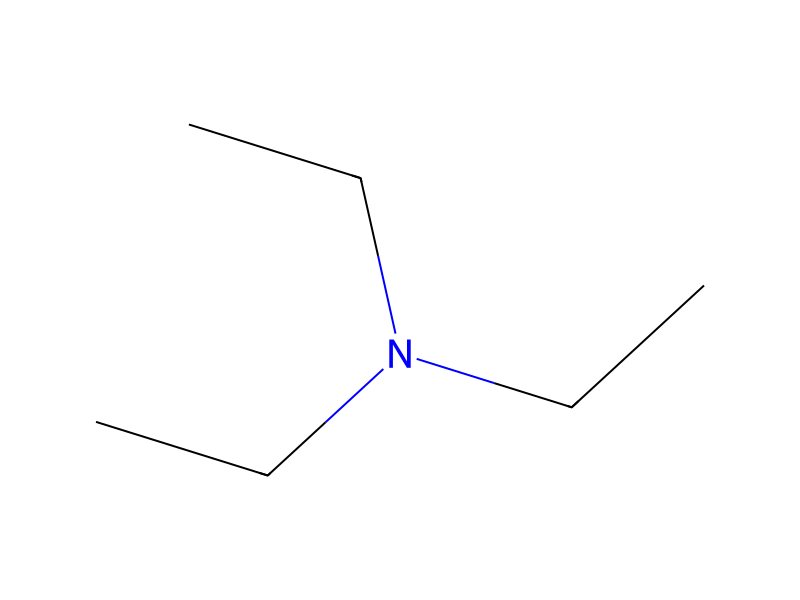
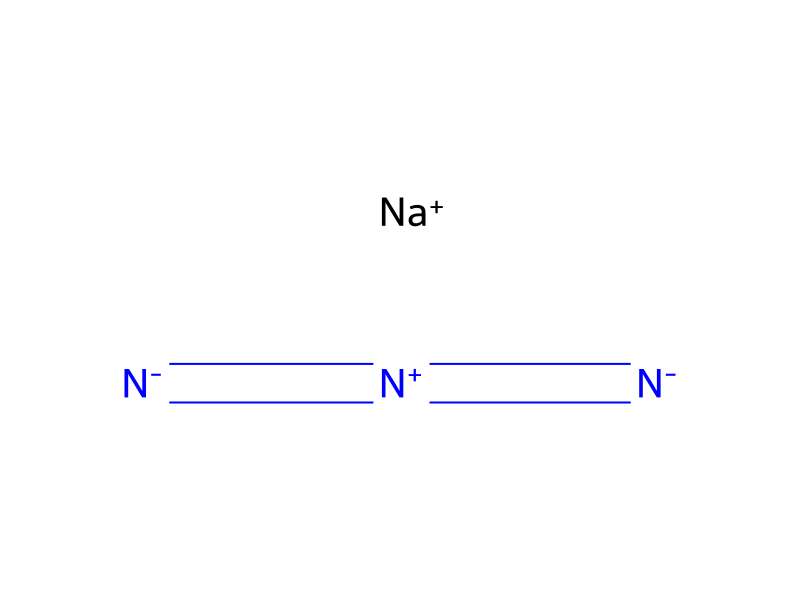
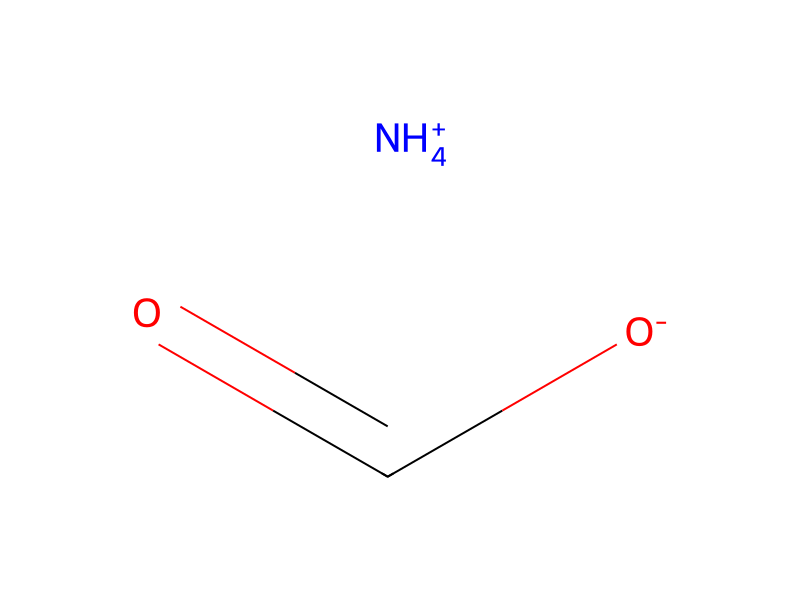
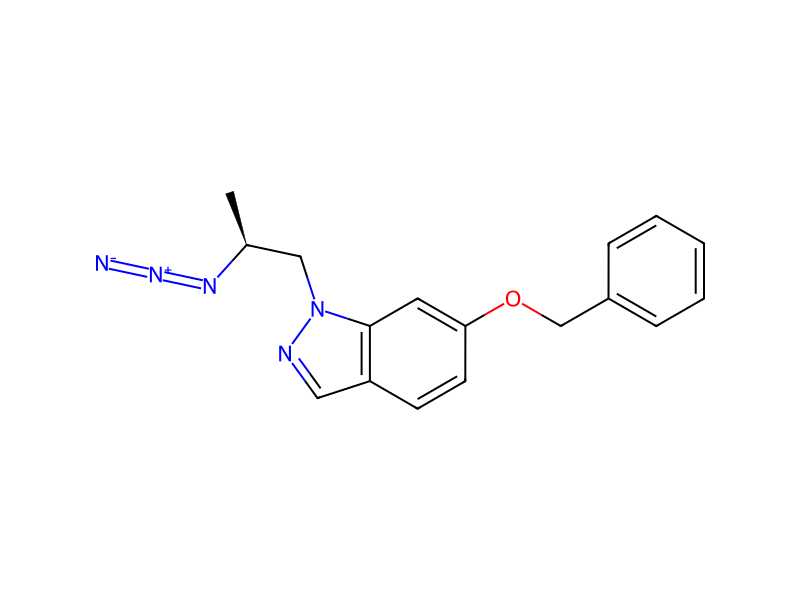
To a stirred, cooled (10° C.) suspension of NaH (80.7 g of a 60% dispersion in mineral oil, 2.02 mol) in anhydrous THF (1.9 L) was added a solution of 6-benzyloxyindole (1) (375 g, 1.68 mol) in anhydrous THF (1.9 L) keeping the temperature below 25° C. After 2 h at 10° C., (±)-propylene oxide (140 mL, 2.0 mol) was added dropwise keeping the temperature below 25° C. After 48 h at 10° C., (±)-propylene oxide (71 mL, 1.0 mol) was added. After 96 h at 10° C., saturated aqueous KH2PO4 (3.8 L) and ethyl acetate (3.8 L) were carefully added, the layers were separated and the aqueous solution was extracted with 3.8 L of ethyl acetate. The combined organic extracts were dried over sodium sulfate and concentrated in vacuo to yield 2 (520 g, 110%, contains mineral oil). Preparation of (±)-4-Benzyloxy-2-(N-(2-hydroxypropyl)formamido)benzaldehyde (3). A solution of 172 g of 2 in 1.5 L of dichloromethane was cooled to 78° C. and ozonized (4% ozone in oxygen). Excess ozone was displaced with oxygen for 5 min, followed by addition of 78 mL of dimethyl sulfide and warming to 25° C. The solution was concentrated to half volume, eluted through Florisil rinsing with ethyl ether-ethyl acetate and concentrated in vacuo. One additional run on 172 g scale and three runs on 58-g scale were performed. The combined products were eluted through silica (2.5 kg) with a gradient of 10%-80% ethyl acetate-hexane to yield, after concentration in vacuo, 3 (351 g, 70%) as an oil. Preparation of (±)-4-Benzyloxy-2-(2-hydroxypropyl)aminobenzaldehyde (6). An ice-cooled solution of 3 (298 g, 0.95 mol) in THF (3 L) was treated with 1 M aq NaOH (1.95 L, 1.9 mol) keeping the temperature below 80° C. After 3 was consumed, the mixture was diluted with brine and extracted twice with ethyl ether. The organic solution was washed with water until neutral and with brine, dried over sodium sulfate, treated with charcoal and eluted through silica (1 kg) with ether and with 1:1 ethyl acetate-hexane to yield, after concentration in vacuo, 6 (207 g, 76%) as a yellow solid. Preparation of 4-Benzyloxy-2-fluorobenzonitrile (4). Benzyl bromide (467 mL, 3.93 mol) and potassium carbonate (1.4 kg, 10.1 mol) were added to a solution of 2-fluoro-4-hydroxybenzonitrile (490 g, 3.57 mol) in 3.4 L of acetone. The stirred mixture was heated at 60° C. for 20 h, then cooled and filtered. The filtrate was concentrated and the resulting solid was triturated with 10% ethyl acetate-hexane (5 L) and vacuum dried at 35° C. to yield 4 (787 g, 97%). Preparation of (R)-4-Benzyloxy-2-(2-hydroxypropyl)aminobenzonitrile (R-5). A solution of (R)-(−)-1-amino-2-propanol (389 g, 5.19 mol) in DMSO (2.6 L) was added to a mixture of 4 (786 g, 3.46 mol), basic alumina (786 g), and 4A. molecular sieves (131 g). The stirred mixture was heated at 110–140° C. for 24 h, cooled and filtered through Celite, washing with 10 L of 4:1 ether-ethyl acetate followed by 4 L of 3:2 ethyl acetate-hexane. The organic washes were extracted with water (5 L) and the aqueous phase was extracted with four 2-L portions of 25% ethyl acetate-hexane. The combined organic phases were washed with water and brine, dried over sodium sulfate, concentrated to about 4 L and allowed to stand for 48 h. The precipitated solid was collected by filtration, washed with hexane and vacuum dried to provide R-5 (first crop 613 g, second crop, 86 g). The concentated supernatant was applied to a 5 kg silica gel pad and eluted with a gradient of 10–50% ethyl acetate-hexane to give, after concentration in vacuo, 119 g of 5, for a total yield of 791 g (81%) of R-5. Preparation of (R)-4-Benzyloxy-2-(2-hydroxypropyl)aminobenzaldehyde (R-6). Sodium hypophosphite hydrate (986 g, 11.2 mol) and Raney nickel (500 g of a 50% aqueous suspension) were added to a solution of R-5 (790 g, 2.8 mol) in 7 L of 2:1:1 pyridine-acetic acid-water. The mixture was stirred at 45° C. for 7 h, then cooled to 25° C. overnight and filtered through Celite rinsing with water and ethyl acetate. The filtrate was washed with saturated Na2HPO4 to pH 5, with water and brine, dried over sodium sulfate and concentrated. During concentration, 4 L of heptane was added to azeotropically remove pyridine. After 8 L of solvent had been removed the product solidified. Heptane (5 L) was added and the solid was triturated, isolated by filtration and vacuum dried at 35° C. to yield R-6 (722 g, 90%). Preparation of (R)-6-benzyloxy-1-(2-hydroxypropyl)indazole (R-8). Sodium nitrite (209 g, 3.03 mol) was added over 25 min to a stirred solution of R-6 (720 g, 2.53 mol) in acetic acid (5.6 L) and water (1.4 L), keeping the temperature below 25° C. The resulting solution of nitrosamine R-7 was cooled in ice, and zinc dust (595 g, 9.10 mol) was added in 25-g portions over 3.5 h, keeping the temperature below 35° C. Ethyl acetate (7 L) was added and the thick suspension was filtered on a sintered glass funnel, washing with ethyl acetate (7.5 L). To the filtrate containing a 5:1 mixture of R-8 and regenerated R-6 was added Girard's Reagent T (98 g, 0.58 mol). After stirring at 25° C. for 1 day, another 150 g (0.90 mol) of Girard's Reagent T was added. After 3 more days R-6 was consumed. The mixture was extracted twice with water, with aqueous Na2HPO4 to remove acetic acid, with water and brine, dried over sodium sulfate, filtered through Florisil and concentrated. The residue was eluted through 5 kg of silica with 1:1 ethyl acetate-hexane. Clean fractions were concentrated and 4 L of heptane was added to precipitate R-8. The solid was collected by filtration, washed with 1:1 ethyl acetate-hexane and vacuum dried at 35° C. to yield (417 g, 58%) of a yellow solid, composed of 96.7% R-8, 0.3% S-8 and 3% R-6 by HPLC. Concentration of the supernatant afforded an additional 141 g (20%) of R-8. Preparation of (±)-6-benzyloxy-1-(2-hydroxypropyl)indazole (8). The procedure described for R-8 was followed, beginning with (±)-6 (202.7 g, 0.71 mol). After nitrosamine 7 had been converted to a mixture of 8 and 6 (5:1), sodium nitrite (29.5 g, 0.43 mol) was added to renitrosate 6. Zinc dust (84 g, 1.28 mol) was then added in portions with cooling as described above. When the formation of 8 was complete, the reaction mixture was worked up as described above and combined with the product from another run that started with 176 g of 6. The combined crude product was purified by chromatography on a Biotage Kiloprep-250 instrument, eluting with ethyl acetate-hexane, to yield 8 (226 g, 60%) of 99% HPLC purity. Preparation of (S)-1-(2-Azidopropyl)-6-benzyloxyindazole (S-9). A solution of R-8 (415 g, 1.47 mol) in dichloromethane (4 L) was treated with triethylamine (224 mL, 1.6 mol) and cooled to 0° C. Methanesulfonyl chloride (125 mL, 1.6 mol) was added keeping the temperature below 25° C. The mixture was stirred at 25° C. until complete and was then quenched with water (4 L) and stirred vigorously. The layers were separated and the aqueous layer was extracted with an additional 4 L of dichloromethane. The combined organic solutions were dried over sodium sulfate and concentrated in vacuo. The residue was dissolved in DMF (4 L), sodium azide (191 g, 2.94 mol) was added and the mixture was stirred and heated to 70° C. for 16 h, then allowed to cool to 25° C. Water (16 L) and diethyl ether (5.5 L) were added, the mixture was stirred vigorously and the layers were allowed to separate. The aqueous layer was extracted with diethyl ether (2×7 L), and the combined organic solutions were concentrated and the residue was eluted through silica (6 kg) with 1:3 ethyl acetate/hexane. Product containing fractions were concentrated in vacuo to yield S-9 (380 g, 84%) as an oil. Preparation of (S)-1-(2-Aminopropyl)-6-hydroxyindazole (S-10). Ammonium formate (312 g, 4.96 mol) and 10% Pd(C) (38 g) were added to a stirred solution of S-9 (380 g, 1.24 mol) in 4 L of EtOH. After 2 h, another 38 g of 10% Pd(C) was added. The mixture was stirred for 2 h, then filtered through Celite, rinsing with EtOH, and the filtrate was concentrated. The residue was partitioned between saturated NaHCO3 (4 L) and 1:1 ethyl acetate-THF (5 L). The aqueous phase was treated with 200 g of NaCl and extracted with 2:1 ethyl acetate-THF (3×4 L). The combined organic extracts were dried over sodium sulfate, filtered and concentrated in vacuo. The solid residue was suspended in ethyl acetate (3 L), stirred for 0.5 h and filtered to give 200 g of a solid. This material was suspended in THF (1 L) and the mixture was stirred for several minutes and filtered to give a solid, which was washed with cold THF (200 mL), air dried, and then dried for 16 h in vacuo at 45° C. to yield S-10 (183 g, 77%).
Workup
- customthe temperature below 25° C
- customwas then quenched with water (4 L)
- stirringstirred vigorously
- customThe layers were separated
- extractionthe aqueous layer was extracted with an additional 4 L of dichloromethane
- dry with materialThe combined organic solutions were dried over sodium sulfate
- concentrationconcentrated in vacuo
- dissolutionThe residue was dissolved in DMF (4 L)
- stirringthe mixture was stirred
- temperatureheated to 70° C. for 16 h
- temperatureto cool to 25° C
- stirringthe mixture was stirred vigorously
- customto separate
- extractionThe aqueous layer was extracted with diethyl ether (2×7 L)
- concentrationthe combined organic solutions were concentrated
- washthe residue was eluted through silica (6 kg) with 1:3 ethyl acetate/hexane
- additionProduct containing fractions
- concentrationwere concentrated in vacuo
- customto yield
- stirringThe mixture was stirred for 2 h
- filtrationfiltered through Celite
- washrinsing with EtOH
- concentrationthe filtrate was concentrated
- customThe residue was partitioned between saturated NaHCO3 (4 L) and 1:1 ethyl acetate-THF (5 L)
- additionThe aqueous phase was treated with 200 g of NaCl
- extractionextracted with 2:1 ethyl acetate-THF (3×4 L)
- dry with materialThe combined organic extracts were dried over sodium sulfate
- filtrationfiltered
- concentrationconcentrated in vacuo
- stirringstirred for 0.5 h
- filtrationfiltered
Sources & evidence
- ORD record
- ord-0f98b5e584364af78409ae57eee39260
- Source dataset
- uspto-grants-2006_02
- Patent number
- US06998489B2
Reaction notes
Loading…