Cesium carbonate → HCID 22240163, compound
Reaction equation

Cl[C:2]1[N:3]=[N:4][CH:5]=[C:6]([O:8][CH3:9])[CH:7]=1.[Cl:10][C:11]1[CH:12]=[C:13](B(O)O)[CH:14]=[CH:15][C:16]=1[F:17].C([O-])([O-])=O.[Cs+].[Cs+].C(P(C(C)(C)C)C(C)(C)C)(C)(C)C>O1CCOCC1.C(OC(=O)C)C>[Cl:10][C:11]1[CH:12]=[C:13]([C:2]2[N:3]=[N:4][CH:5]=[C:6]([O:8][CH3:9])[CH:7]=2)[CH:14]=[CH:15][C:16]=1[F:17]Participants
Reactant 4



Product 1

Reagents, catalysts & solvents 2


Conditions
- Temperature
- 90 °C
Procedure
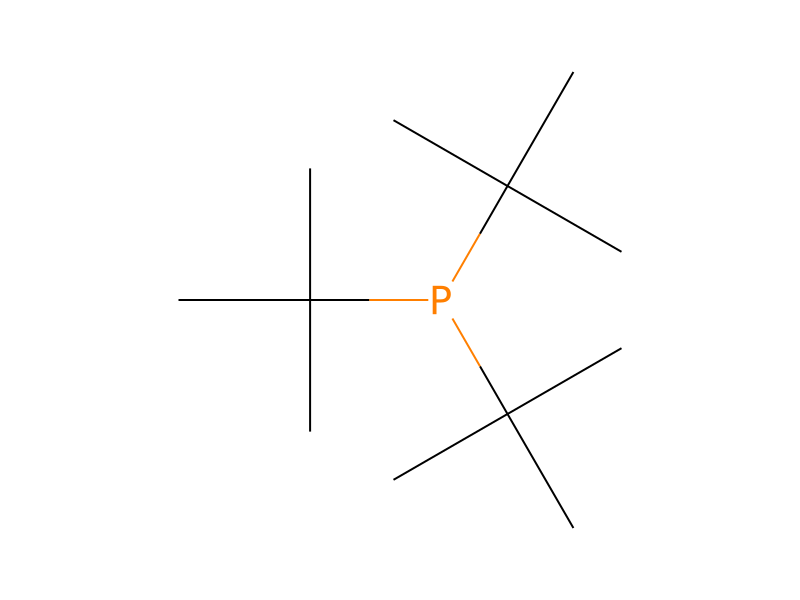
3-Chloro-5-methoxy-pyridazine (Bryant, R. D.; Kunng, F. -A.; South, M. S. J. Heterocycl. Chem. (1995), 32(5), 1473-6.) (300 mg, 2.08 mmol), 3-chloro-4-fluorophenylboronic acid (724 mg, 4.15 mmol), Cs2CO3 (2 g, 6.2 mmol) and tris(dibenzylideneacetone)dipalladium chloroform complex (96.7 mg, 0.093 mmol) were mixed and a solution of tri-tert-butylphosphine (45.4 mg, 0.22 mmol) in degassed dioxane (6 ml) was added. The mixture was heated at 90° C. for 22 hours then cooled to room temperature, ethylacetate was added, the solid was filtered and the filtrate was concentrated in vacuo. The residue was chromatographed over silica gel (hexane-ethyl acetate 4:1) to provide 3-(3-chloro-4-fluoro-phenyl)-5-methoxy-pyridazine (330 mg, 67%) as an orange solid, MS: m/e=239.3 (M+H+).
Workup
- temperaturethen cooled to room temperature
- filtrationthe solid was filtered
- concentrationthe filtrate was concentrated in vacuo
- customThe residue was chromatographed over silica gel (hexane-ethyl acetate 4:1)
Sources & evidence
- ORD record
- ord-521a3a6f07124c96876357311f99a62c
- Source dataset
- uspto-grants-2006_02
- Patent number
- US07005432B2
Reaction notes
Loading…