Resorcinol → (2-[3-Hydroxyphenoxymethyl]-6-methylphenoxy)acetonitrile
Reaction equation

[C:1]([CH2:3][O:4][C:5]1[C:12]([CH3:13])=[CH:11][CH:10]=[CH:9][C:6]=1[CH2:7]Br)#[N:2].[C:14]1([CH:21]=[CH:20][CH:19]=[C:17]([OH:18])[CH:16]=1)[OH:15].C(=O)([O-])[O-].[K+].[K+]>C(#N)C.CCOCC>[OH:15][C:14]1[CH:16]=[C:17]([CH:19]=[CH:20][CH:21]=1)[O:18][CH2:7][C:6]1[CH:9]=[CH:10][CH:11]=[C:12]([CH3:13])[C:5]=1[O:4][CH2:3][C:1]#[N:2]Participants
6
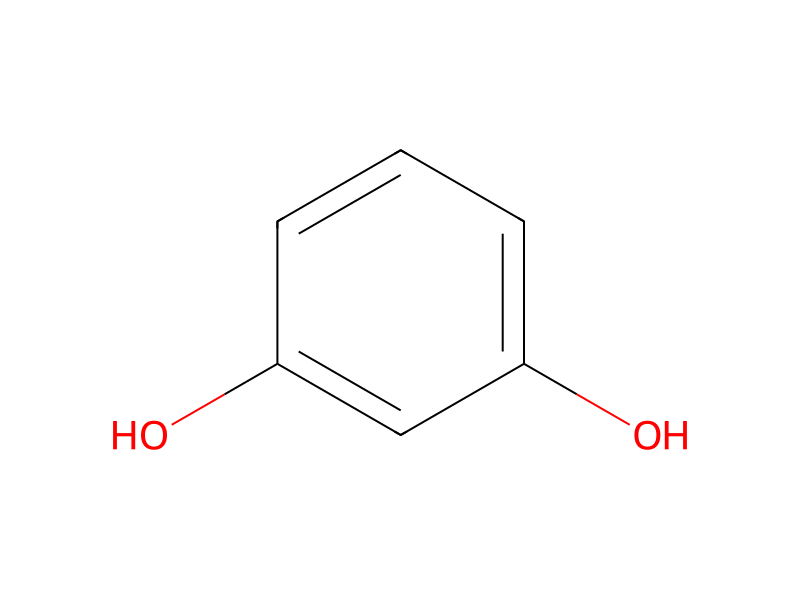





Conditions
- Temperature
- 60 °C
Procedure
Heated (60° C.) a mixture of 2-cyanomethoxy-3-methylbenzyl bromide (10.2 g, 42.7 mmoles, example 24), resorcinol (18.8 g, 171 mmoles), and potassium carbonate (47.2 g, 342 mmoles) in acetonitrile (140 mL) for two hours. The reaction is diluted with ether and washed three times with distilled water, once with brine, and dried over MgSO4. The organic layer is isolated and concentrated, and the resulting residue is purified by column chromatography (silica, 5% EtOAc/CH2Cl2) to yield the title compound as a white crystalline solid. MS(EI) 269 (M)+.
Workup
- washwashed three times with distilled water
- dry with materialonce with brine, and dried over MgSO4
- customThe organic layer is isolated
- concentrationconcentrated
- customthe resulting residue is purified by column chromatography (silica, 5% EtOAc/CH2Cl2)
Sources & evidence
- ORD record
- ord-b9fa7fc851564ba8bade906282d5fb02
- Source dataset
- uspto-grants-2006_02
- Patent number
- US07005440B1
Reaction notes
Loading…