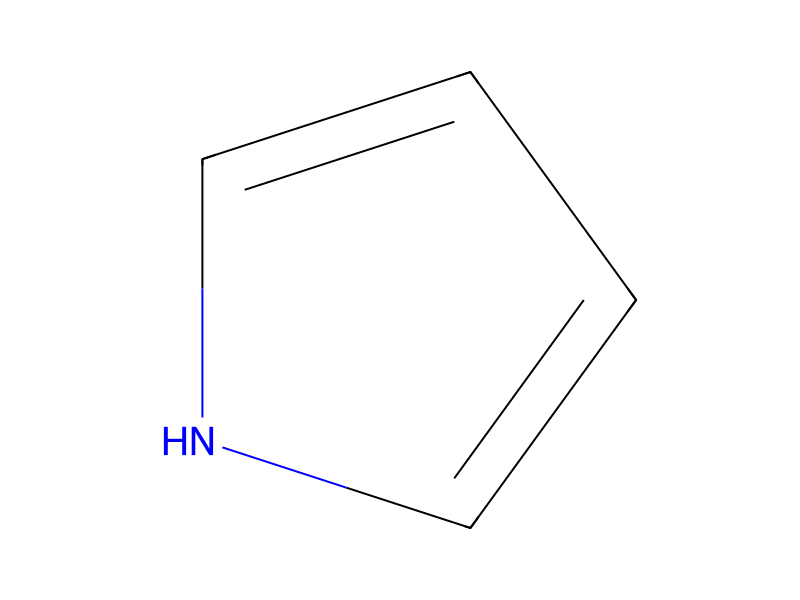
Pyrrole → HCID 19790389, compound
Reaction equation

CC(C)([O-])C.[K+].[Cl:7][C:8]1[NH:9][C:10]([C:16]2[CH:21]=[CH:20][C:19]([Cl:22])=[C:18]([Cl:23])[CH:17]=2)=[C:11]([Cl:15])[C:12]=1[C:13]#[N:14].[CH2:24]([O:26][CH2:27]Cl)[CH3:25].N1C=CC=C1>CCCCCC.C(OCC)(=O)C.O1CCCC1>[Cl:7][C:8]1[N:9]([CH2:27][O:26][CH2:24][CH3:25])[C:10]([C:16]2[CH:21]=[CH:20][C:19]([Cl:22])=[C:18]([Cl:23])[CH:17]=2)=[C:11]([Cl:15])[C:12]=1[C:13]#[N:14]Participants
7






Procedure
To a mixture of potassium tert-butoxide (0.62 g, 0.0055 mol) and tetrahydrofuran (50 mL) is added 2,4-dichloro-5-(3,4-dichlorophenyl)pyrrole-3-carbonitrile (1.3 g, 0.0043 mol) followed by chloromethyl ethyl ether (0.52 g, 0.0055 mol). After stirring the reaction mixture overnight, TLC (1:1 hexane/ethyl acetate shows no remaining starting pyrrole and the reaction is concentrated in vacuo. Addition of water to the residue affords a solid which is collected and dried to give the title compound as a brown solid (1.4 g, 90%, mp 106°-109° C.) which is indentified by IR and NMR spectral analyses.
Workup
- concentrationthe reaction is concentrated in vacuo
- additionAddition of water to the residue
- customaffords a solid which
- customis collected
- customdried
Sources & evidence
- ORD record
- ord-df03baedc5fa44dfa45608ecc6a8434f
- Source dataset
- uspto-grants-1992_06
- Patent number
- US05122615
Reaction notes
Loading…