Formic Acid → L-Aspartic Acid
Reaction equation

NC(N)=O.[CH:5]([OH:7])=[O:6].[NH:8]1CC[CH2:13][C@H:9]1[C:10]([OH:12])=[O:11]>O.Cl.NC(N)=N>[NH2:8][C@H:9]([C:10]([OH:12])=[O:11])[CH2:13][C:5](=[O:7])[OH:6]Participants


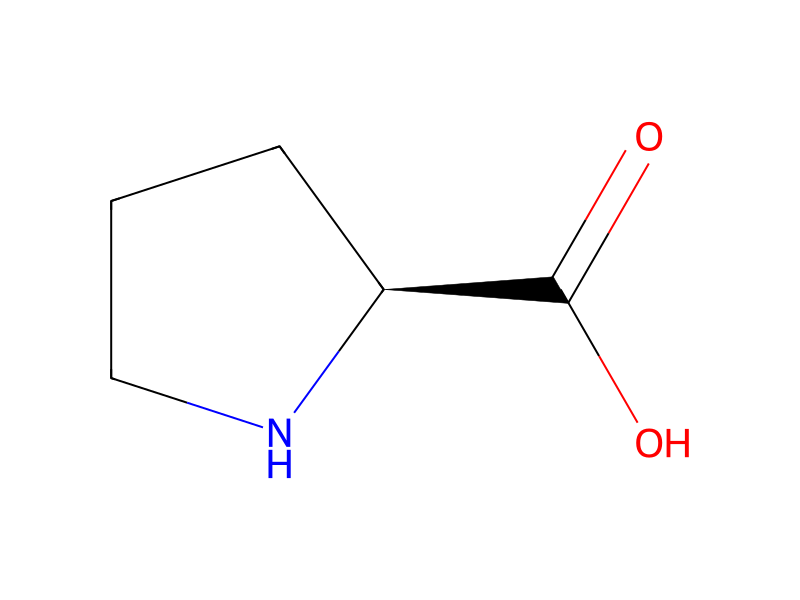

Reagents, catalysts & solvents 2

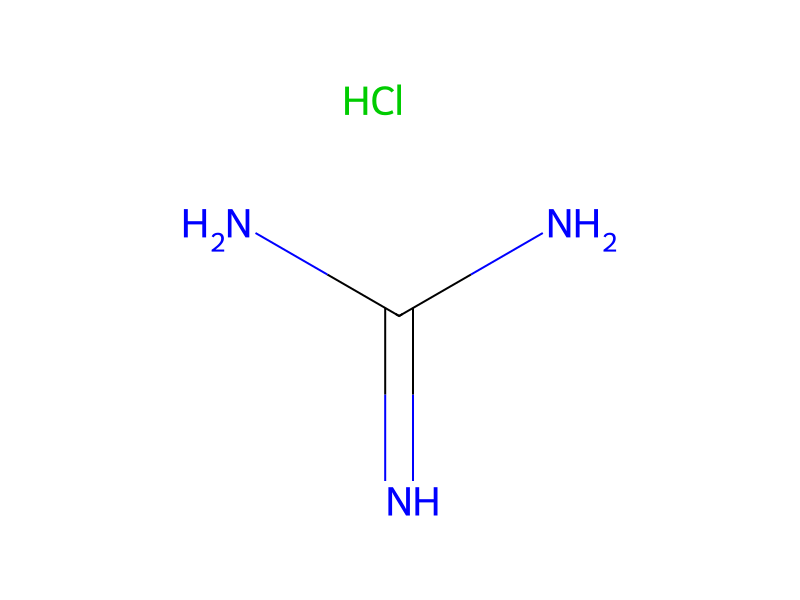
Procedure
An aliquot (30 ul) of the urea soluble fraction was diluted with ten volumes of water, and the insoluble fusion protein was pelleted by centrifugation. The protein was then dissolved in 30 ul of 6M guanidine hydrochloride, and 70 ul 98% formic acid added (Digestion 1). In a parallel experiment, 70 ul 98% formic acid was added to an aliquot (30 ul) of the urea fraction directly (Digestion 2). Following two days incubation at 42° C., ten volumes of water were added, and the insoluble proteins were pelleted by centrifugation. The pellet was resuspended in 1X treatment buffer (100 ul), and 10 ul was used per well on 12.5% SDS-polyacrylamide gel. FIG. 10 shows a sample of the cleaved products (Digestion 1 and Digestion 2) both on a Commassie-stained gel and an immunoblot (using HIVI positive human serum as primary antibody). Only two major bands are visible on the Commassie-stained gel. These represent the products of cleavage at the unique Asp-Pro bond: the CKS portion, MW=26.5 kDa and the p41 portion, MW=23.5 kDa. Peptide sequencing confirmed that the lower molecular weight band was indeed the p41 peptide, and that the amino terminal residue was proline which results from expected cleavage between the Asp and Pro.
Workup
- additionwere added
Sources & evidence
- ORD record
- ord-4a73207270a14545a0db0cd39d6f7112
- Source dataset
- uspto-grants-1992_06
- Patent number
- US05124255
Reaction notes
Loading…