Hydrochloric Acid → HCID 20574338, compound
Reaction equation

C(N1CC(C2C=CC=CC=2)=C(O)C1=O)C.N1(CCCl)CCCCC1.Cl.Cl.[CH2:27]([N:29]1[CH2:33][C:32]([C:34]2[CH:39]=[CH:38][CH:37]=[CH:36][CH:35]=2)=[C:31]([O:40][CH2:41][CH2:42][N:43]2[CH2:48][CH2:47][CH2:46][CH2:45][CH2:44]2)[C:30]1=[O:49])[CH3:28]>C(OCC)(=O)C>[CH2:27]([N:29]1[CH2:33][C:32]([C:34]2[CH:39]=[CH:38][CH:37]=[CH:36][CH:35]=2)=[C:31]([O:40][CH2:41][CH2:42][N:43]2[CH2:48][CH2:47][CH2:46][CH2:45][CH2:44]2)[C:30]1=[O:49])[CH3:28]Participants
6
Reactant 4

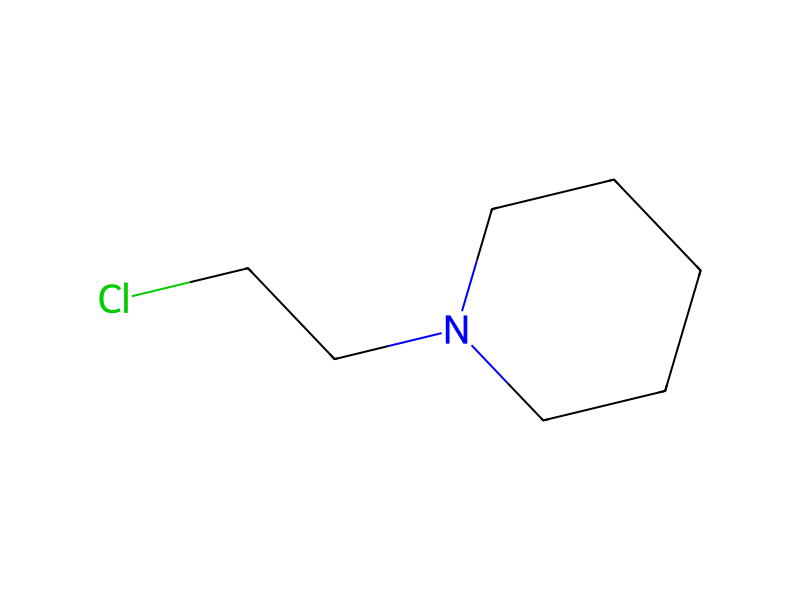


Product 1

Reagents, catalysts & solvents 1

Procedure
In a manner analogous to that described in Example 1, 30.5 g. 1-ethyl-3-hydroxy-4-phenyl-3-pyrrolin-2-one is reacted with 21.5 g. β-piperidinoethyl chloride. The base obtained is converted into the crystalline hydrochloride in ethyl acetate by means of gaseous hydrogen chloride. There is obtained 22.5 g. (42% of theory) 1-ethyl-3-(β-piperidinoethoxy)-4-phenyl-3-pyrrolin-2-one hydrochloride; m.p. 120° C., (decomp.), after recrystallization from methyl ethyl ketone.
Workup
- customThe base obtained
- customThere is obtained 22.5 g
- customm.p. 120° C., (decomp.), after recrystallization from methyl ethyl ketone
Sources & evidence
- ORD record
- ord-c1951d1eea184685925eec5395c0b83f
- Source dataset
- uspto-grants-1981_08
- Patent number
- US04284632
Reaction notes
Loading…