Benzene → 7-Methoxy-3,4-dihydronaphthalene-1-carbonitrile
Reaction equation

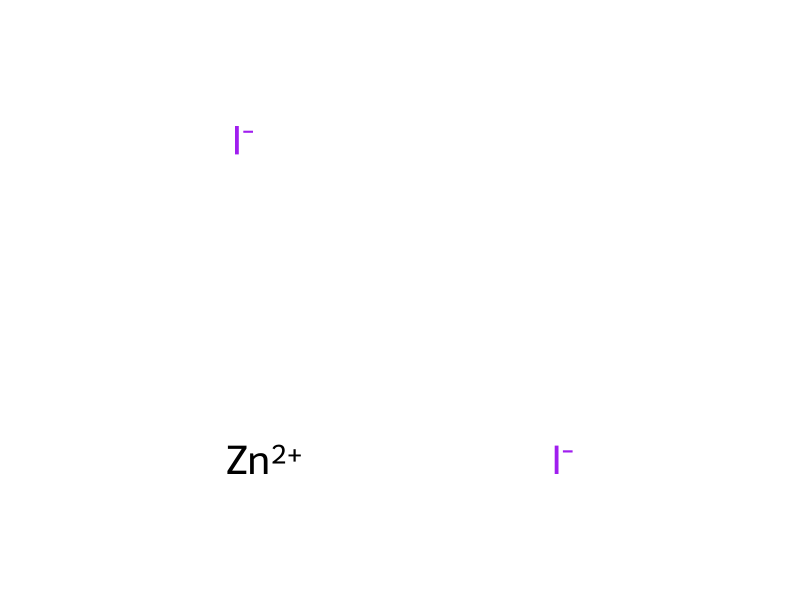
[CH3:1][O:2][C:3]1[CH:12]=[C:11]2[C:6]([CH2:7][CH2:8][CH2:9][C:10]2=O)=[CH:5][CH:4]=1.C1C=CC=CC=1.C[Si]([C:24]#[N:25])(C)C.P(Cl)(Cl)(Cl)=O>[I-].[Zn+2].[I-].N1C=CC=CC=1>[CH3:1][O:2][C:3]1[CH:12]=[C:11]2[C:6]([CH2:7][CH2:8][CH:9]=[C:10]2[C:24]#[N:25])=[CH:5][CH:4]=1Participants
Reactant 4




Product 1

Reagents, catalysts & solvents 2

Procedure
To a mixture of 7-methoxy-1-tetralone (39.65 g, 0.23 mol), zinc iodide (1.73 g, 5.4 mmol), and benzene (100 mLs) was added trimethylsilylcyanide (25.0 g. 0.25 mol). The mixture was stirred overnight at room temperature. Pyridine (350 mL) was added and phosphorous oxychloride (100 mL) was then added dropwise, with a slight temperature increase. The mixture was heated to reflux and held for 6 hr. TLC showed one mid-Rf spot for the desired product. The mixture was stirred overnight at room temperature. The mixture was carefully poured onto ice/hydrochloric acid (about 1.5 liter of 10% HCl). The total volume was 2 liters. This mixture was extracted with ethyl acetate (3×500 mLs), the organics combined and washed with water (2×500 mLs) and then brine (500 mLs). The ethyl acetate was dried over magnesium sulfate and evaporated off provide a liquid which on standing solidified. This crude solid was slurried in hexane and filtered to give 31.3 g (74%) of a tan solid. Some of this material was purified by silica gel chromatography (10% ethyl acetate-hexanes) to provide a solid: mp 47-49° C.; 1H NMR (DMSO-d6): δ 2.44-2.50 (2H, m), 2.72 (2H, t, J=8.4 Hz), 6.81 (1H, d, J=2.6 Hz), 6.90 (1H, dd, J=2.9 Hz, J=8.2 Hz), 7.17-7.19 (2H, m); MS m/z 168 ([M−H]−);
Workup
- temperatureincrease
- temperatureThe mixture was heated
- temperatureto reflux
- waitheld for 6 hr
Sources & evidence
- ORD record
- ord-91d7929763bb43f6858aa2a9a9c6472f
- Source dataset
- uspto-grants-2005_07
- Patent number
- US06914074B2
Reaction notes
Loading…