Sodium Chloride → HCID 23086912, compound
Reaction equation

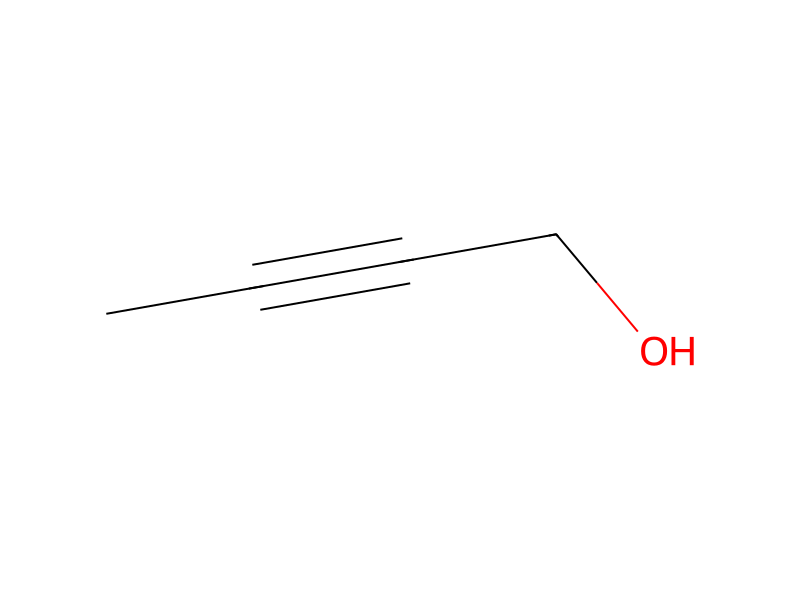
CS([C:5]1[N:9]=[C:8]([C:10]2[CH:15]=[CH:14][CH:13]=[CH:12][C:11]=2[Cl:16])[S:7][N:6]=1)(=O)=O.CS(C1N=C(C2C=CC=CC=2Cl)SN=1)=O.[CH2:32]([OH:36])[C:33]#[C:34][CH3:35].[H-].[Na+].[Cl-].[Na+]>CN(C)C=O>[Cl:16][C:11]1[CH:12]=[CH:13][CH:14]=[CH:15][C:10]=1[C:8]1[S:7][N:6]=[C:5]([O:36][CH2:32][C:33]#[C:34][CH3:35])[N:9]=1Participants





Procedure
In 3 ml of N,N-dimethylformamide, 400 mg of a mixture of 3-methylsulfonyl-5-(2-chlorophenyl)-1,2,4-thiadiazole and 3-methylsulfinyl-5-(2-chlorophenyl)-1,2,4-thiadiazole and 114 mg of 2-butyne-1-ol were dissolved, to the resulting solution was added 65 mg of sodium hydride (60% oily) with ice-cooling, and the mixture was stirred for 1 hour, and further stirred at room temperature for 1 hour. Then, the reaction mixture was poured into an aqueous saturated sodium chloride solution, and the mixture was extracted with t-butyl methyl ether. The residue obtained by concentration of the organic layer was subjected to silica gel column chromatography to obtain 210 mg of 5-(2-chlorophenyl)-3-(2-butynyloxy)-1,2,4-thiadiazole (the compound (8) of the present invention).
Workup
- temperaturecooling
- stirringfurther stirred at room temperature for 1 hour
- extractionthe mixture was extracted with t-butyl methyl ether
- customThe residue obtained by concentration of the organic layer
Sources & evidence
- ORD record
- ord-d53ed0435248497785976c7906ab64e8
- Source dataset
- uspto-grants-2008_04
- Patent number
- US07361675B2
Reaction notes
Loading…