Methylparaben → HCID 14980113, compound
Reaction equation

[OH:1][C:2]1[CH:11]=[CH:10][C:5]([C:6]([O:8][CH3:9])=[O:7])=[CH:4][CH:3]=1.[OH-].[CH2:13]([N+:17]([CH2:26][CH2:27][CH2:28][CH3:29])([CH2:22][CH2:23][CH2:24][CH3:25])[CH2:18][CH2:19][CH2:20][CH3:21])[CH2:14][CH2:15][CH3:16]>O>[CH3:9][O:8][C:6]([C:5]1[CH:10]=[CH:11][C:2]([O-:1])=[CH:3][CH:4]=1)=[O:7].[CH2:26]([N+:17]([CH2:13][CH2:14][CH2:15][CH3:16])([CH2:18][CH2:19][CH2:20][CH3:21])[CH2:22][CH2:23][CH2:24][CH3:25])[CH2:27][CH2:28][CH3:29]Participants
4
Reactant 2
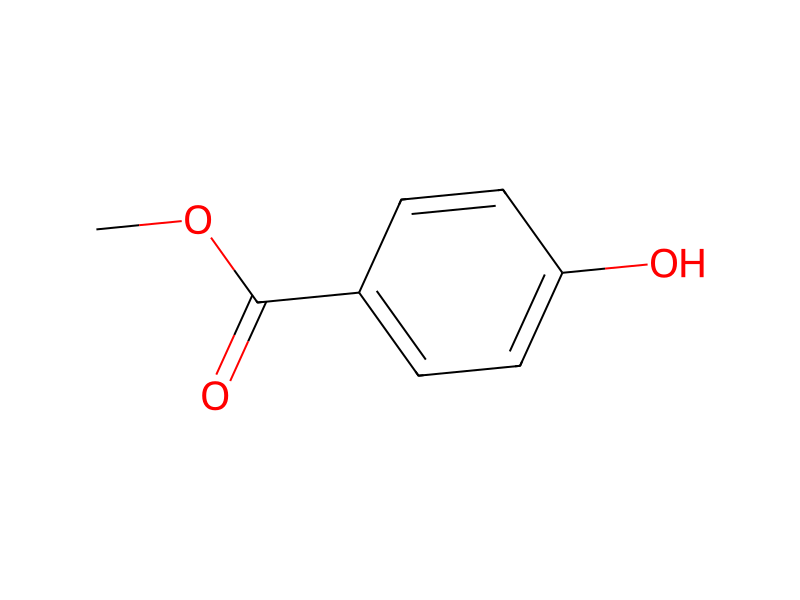

Product 1

Reagents, catalysts & solvents 1

Conditions
- Temperature
- 60 °C
Procedure
A glass flask with reflux condenser, heatable oil bath, mechanical stirrer and internal thermometer was charged at room temperature with 38.00 g of methyl 4-hydroxybenzoate and 277.92 g of water and these components were stirred together thoroughly. Subsequently 162.00 g of tetrabutylammonium hydroxide (40% strength in water) were added and the reaction mixture was heated to 60° C. It was stirred at 60° C. for one hour (the contents of the flask become clear). Then the reaction mixture was cooled and the water was distilled off under reduced pressure, 20 mbar, at 30-45° C. The product was then washed with butyl acetate and dried at 80° C. and 10 mbar in a vacuum drying cabinet. This gave a white solid.
Workup
- temperatureA glass flask with reflux condenser, heatable oil bath, mechanical stirrer
- stirringIt was stirred at 60° C. for one hour (the contents of the flask
- temperatureThen the reaction mixture was cooled
- distillationthe water was distilled off under reduced pressure, 20 mbar, at 30-45° C
- washThe product was then washed with butyl acetate
- customdried at 80° C.
- custom10 mbar in a vacuum drying cabinet
- customThis gave a white solid
Sources & evidence
- ORD record
- ord-4ebcfa475a6e4e3086d8ba0731140471
- Source dataset
- uspto-grants-2008_04
- Patent number
- US07361723B2
Reaction notes
Loading…